Sahra & BeyondSahra& Beyond
⛰️

Hiking in the UAE: Trails in Dubai, RAK & Fujairah

Inspired by the landscapes of the UAE — wear the wild side of it

Hiking in the UAE means the Hajar Mountains. The range runs through the northern emirates of Ras Al Khaimah, Sharjah and Fujairah and on into Oman, and almost every marked trail in the country sits on its flanks, in its wadis or around its dams. Dubai has a foothold in the range too, at Hatta. The deserts and beaches are not hiking country in the same sense.

This guide lays out where the trails are by emirate, when the season runs, how to handle heat and water, what the flash-flood warnings mean, and which places have permits or rules. Trail lengths and times are the figures published by the operators and tourism bodies named at the foot of the page. Conditions in the mountains change after rain and between seasons, so check current status before you set out.

The places picked out below are the mountain and wadi guides on this site, each with GPS, access notes and a packing list. Read the sections on heat and flash floods first. They apply to every route here.

Our top picks

Al Rafisah DamSharjah · MountainsAn emerald reservoir in the Hajar Mountains above Khor Fakkan, with a landscaped lakeside park, hiking trails, kayaking and a 55m man-made waterfall on Sharjah's east coast.Hajar MountainsRas Al Khaimah, Fujairah, Sharjah & Dubai (Hatta) · MountainsA range about 700km long that runs from the northern UAE into Oman. From the UAE side the usual ways in are Jebel Jais, Wadi Naqab and Jebel Yanas in Ras Al Khaimah, the wadis of Fujairah and Hatta, with Jebel Hafeet standing apart near Al Ain.Jebel YanasRas Al Khaimah · MountainsA rugged Ras Al Khaimah summit reached via the Wadi Naqab road — sunset ridge views, an old mountain village and a checkpoint you pass free of charge.Jebel HafeetAbu Dhabi · MountainsThe only mountain in Abu Dhabi emirate, about 1,249m, straddling the Oman border above Al Ain. A paved road climbs 1,200m through 60 hairpin bends to a summit hotel, with hot springs and Bronze Age tombs at the base.Jebel JaisRas Al Khaimah · MountainsThe UAE's highest mountain massif in the Hajar range: a paved road to a viewing deck at 1,250m, the Jais Flight zipline, mountain camps and air usually about 10°C cooler than the coast.Wadi NaqabRas Al Khaimah · MountainsA dramatic Hajar Mountains wadi in Ras Al Khaimah with red-rock scrambles, seasonal pools and a small dam — a genuine mountain hike with real flash-flood risk after rain.Wadi ShawkaRas Al Khaimah · WadisA family-friendly Hajar Mountains wadi in Ras Al Khaimah with a free dam park, seasonal pools after rain and marked trails, plus longer routes for serious hikers.Wadi WurayahFujairah · WadisFujairah's UNESCO-listed mountain reserve in the Hajar range, home to what The National and Khaleej Times call the country's only permanent natural waterfall. It is open to visitors only on guided tours.

Ras Al Khaimah: Jebel Jais, Jebel Yanas, Wadi Naqab and Wadi Shawka

Ras Al Khaimah has the widest choice. Visit Ras Al Khaimah describes six trails on Jebel Jais with a combined length of 16km. The Bear Grylls Explorers Camp lists guided routes from the 2.5km Upper Shepherd Walk (about two hours, beginner) to the 9.6km Hidden Oasis Loop (five to six hours, experienced hikers), and states that a guide is not required. Jebel Jais was reported closed for seasonal maintenance in September 2026; check visitjebeljais.com before going. An 80km Grand Loop is planned, with work due to begin in January, and trail rehabilitation between Wadi Khammed and Hidden Oasis was reported in September 2026. Wadi Shawka has beginner loops of 3 to 5km (1.5 to 2 hours) and longer routes of up to six hours or more over loose shale. Wadi Naqab is a harder day: the Red Wall route takes about six hours and the route to Sheri and Baqal villages about twelve, both exposed in places and about two hours from Dubai. Jebel Yanas is reached by the Wadi Naqab road and a checkpoint; the Jebel Yanas guide on this site notes that the unpaved climb is harder than the ridge walk, and that a 4x4 is strongly preferred.

Hatta, Sharjah and Fujairah

Hatta, Dubai's mountain exclave, has the Hatta Wadi Hub, where the operator lists five graded hiking routes totalling 32.6km, running seasonally. Its guidance is simple: tell a friend or family member where you intend to hike, carry a trail map and the right equipment, keep your phone fully charged and follow the signage. In Sharjah, Al Rafisah Dam above Khor Fakkan is free to enter and has two trails, about 1km (paved, easy and family-friendly) and about 3.5km (a moderate climb into the Hajar with views of the lake and coast), according to ComfortDrive. The same source notes that swimming is not permitted in the reservoir. In Fujairah, Wadi Wurayah is not a walk-up wadi. Khaleej Times reported in July 2026 that it has been open through controlled group visits since January 2026, with visitors registering for an organised tour run by Fujairah Holidays, from AED 300 a person, on Saturdays, with limited places. Reports describe the tour season only loosely, so confirm dates with the operator before planning a trip around it.

The hiking season, heat and water

Visit Ras Al Khaimah gives October to April as the best time of year for hiking and does not recommend summer hikes because of the heat; Wadi Shawka is usually put at November to April. Altitude helps but does not remove the problem: Visit Ras Al Khaimah gives daytime averages at the Jebel Jais peak of around 31°C in summer, against 35 to 38°C elsewhere in the emirate. In August 2026 the UAE Ministry of Health and Prevention advised drinking water regularly, even when not thirsty, and postponing demanding exercise in the hottest hours of the day, after the country recorded 51.2°C on 5 August. There is no single UAE figure for water. Visit Jebel Jais asks for at least three litres per person on its trails; carry more for longer or hotter routes.

Flash floods and weather warnings

Wadis are flood channels. Visit Ras Al Khaimah warns that Wadi Naqab can fill with water quickly and says never to attempt the hike when rain is expected; hiking after rainfall is described as too dangerous. Visit Ras Al Khaimah makes the same point for Wadi Shawka, where wadis risk flash floods in heavy rain. During the storms of March 2026 the National Centre of Meteorology (NCM) issued a flash flood warning for mountain areas, and Sharjah Police told people to stay away from valleys, dams and water accumulation because levels can rise rapidly, while Ras Al Khaimah Police advised staying away from flood channels during active flow. Check NCM forecasts and warnings before you leave and again that morning, and postpone if rain or an NCM warning covers the mountains. Activities on Jebel Jais can close in extreme weather, and visibility drops in heavy fog or rain. For an emergency, call 999 (police), 998 (ambulance) or 997 (civil defence).

Permits and rules

Most trails here need no permit, but several have conditions. At Wadi Naqab, individuals need no permit, but groups of ten or more should contact Ras Al Khaimah's tourism authority in advance. On Jebel Jais, the trail operator asks that groups be limited to ten unless registered in advance with the Ras Al Khaimah Tourism Development Authority (RAKTDA), and the Jebel Jais FAQ says barbecuing is not permitted in open areas, with designated picnic spots at Jais Viewing Deck Park. Wadi Wurayah is by organised tour only. Wadi Shawka is free to enter, and Visit Ras Al Khaimah describes it as a popular free wild-camping spot, with flat ground near the trails and the dam and no official campsite facilities. Visit Ras Al Khaimah asks hikers to leave their route details with a trusted person. Rules, fees and opening dates change with the season, so confirm them with the operator or the tourism authority for the emirate you are visiting.

What to wear and pack

Kit advice from the sources is practical and consistent. Visit Ras Al Khaimah lists more water than you think you will need, light, breathable clothing, sunscreen, a hat and sunglasses, an extra layer for emergencies, and leaving your route details with a trusted person. Visit Jebel Jais adds sturdy shoes and, in winter, a jacket, as temperatures at altitude can drop sharply. Wadi Shawka's guidance asks for proper footwear and enough water, a charged phone and an early start, and Hatta Wadi Hub asks hikers to carry a trail map. Wadi Shawka's page also warns that the shale makes for uneven walking, so choose footwear for loose rock, not for the car park. A head torch, first-aid kit, snacks and a power bank or offline map are sensible additions for longer routes. Carry out all your rubbish.

Related guides

Frequently asked questions

Where is the best hiking in the UAE?

Most marked mountain hiking is in the Hajar Mountains: Jebel Jais, Wadi Shawka and Wadi Naqab in Ras Al Khaimah, Al Rafisah Dam in Sharjah, Hatta in Dubai and, by organised tour, Wadi Wurayah in Fujairah. Which is best depends on your fitness and the season. Jebel Jais was reported closed for seasonal maintenance in September 2026; check visitjebeljais.com before going.

Where can I go hiking near Dubai?

Hatta Wadi Hub in Dubai has five graded routes totalling 32.6km, according to its operator. Wadi Shawka in Ras Al Khaimah has beginner loops of 3 to 5km, and Wadi Naqab is about two hours from Dubai, though it is a much harder hike.

When is the hiking season in the UAE?

October to April, according to Visit Ras Al Khaimah, which does not recommend summer hikes. Wadi Shawka is usually put at November to April.

Do I need a permit to hike in the UAE?

Not for individuals on most trails. At Wadi Naqab, groups of ten or more should contact Ras Al Khaimah tourism authorities in advance, and Jebel Jais trail groups should be limited to ten unless registered with RAKTDA. Wadi Wurayah is by organised tour only.

Can you visit Wadi Wurayah in Fujairah?

Only on an organised tour. Khaleej Times reported in July 2026 that the reserve has been open through controlled group visits since January 2026, booked through Fujairah Holidays from AED 300 a person, on Saturdays, with limited places. Confirm current dates with the operator.

How much water should I carry hiking in the UAE?

There is no single UAE figure. Visit Jebel Jais asks for at least three litres per person on its trails. Carry more for longer or hotter routes.

Is it safe to hike after rain?

No. Visit Ras Al Khaimah says hiking Wadi Naqab after rainfall is too dangerous, and wadis can fill quickly. Check NCM forecasts and warnings, and avoid wadi beds and flood channels when rain is expected. For an emergency, call 999, 998 or 997.

Sources

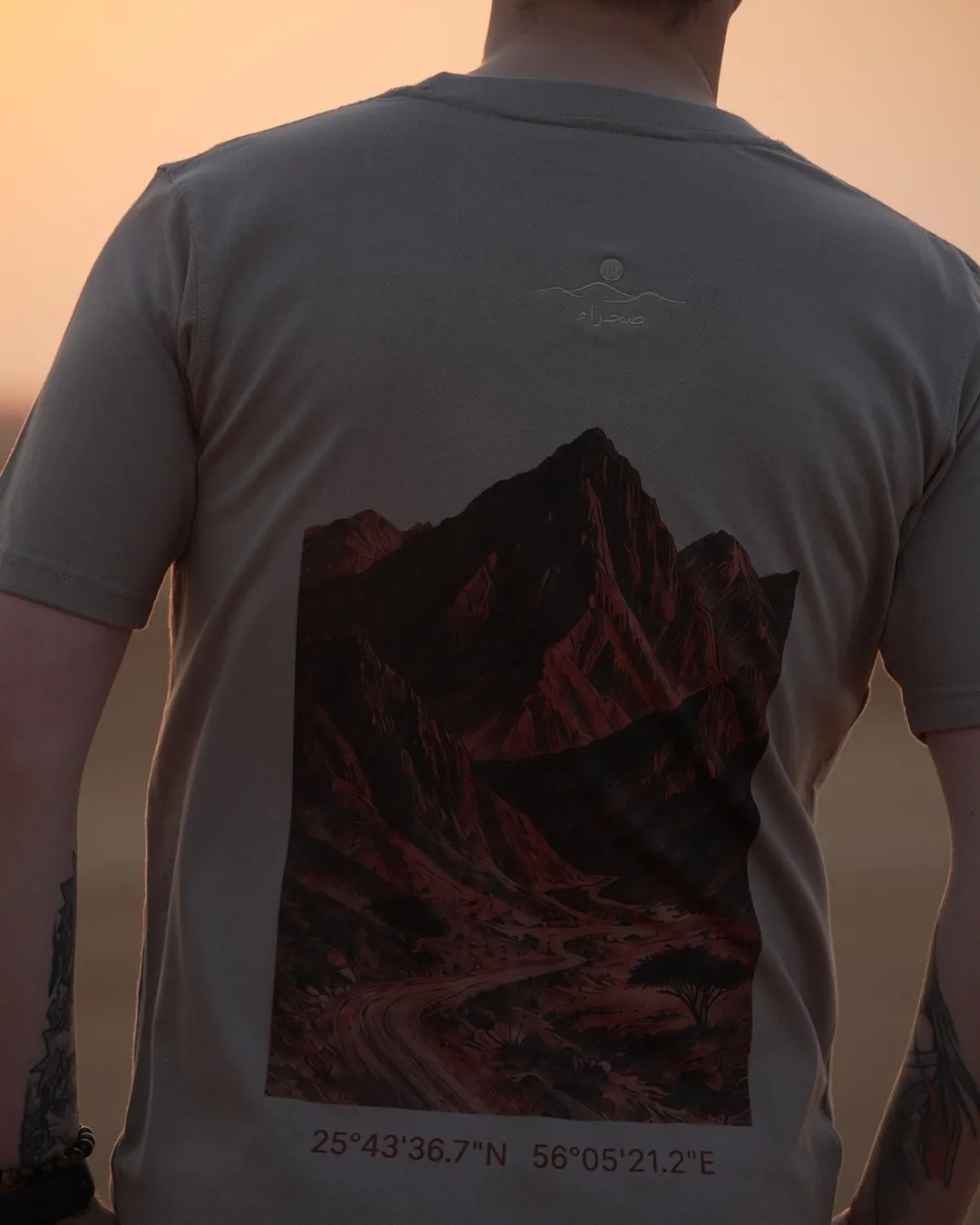
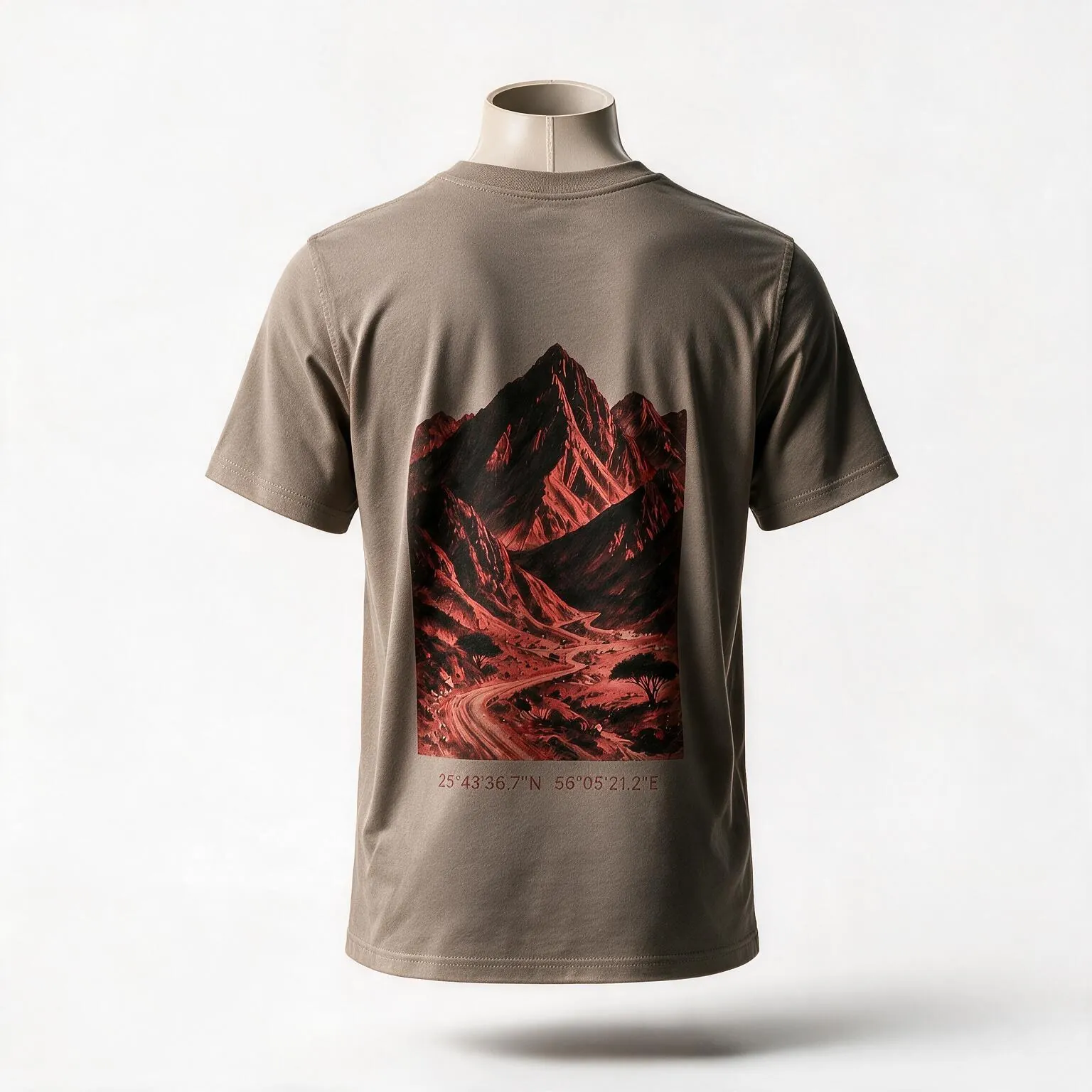
Hajar Mountains t-shirt, a mountain graphic tee in the regular fit — the red rock of the Hajar printed across the backHajar Mountains — Regular, regular fit, front view showing the set-in shoulder and classic cutThe Hajar Mountains tee worn in the dunes — the printed ridgeline across the back with the coordinates beneath itThe Hajar Mountains tee, front, worn in the dunes — the chest mark on the sand-coloured cotton
The tee drawn from this place

Hajar Mountains — Regular

Regular fit. A topographic line drawing of the Hajar peaks. 230gsm combed cotton, made to layer. Limited first run.

AED 199DTG print · embroidered logo✦ Limited first run
See the tee →

Also in Oversized

More mountain t-shirts

Sahra & Beyond · Drop 01 out now

Be first to see the next drop

Original tees drawn from real places across the Emirates — the first drop is live now. Join the list and you will hear about the next one first.

Shop the collection →

Back to Sahra & Beyond →