
Sahra & BeyondSahra& Beyond
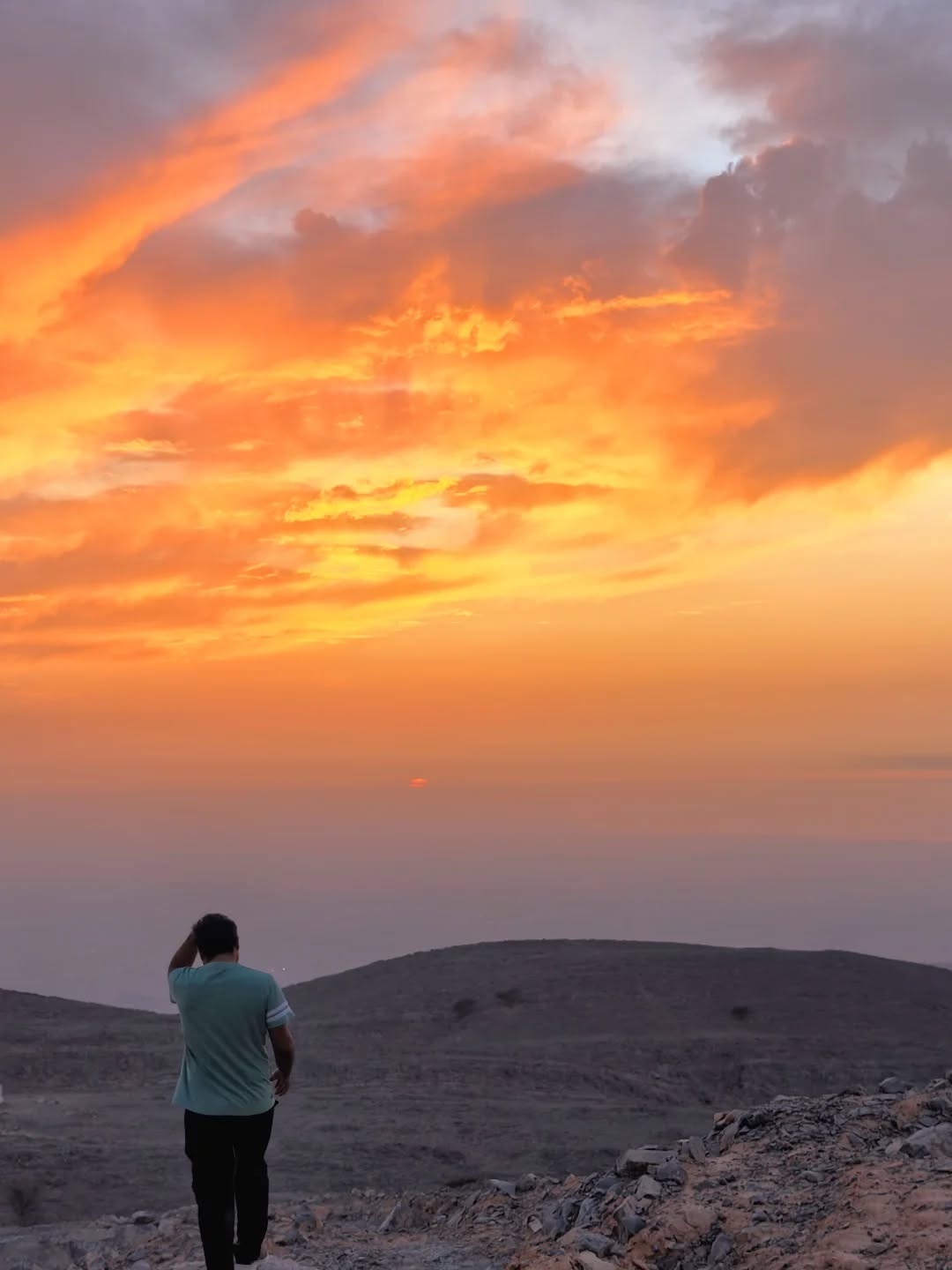
A hiker looking out over the Hajar ridges from Jebel Yanas under an orange sunset

Jebel Yanas

Hajar Mountains, reached via the Wadi Naqab road and its checkpoint · Ras Al Khaimah

MountainsModerateBest Oct–Apr
Loading live weather…
Getting there4x4 advisedThe summit road is steep and loose with drop-offs
Time needed2–4 hours
Best timeLate afternoon; be off the road before dark
CostFree
Toilets NoneFood None
  1. January: best
  2. February: best
  3. March: best
  4. April: possible
  5. May: avoid
  6. June: avoid
  7. July: avoid
  8. August: avoid
  9. September: avoid
  10. October: possible
  11. November: best
  12. December: best

Jebel Yanas is a ridge in Ras Al Khaimah's Hajar Mountains, reached by driving up the same road that leads into Wadi Naqab below — the wadi actually cuts into this mountain, so the two places share one access route rather than sitting in separate ranges. A short way up, a guarded checkpoint sits where the road starts to climb; visitor accounts describe it as a formality rather than an obstacle, with no entrance fee or documents asked for and everyone waved through.

From there the track turns properly rough: unpaved, steep in sections, loose underfoot, and lined in places with sizeable drop-offs, so a 4x4 is strongly preferred even though a careful driver in a sedan can sometimes get through. The reward for the climb is a long, elongated summit ridge with viewpoints looking down into Wadi Naqab on one side and out toward a stark, pale landscape running to the coast on the other, with Oman's own mountains visible beyond. Once you're actually on the ridge, the walking itself is comparatively gentle — one hiking guide describes it as not very challenging, with the harder part being the drive rather than the trail.

Near the summit are the remains of an old, abandoned stone-built settlement, with some structures still standing today — a genuine piece of mountain heritage rather than a viewpoint alone. There are no shops, cafés or other facilities up here, so treat it as self-sufficient territory. The ridge is a well-known spot for sunset camping on flat ground, with clear, dark skies afterwards, but bring proper footwear, more water than you'd expect to need, and be ready for exposed, sun-hit sections if you're walking around midday; guides advise against hiking the ridge in the heat of the day even in winter.

These are genuinely wet mountains when it rains: in one recent UAE-wide storm, Jebel Yanas recorded the highest rainfall total of any station in the country, over 244mm in a single event — the same kind of weather that turns Wadi Naqab below into a flash-flood risk.
Last checked 27 September 2026. Facts on this page come from the sources listed at the bottom. Spotted something out of date?

Getting there

Access is via the Wadi Naqab road out of Ras Al Khaimah city — the same route used for…
Dubai Jebel Yanas
103 km from Dubai as the crow fliesBy road: about 2h–2h15 from Dubai

Access is via the Wadi Naqab road out of Ras Al Khaimah city — the same route used for the Wadi Naqab hike, roughly two hours' drive from Dubai and around 40 minutes from RAK city, before the road climbs. A guarded checkpoint sits where the ascent begins; visitors are waved through without a fee or paperwork. From there it's an unpaved mountain track, steep and loose in sections with real drop-offs, so a 4x4 or other high-clearance vehicle is strongly preferred over a regular car. There's no fuel or shop on the mountain itself, so fill up and stock up in Ras Al Khaimah city beforehand. There's no public transport up here — this is a self-drive or organised 4x4 tour only.

GPS 25.7326, 56.1129

When to go

Winter is the season here, when temperatures are manageable and, by spring, the…
  1. January: best
  2. February: best
  3. March: best
  4. April: possible
  5. May: avoid
  6. June: avoid
  7. July: avoid
  8. August: avoid
  9. September: avoid
  10. October: possible
  11. November: best
  12. December: best

Best Possible Avoid This month is marked

Winter is the season here, when temperatures are manageable and, by spring, the surrounding slopes turn green with flowering plants and grass after the rains. Even in the cooler months, avoid hiking or driving the exposed ridge around midday — the trail sits directly in the sun and heat exhaustion is a real risk. Sunset is the classic time to be on the ridge, when the light turns the rock warm colours before the mountain sky goes properly dark for stargazing or an overnight camp. Check the forecast before you go: this is some of the wettest ground in the UAE when storms roll through.

What to do there

The main draw is the drive itself and the long summit ridge it leads to, with viewpoints…

The main draw is the drive itself and the long summit ridge it leads to, with viewpoints back down into Wadi Naqab and out over a pale, eroded landscape toward the coast and, on a clear day, Oman's mountains beyond. Several short trails branch off along the ridge, and walking here is comparatively easy once you've made the climb — most of the effort is in the road, not the footpath. At the top, the ruins of an old stone-built settlement are worth a look on foot, a real piece of mountain history rather than a modern viewpoint. Flat ground along the ridge makes for popular sunset camping. There's nothing to buy up here, so bring everything with you.

Safety and rules

The road up is the main hazard: unpaved, steep, with loose surfaces and stretches with…
Rain you cannot see, far upstream, can send water down a dry wadi in minutes. If rain is forecast anywhere in the mountains, stay out of wadis and off wadi floors.

The road up is the main hazard: unpaved, steep, with loose surfaces and stretches with genuine drop-offs, and at least one recent account near the summit noted a vehicle had gone over the edge close to where a safety gate was later closed. Take the climb slowly, in a suitable vehicle, and don't push on in poor visibility or after rain, when the surface can wash out. Once on the ridge, exposure and heat are the concerns — avoid midday hiking even in winter, carry more water than you think you need, and wear proper footwear and sun protection. This area also sees some of the heaviest rainfall in the UAE during winter storms, which feeds flash flooding in Wadi Naqab directly below, so check the forecast before committing to the drive.

In an emergency
  • 999 Police
  • 998 Ambulance
  • 997 Civil Defence

Weather warnings: National Center of Meteorology. Tell someone where you are going and when you will be back.

Heritage, nature and etiquette

Near the summit stand the remains of an old stone-built settlement, with some structures…

Near the summit stand the remains of an old stone-built settlement, with some structures still visible on the mountaintop today. It's a genuine piece of mountain history rather than a modern lookout, and worth the walk on foot once you've made the drive up.

Etiquette. The old stone structures at the summit are a heritage site, not a ruin to climb on or take from — look, photograph, and leave everything as you found it.

Wear the place

Hajar Mountains — Regular

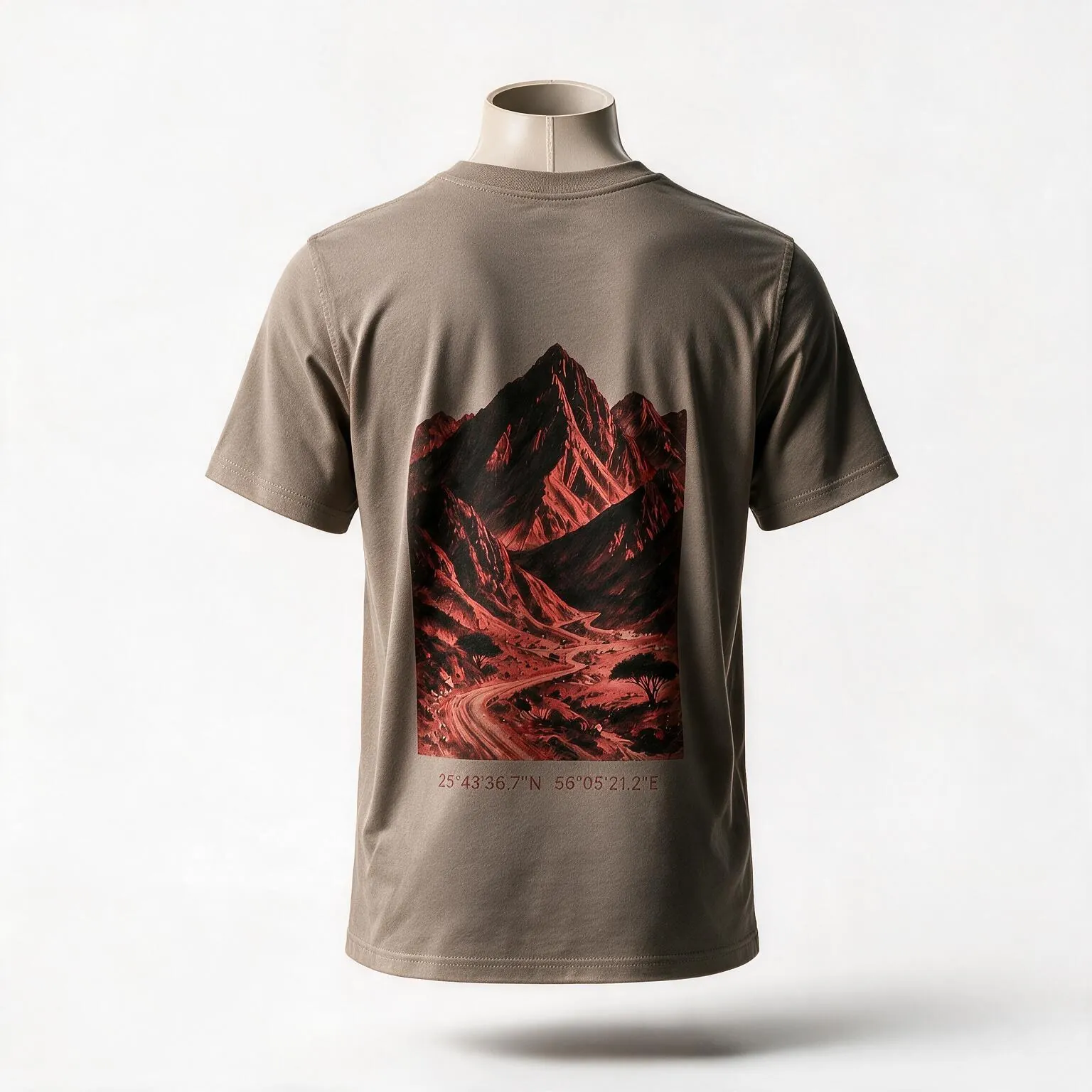
Wadi Naqab, the valley that climbs towards this summit, is the ridge traced on the Hajar Mountains tee.

AED 199 · 230gsm cotton · any 2 tees AED 359· 230gsm cotton

See the tee →

What to pack for Jebel Yanas

Matched to how you get there and how long you stay. Tap items as you pack them; this list is saved on your phone.

0 packed

Take this list with you

Send it to yourself or the people you are going with. Ticked items are marked.

Questions people ask about Jebel Yanas

Is Jebel Yanas in Sharjah or Ras Al Khaimah?

Ras Al Khaimah. It sits on the same mountain that Wadi Naqab cuts into, and is reached via the Wadi Naqab road.

Do I need to pay to enter Jebel Yanas?

No — there's a checkpoint on the way up, but visitors are waved through without a fee or paperwork.

Do I need a 4x4?

Strongly recommended. The unpaved summit road is steep and loose in places with real drop-offs; a careful driver may get a sedan up, but it isn't the safe default.

How difficult is the hike?

The drive is the hard part. Once you're on the summit ridge, walking is comparatively easy, though sections are exposed to full sun.

Can I camp at Jebel Yanas?

Flat ground on the ridge is a well-known sunset camping spot, though there are no facilities — bring everything you need and pack it all out.

What's at the top?

Sweeping views over Wadi Naqab and toward the coast, plus the ruins of an old stone-built settlement near the summit.

SourcesWhere the facts on this page come from