
Sahra & BeyondSahra& Beyond
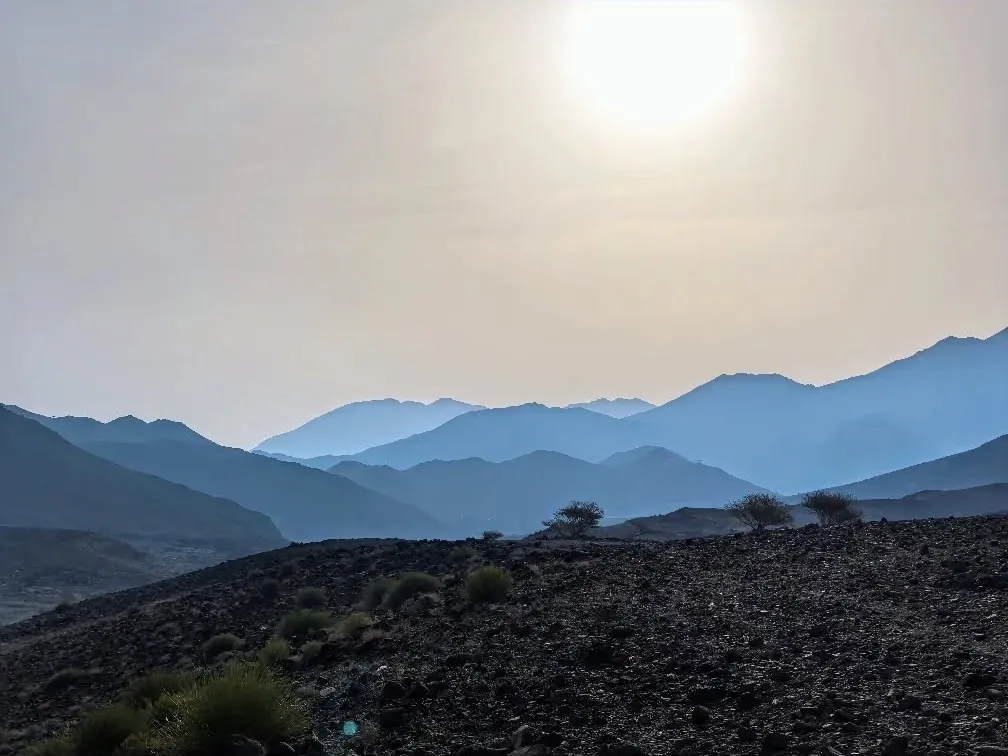
Layers of hazy Hajar Mountain ridges seen from the slopes above Wadi Shawka

Wadi Shawka

Hajar foothills near Khari village, off the E102/Shawka intersection · Ras Al Khaimah

WadisEasy at the dam, hard upstreamBest Nov–Apr
Loading live weather…
Getting thereAny car to the damHigher clearance helps for the pools beyond
Time needed2–3 hours, or a full day upstream
Best timeMorning; start long trails at first light
CostFree
Toilets YesFood YesShade Yes
  1. January: best
  2. February: best
  3. March: best
  4. April: best
  5. May: avoid
  6. June: avoid
  7. July: avoid
  8. August: avoid
  9. September: avoid
  10. October: possible
  11. November: best
  12. December: best

Quick answers

Where is it?
In the Hajar foothills near Khari village, Ras Al Khaimah, about 90 km from Dubai: roughly an hour to an hour and fifteen minutes via the E102.
Can you swim?
Seasonal natural pools form after rain, mostly in winter (Visit Ras Al Khaimah, checked 1 Oct 2026). That page does not say whether swimming in the dam itself is allowed, so follow any signs on site. Stay out of the wadi during and after heavy rain: flash floods.
What are the hikes like?
Beginner loops of about 3 to 5 km take 1.5 to 2 hours; longer routes of close to 10 km can take up to 6 hours or more (Visit Ras Al Khaimah).
Do I need a 4x4?
Not for the dam and park area. A 4x4 or high-clearance vehicle helps for the first pools and trails beyond it.
Cost
Free, with no entry fee at the dam or on the trails.
Best months
November to April, when it is cooler and the pools are fullest after rain.

Wadi Shawka (also written Showka) runs through the Hajar foothills of Ras Al Khaimah, starting near Khari village and merging further along with the neighbouring Wadi Esfai and Wadi Ejili. Its name is generally translated as 'powerful wadi', and it earns it: the area gets around 120mm of rain a year, unusually high for this part of the UAE, which is what feeds its seasonal pools in the cooler months. A dam completed in 2001 — 13 metres high, holding around 275,000 cubic metres of water — sits at the heart of the site, ringed by a proper recreational area rather than a bare trailhead.

That's the part most visitors see: washrooms, a family barbecue area, a children's play area, shaded seating and parking, plus small shops at the entrance selling basic supplies (worth topping up on food and water before you arrive, since stock is limited). It's free to visit, with no entry fee at any point.

Beyond the dam, Wadi Shawka turns into a genuine hiking and mountain-biking destination, with trails ranging from a gentle 1.5–2 hour loop suitable for most fitness levels up to advanced routes of six hours or more into rockier, shalier terrain further upstream. A regular car comfortably reaches the dam and park; if you want to push on to the first pools and beyond, a 4x4 or at least a high-clearance vehicle makes life considerably easier over the unpaved sections.

After rain, the wadi genuinely comes alive — pools fill, and for a short window the area turns green in a way that catches most visitors by surprise in a country better known for its deserts. That same rain, though, is the thing to watch: parts of the trail can flood and become impassable, so this is not a place to push through in wet weather. Come in the cooler months, treat the dam area as the easy half of the visit and the upstream trails as a genuinely different, harder proposition, and you'll get the best of both.
Last checked 1 October 2026. Facts on this page come from the sources listed at the bottom. Spotted something out of date?

Wadi Shawka dam

The dam, completed in 2001, is 13 metres high and holds around 275,000 cubic metres of…

The dam, completed in 2001, is 13 metres high and holds around 275,000 cubic metres of water (Wikipedia; MyBayut). It overlooks a developed recreational area with washrooms, a family barbecue area, a children's play area, shaded seating and parking, and small shops at the entrance. Entry is free.

Names: the wadi is written Shawka, Showka and Shawhkah, and the dam appears as Al Showka Dam (The National) and Sawhkan Dam (Gulf News). They all refer to the same place.

After dark: Gulf News lists Sawhkan Dam as a Milky Way viewing spot, a 45-minute drive from Dubai, while The National says the dam is lit by flight paths, unlike Al Quaa, where no artificial lights are around. For the darker option, see the Al Quaa Desert guide.

Wadi Shawka hike

Wadi Shawka has trails for most levels. WildyNess describes three tiers by difficulty,…

Wadi Shawka has trails for most levels. WildyNess describes three tiers by difficulty, and Visit Ras Al Khaimah gives distances and times for beginner and longer routes. The two sources are not the same trails, so they are listed separately; where a source gives no figure, the table says so.

Parts of the wadi flood after heavy rain. Avoid it during and right after storms.

Wadi Shawka trails
TrailDifficultyDistanceTimeWhat to expect
Dam Loop (WildyNess)EasyNot confirmedNot confirmedRelatively flat loop around the dam and lower wadi, minimal elevation gain; suits beginners and families
Pool Trail (WildyNess)ModerateNot confirmedA few hoursModest climbs and rocky, uneven sections that need careful footing; hidden pools, especially after rain
Summit Trail (WildyNess)ChallengingNot confirmedNot confirmedSteep ascents and technical sections that may need scrambling; 360 degree views from the summit
Beginner loops (Visit RAK)Beginner-friendlyAbout 3 to 5 km1.5 to 2 hoursShort trails
Longer routes (Visit RAK)Moderately challengingClose to 10 kmUp to 6 hours or moreFor more seasoned hikers

WildyNess and Visit Ras Al Khaimah, checked 1 Oct 2026. Neither gives elevation gain or a GPX track. Source: Visit Ras Al Khaimah: Wadi Shawka.

Wadi Shawka pools: can you swim?

Seasonal natural pools form in the wadi after rain, mostly in the winter months (Visit…

Seasonal natural pools form in the wadi after rain, mostly in the winter months (Visit Ras Al Khaimah). They are seasonal, so how much water you find depends on recent rain. Visit Ras Al Khaimah lists swimming among the activities, but its page does not say whether swimming in the dam itself is allowed; treat that as not confirmed and follow any signs on site.

Flash floods: wadis are prone to flash floods in heavy rain and are best avoided until the sun comes out (Visit Ras Al Khaimah). Do not go into the wadi during or after a storm.

Rules at other dams, such as Hatta, are different and do not carry over to Wadi Shawka.

Getting there

From Dubai, take the E102 highway and turn off at the Shawka intersection; from Ras Al…
Dubai Wadi Shawka
80 km from Dubai as the crow fliesBy road: about 1h–1h15 from Dubai

From Dubai, take the E102 highway and turn off at the Shawka intersection; from Ras Al Khaimah city, follow the E18 to the E88 crossing, then turn right and left again before the Adnoc station. It's roughly 90km from Dubai, around an hour to an hour and fifteen minutes in normal traffic. A regular car reaches the dam and recreational area without trouble; to continue to the first pools and beyond, the parking there needs a 4x4 or high-clearance vehicle over rougher ground. There's no public transport to Wadi Shawka, so this is a self-drive trip or an organised tour; fuel up before you leave the highway, since there's little beyond the small shops at the entrance.

GPS 25.102, 56.06

When to go

November to April is the comfortable window, with temperatures generally between 20–26°C…
  1. January: best
  2. February: best
  3. March: best
  4. April: best
  5. May: avoid
  6. June: avoid
  7. July: avoid
  8. August: avoid
  9. September: avoid
  10. October: possible
  11. November: best
  12. December: best

Best Possible Avoid This month is marked

November to April is the comfortable window, with temperatures generally between 20–26°C rather than summer's extremes. Winter is also when the pools are fullest after rain, and when the surrounding hillsides briefly turn green. Weekdays are quieter than weekends at the dam area, which draws family day-trippers; if you're heading for the longer upstream trails, an early start avoids both the heat and the crowds. Whatever the season, check the forecast first — parts of the wadi flood and become impassable after heavy rain.

What to do there

At the dam, expect a proper family-day-out setup: shaded seating, a children's play area,…

At the dam, expect a proper family-day-out setup: shaded seating, a children's play area, barbecue spots and washrooms, with pools nearby that fill seasonally after rain. From there, marked trails head upstream through the wadi, ranging from a beginner-friendly 1.5–2 hour there-and-back walk to advanced routes of six hours or more over rockier, shaley ground deeper into the mountains. It's also a mountain-biking destination, with donkey trails and bike-specific tracks alongside the hiking paths, and it's used for off-roading, canyoning, swimming in the pools, picnicking and stargazing after dark. Treat the dam area as an easy half-day out on its own, and the upstream trails as a separate, harder trip if you're after more of a workout.

Safety and rules

The dam and park area is genuinely easy and family-friendly, but don't let that lull you…
Rain you cannot see, far upstream, can send water down a dry wadi in minutes. If rain is forecast anywhere in the mountains, stay out of wadis and off wadi floors.

The dam and park area is genuinely easy and family-friendly, but don't let that lull you into treating the upstream wadi the same way: parts of it flood and become impassable after heavy rain, and the terrain turns rocky and uneven the further you go. Avoid Wadi Shawka altogether during or right after storms. Wear proper hiking shoes rather than sandals once you leave the paved park area, carry sun protection and enough water, keep your phone charged, and start early to beat the midday heat on the longer routes. The UAE's general emergency numbers apply here as everywhere — 999 for police, 998 for ambulance — worth having saved before you head off the marked paths.

In an emergency
  • 999 Police
  • 998 Ambulance
  • 997 Civil Defence

Weather warnings: National Center of Meteorology. Tell someone where you are going and when you will be back.

Heritage, nature and etiquette

This is a popular family spot, so keep noise down near the play areas and pack out any…

Etiquette. This is a popular family spot, so keep noise down near the play areas and pack out any barbecue rubbish — bins are limited beyond the entrance.

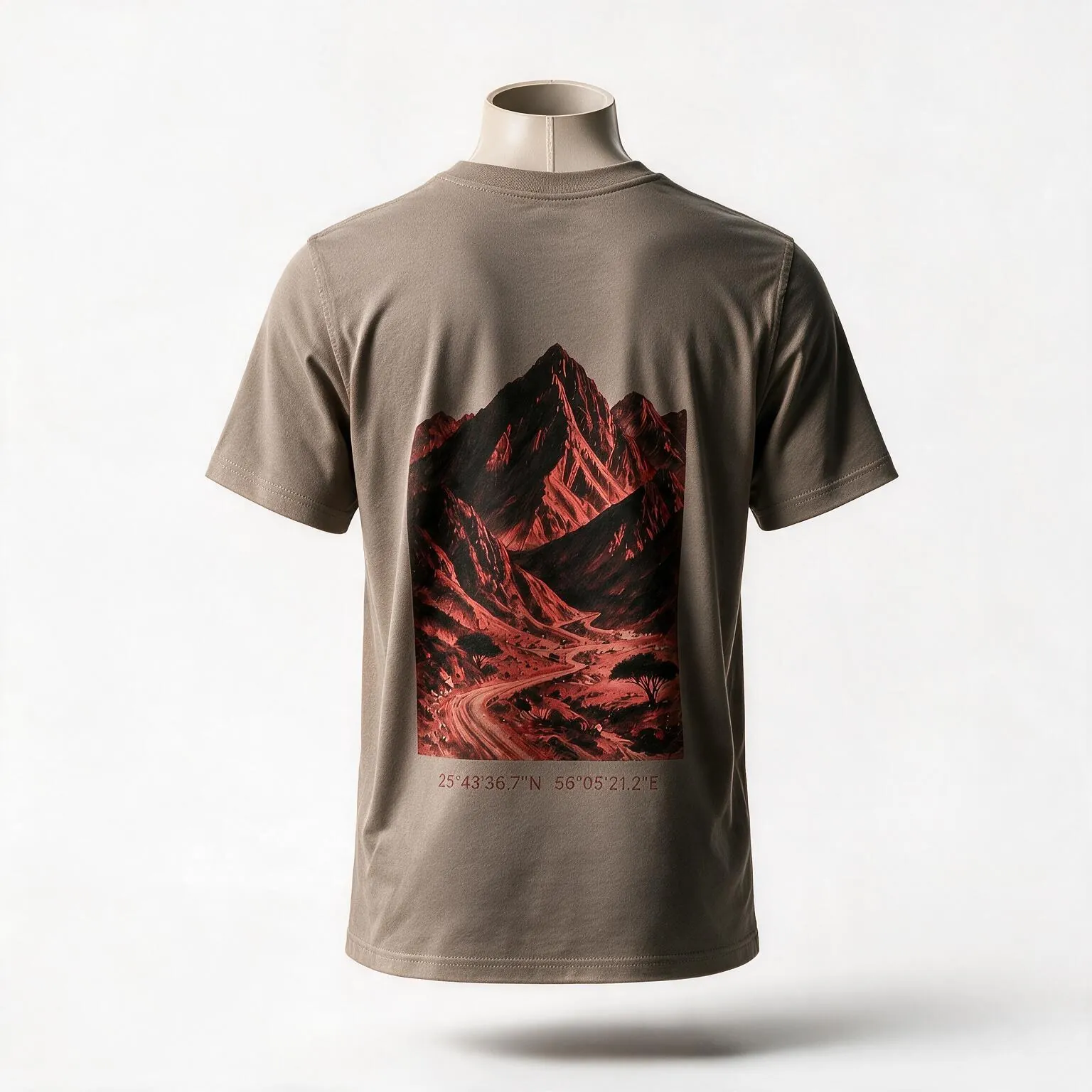
Wear the place

Hajar Mountains — Regular

The peaks printed on the Hajar Mountains tee rise above Wadi Naqab, further north in the same Hajar range.

AED 199 · 230gsm cotton · any 2 tees AED 359· 230gsm cotton

See the tee →

What to pack for Wadi Shawka

Matched to how you get there and how long you stay. Tap items as you pack them; this list is saved on your phone.

0 packed

Take this list with you

Send it to yourself or the people you are going with. Ticked items are marked.

Questions people ask about Wadi Shawka

Is there an entry fee for Wadi Shawka?

No — it's free to visit, at the dam and along the trails.

Is Wadi Shawka good for families?

Yes — the dam and recreational area has washrooms, a play area, shaded seating and an easy trail. Longer trails further upstream are considerably harder.

Do I need a 4x4?

Not for the dam and park area — a regular car is fine. A 4x4 or high-clearance vehicle helps for the first pools and trails beyond it.

How far is Wadi Shawka from Dubai?

About 90km, roughly an hour to an hour and fifteen minutes in normal traffic via the E102.

Can I camp at Wadi Shawka?

Yes — Ras Al Khaimah's own tourism board lists it as a popular, free wild-camping spot, with flat ground near the trails and the dam. There's no official campsite infrastructure, so bring everything you need and leave no trace.

When's the best time to visit?

November to April, when temperatures sit around 20–26°C; the pools are also fullest then after rain.

SourcesWhere the facts on this page come from