Sahra & BeyondSahra& Beyond
🌌

Best Places to See the Milky Way Galaxy in the UAE

Inspired by the landscapes of the UAE — wear the wild side of it

The Milky Way is overhead every night of the year in the UAE; what changes is whether its bright core is above the horizon after dark. That is only roughly May to October, and only on nights when the moon is out of the way. Everything else, from the spot you choose to the date you go, follows from those two facts.

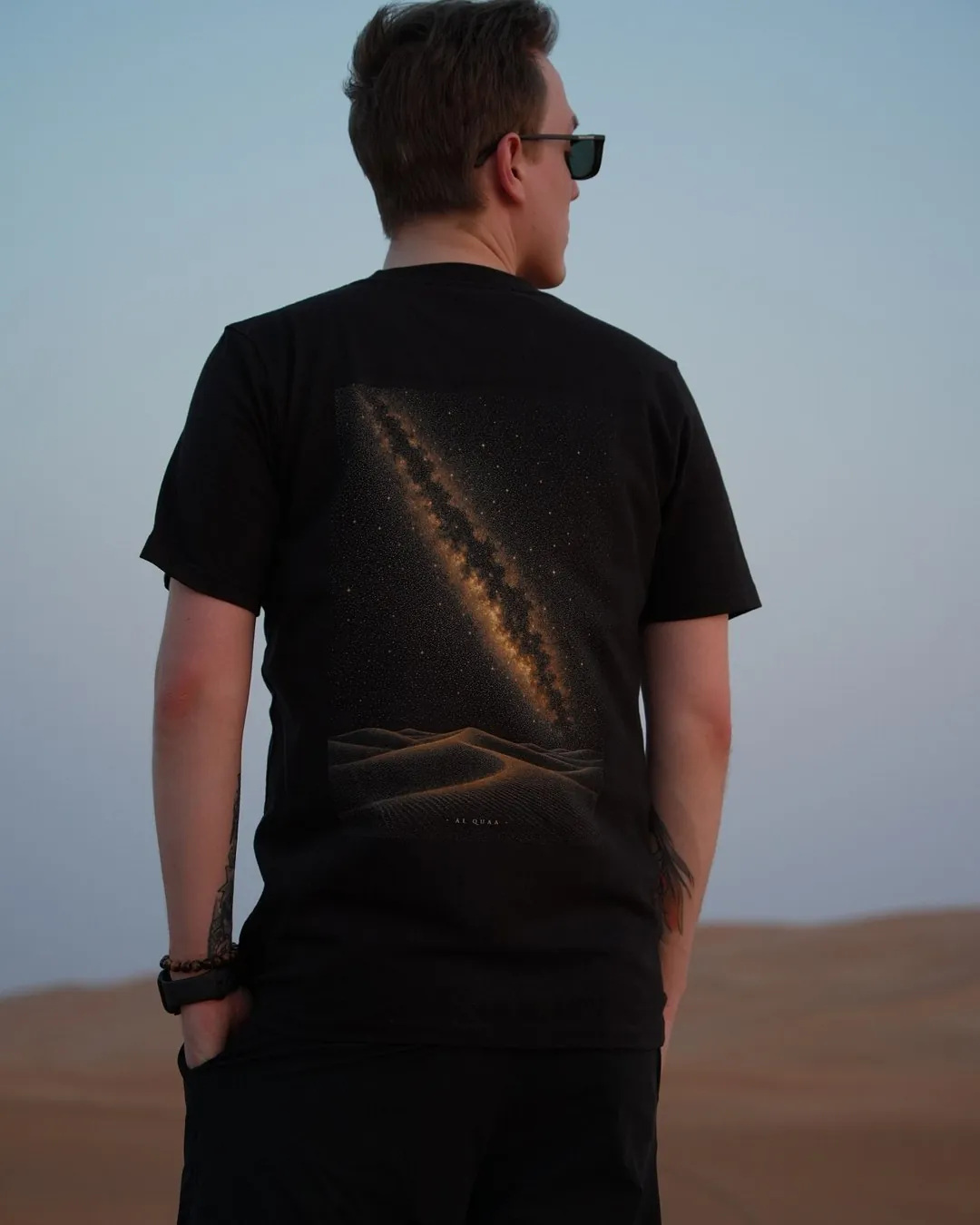
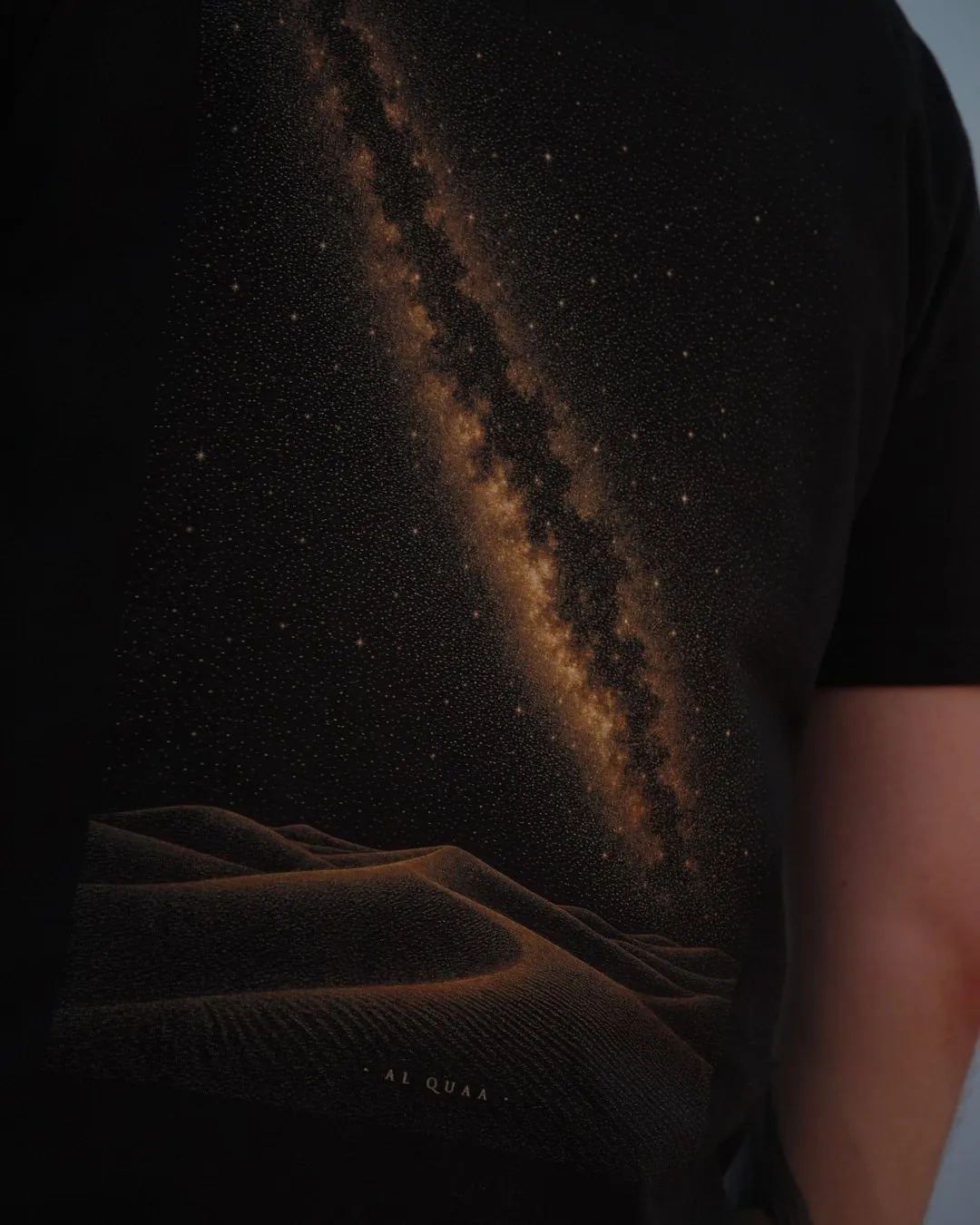
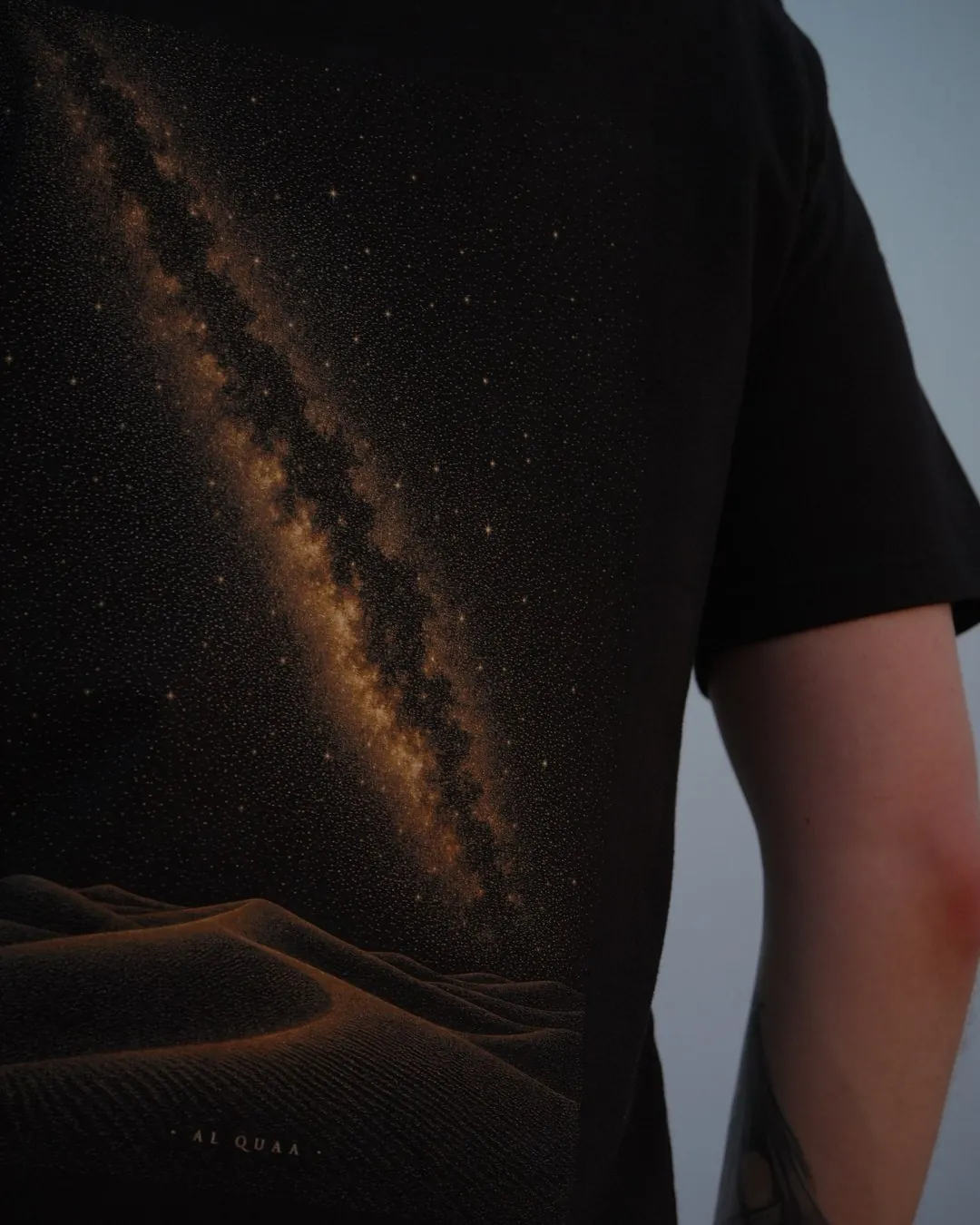
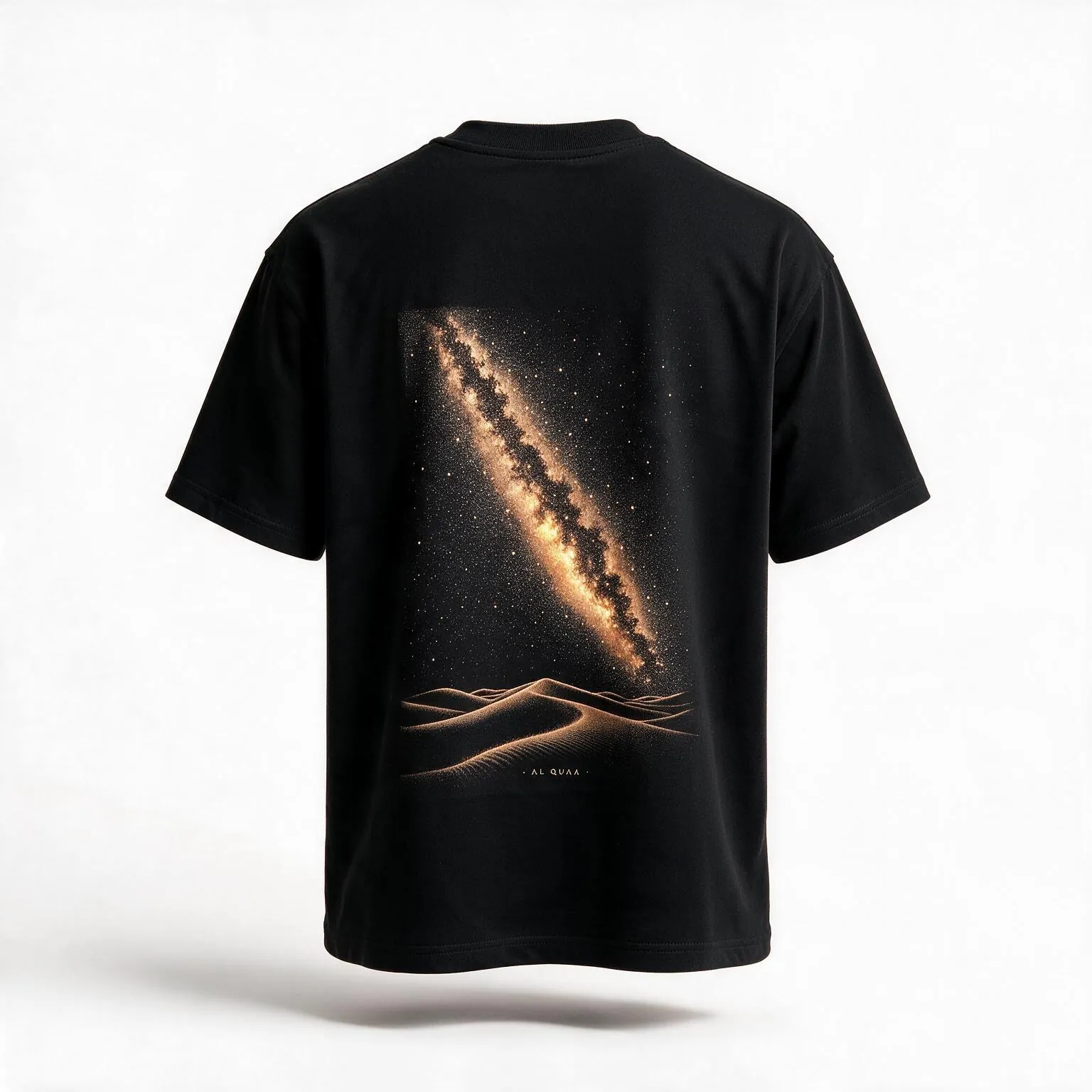
That view is the one printed on the Al Quaa Galaxy tee — the core as it rises over Al Quaa, mapped rather than illustrated.

This guide lists eight dark places within reach of the cities, a moon calendar to September 2027, the next meteor showers, and what a tour costs against going on your own. Go on a moonless night, bring a red-light torch, and give your eyes twenty minutes to adjust before judging the sky.
Our top picks

Al Quaa DesertAbu Dhabi · CampingOne of the darkest accessible skies in the Emirates. Deep in the southern desert, far from any city glow, it's a magnet for stargazers and astrophotographers chasing the Milky Way.MleihaSharjah · DunesAn archaeological desert in Sharjah where dunes meet Fossil Rock, Camel Rock and Bronze Age tombs — home to Mleiha National Park and the UNESCO-listed Faya Palaeolandscape.Al Qudra Desert LakeDubai · CampingA small, undocumented lake inside Dubai's Al Qudra Lakes cluster, a couple of kilometres from Love Lake — quieter than the named lakes nearby, with no facilities at all.Crescent Moon LakeDubai · CampingA crescent-shaped artificial lake off the beaten track in Dubai's Al Qudra desert, known for oryx sightings at dawn. Reaching it needs a 4x4 — there's no paved road for the final stretch.Wadi ShawkaRas Al Khaimah · WadisA family-friendly Hajar Mountains wadi in Ras Al Khaimah with a free dam park, seasonal pools after rain and marked trails, plus longer routes for serious hikers.Liwa OasisAbu Dhabi · DunesMoreeb Dune, a mega-dune usually quoted at around 300m on the edge of Liwa Oasis where the Rub' al Khali begins. Home to the annual dune-bashing festival, with date farms and forts strung along the oasis road behind it.

Last Milky Way window of 2026: 6–14 October

The new moon falls on Saturday 10 October 2026 at 19:50 UAE time. The nights from about 6 to 14 October are the darkest of the month, and they are the last of the year with the Milky Way core in the evening sky.

In October the core is only up for a short spell after dusk. Khaleej Times' month-by-month table has it appearing at about 6pm and gone by about 10pm. The galaxy forms an arc from the north-east to the south-west, and its densest part lies towards the constellations Scorpius and Sagittarius. Arrive before dark, find a clear horizon and look for it as soon as the sky has faded.

The core season runs from May to October, with the clearest views in July and August (Gulf News and Khaleej Times, both quoting the Emirates Astronomical Society chairman). After October the core stays below the horizon at night until spring. The next new moon, on 9 November, is a good night for constellations and camping, but there is no core to see.

New moon, October 2026
New moon (UAE time)Darkest nightsMilky Way core
Sat 10 Oct 2026, 19:50About 6 to 14 OctIn the evening sky, about 6pm to 10pm

New-moon time is computed, then checked against the Skylive moon calendar (16:50 in its London-time view, which is 19:50 in the UAE) and MoonGiant, which shows a new moon on 10 October. Core hours are from a Khaleej Times table published 7 May 2025 and are approximate. Checked 1 Oct 2026. Source: Khaleej Times: Milky Way visible from May to October.

Where to go: 8 dark spots near the cities

Distance from city light matters more than anything else you can choose. Gulf News, quoting the Emirates Astronomical Society chairman, advises getting at least 35 km from urban areas. None of these places has a published sky-brightness rating on this site: to check a site yourself, look it up on the light pollution map at https://www.lightpollutionmap.info before you drive.

Al Quaa is one of the darkest accessible skies in the UAE and is the best-known choice for the core. The others trade some darkness for a shorter drive or for facilities.

Eight places to see the Milky Way, from Dubai
SpotEmirateDrive from Dubai4x4?FacilitiesCaveat
Al QuaaAbu DhabiAbout 2.5 hours (about 90 minutes from Abu Dhabi city)A regular car reaches the usual pull-off on packed sand; a 4x4 is for the dunesNone at the site: no toilets, shops, water or fuelOne of the darkest accessible skies in the UAE. Fill the tank and bring everything
Wadi Shawka damRas Al KhaimahAbout 1 hour to 1 hour 15No for the dam; a 4x4 helps on the trails beyondWashrooms, barbecue area, shaded seating, small shopsThe National says the dam is lit by flight paths
Jebel Jais areaRas Al KhaimahAbout 1 hour 45 to 2 hoursNo: the road is pavedTwo cafés at the viewing deck park; no fuel on the mountain roadA seasonal closure was reported on 14 September 2026; check the operator before you drive up
Liwa and Tal MoreebAbu DhabiAbout 3.5 to 4 hoursPaved to the base of Moreeb; a 4x4 only on the sandLimited: resorts and a few stops in Liwa; pack food and waterRemote. Busy during the Liwa International Festival, 11 December 2026 to 2 January 2027
Al Qudra and Al MarmoomDubaiAbout 1 hourPaved to Love Lake; the quieter lake spots need a high-clearance vehicleToilets and parking at Love Lake and Expo Lake; none at the quieter spotsDubai Astronomy Group held a public event here on 2 May 2026
Lahbab red dunesDubaiNot confirmedNot confirmedNot confirmedListed by Dubai Desert as a stop for stargazing after a dune tour
MleihaSharjahAbout 50 minutes to 1 hour 15An ordinary car reaches the Archaeological Centre; a 4x4 is needed on the dunesToilets and café at the Archaeological CentreEvening stargazing sessions are bookable through the park
Jebel HafeetAbu Dhabi (Al Ain)About 1 hour 45No: the summit road is pavedHotel restaurant at the summit; shaded lawns and chalets at Green MubazzarahListed in a PropertyFinder guide to stargazing in Abu Dhabi, with no darkness measurement given

Drive times and facilities are from the linked place guides; the sky-brightness line is yours to check on the map. Checked 1 Oct 2026. Source: Gulf News: Milky Way season in the UAE.

When the core is up, month by month

Core season is May to October. In May the core only appears after midnight; by October it is a short appearance in the early evening. Khaleej Times, quoting Dubai Astronomy Group, gives a wider season of late March to September, with the best hours from 9pm to 3am, so treat the edges of the season as approximate. In midwinter the core is below the horizon at night: a December trip gives a very dark sky and good constellations, but no core.

When the Milky Way core is visible, by month
MonthCore first appearsCore gone by
May12am4am
June11pm3:30am
July10pm3am
August8:30pm2am
September7pm12:30am
October6pm10pm

Times are approximate and from a Khaleej Times table (7 May 2025). The core is clearest in July and August. Source: Khaleej Times: Milky Way visible from May to October.

Moon calendar 2026–27

Pick a date within a few days of the new moon. A bright moon washes out the fainter parts of the Milky Way almost as much as city light, so the dark window matters as much as the month.

New moons from October 2026 to September 2027 (computed)
New moon (UAE time, computed)Dark window (4 days either side)What is up
Sat 10 Oct 2026, 19:506 to 14 OctCore in the evening, about 6pm to 10pm
Mon 9 Nov 2026, 11:025 to 13 NovNo core; constellations and camping
Wed 9 Dec 2026, 04:515 to 13 DecNo core; the Geminids peak on 13 to 14 Dec
Fri 8 Jan 2027, 00:244 to 12 JanNo core; the Quadrantids peak on 4 Jan
Sat 6 Feb 2027, 19:562 to 10 FebNo core
Mon 8 Mar 2027, 13:294 to 12 MarCore not yet in the usual season, which opens in late March
Wed 7 Apr 2027, 03:513 to 11 AprCore before dawn only, as the season opens
Thu 6 May 2027, 14:582 to 10 MayCore from about midnight to 4am
Fri 4 Jun 2027, 23:4031 May to 8 JunCore from about 11pm to 3:30am
Sun 4 Jul 2027, 07:0130 Jun to 8 JulCore from about 10pm to 3am
Mon 2 Aug 2027, 14:0529 Jul to 6 AugCore from about 8:30pm to 2am; peak season
Tue 31 Aug 2027, 21:4127 Aug to 4 SepCore in the evening, about 7pm to 12:30am

New-moon times are computed with the PyEphem astronomy library for UAE time (GST, UTC+4) and agree with published new-moon tables to the minute. The Skylive moon calendar and MoonGiant confirm the October date. What is up is from the Khaleej Times month table and season dates. Checked 1 Oct 2026. Source: Skylive: Moon calendar, October 2026.

Meteor showers: the next three

Meteor showers need no equipment and no core, so they work in the winter months when the Milky Way is not up. Of the next three, the Geminids have the best moon of the year.

The Geminids peak on the night of 13 to 14 December 2026. The moon is a thin waxing crescent, and by our calculation it sets at about 21:15 on 13 December and about 22:05 on 14 December, so the sky is moonless from about 22:30 to dawn. EarthSky gives the best viewing around 2am, with up to about 120 meteors an hour under ideal dark skies.

The Orionids peak on 21 October 2026 at 18:00 UTC (22:00 UAE time), with EarthSky quoting 10 to 20 meteors an hour. The moon is about three-quarters lit and sets at about 02:25 on the morning of 22 October (computed), leaving about two and a half hours of dark sky before dawn twilight.

The Quadrantids peak on 4 January 2027 at 05:47 UTC, which is 09:47 in the UAE, after sunrise. EarthSky describes a peak lasting only about six hours, with over 100 meteors an hour possible under ideal conditions, so expect fewer in the pre-dawn hours here. The moon is a thin waning crescent that rises at about 04:15 (computed).

Meteor showers, October 2026 to January 2027
ShowerPeak (UAE time)MoonRate under ideal skiesBest window
Orionids21 Oct 2026, 22:00 (18:00 UTC)About 76% lit; sets about 02:25 on 22 Oct10 to 20 an hourAbout 02:30 to 05:00 on 22 Oct
Geminids14 Dec 2026, 09:44 (05:44 UTC), after sunriseWaxing crescent; sets about 21:15 on 13 Dec and 22:05 on 14 DecUp to about 120 an hourFrom about 22:30 to dawn on 13 to 14 Dec; best around 2am
Quadrantids4 Jan 2027, 09:47 (05:47 UTC), after sunriseWaning crescent; rises about 04:15Over 100 an hour at a narrow peakThe pre-dawn hours of 4 Jan

Peak times and rates are from EarthSky; moonset, moonrise and dark windows are computed for Dubai with PyEphem. Checked 1 Oct 2026. Source: EarthSky: Geminid meteor shower.

Tours or DIY

Going on your own is free: PropertyFinder says there are no charges for independent trips to Al Quaa. A tour costs money but removes the driving, the fuel, the tents and the navigation in the dark. Prices below are what each source lists and are not quotes.

What stargazing tours and events cost
OptionPrice listedWhat it isAs at
Desert Dreams, Al Quaa overnightAED 450 per personMinimum 4 people; includes barbecue dinner, breakfast, private tent, camp gear, 4x4 and guides; transfers are extraPage read 1 Oct 2026 (undated)
PropertyFinder, organised toursAbout AED 550 per personFull stargazing tours at Al QuaaPublished 23 Nov 2025
Dubai Desert, shared desert toursAED 350 to 500 per personShared stargazing tours near DubaiPage read 1 Oct 2026 (undated)
Dubai Desert, private campsAED 600 to 1,200Private stargazing camps; price depends on the level of luxuryPage read 1 Oct 2026 (undated)
Al Sadeem Observatory, Abu DhabiAED 300 adult, AED 100 child (8 to 17)Guided observatory sessionsPropertyFinder, 12 Mar 2025

Prices change. Confirm with the operator before you book. Source: Desert Dreams: Al Quaa overnight stargazing.

Dubai Astronomy Group, a volunteer astronomy society, runs public stargazing evenings with telescopes and guided sessions. The most recent we can confirm: a Milky Way event at Al Quaa in late May 2026, which Khaleej Times reported drew hundreds of people, and an event at Al Qudra on 2 May 2026 (7pm to 10pm, AED 200 for adults and AED 150 for children under 13, per Travel And Tour World, 29 April 2026). An earlier Al Quaa evening on 21 June 2025 cost AED 120 including a bus from Jebel Ali Metro (Gulf News). Dates and prices change with each event, so check dubaiastronomy.com for the next one.

Al Thuraya Astronomy Centre is a public astronomy facility in Mushrif Park, Dubai, established in 2018 under directives from Sheikh Mohammed bin Rashid Al Maktoum. MyBayut lists public telescope viewing at AED 20 for 10 minutes, planetarium shows at AED 20 and courses, with hours of Saturday to Thursday 1pm to 9pm and Friday 5pm to 9pm (checked 1 Oct 2026). It is inside the city, so it suits the moon and the planets rather than the Milky Way; phone ahead on +971 4 221 6603.

The Milky Way in Abu Dhabi

For the Milky Way in Abu Dhabi, Al Quaa is the main choice. It lies in southern Abu Dhabi on the Al Ain road, about 90 minutes from Abu Dhabi city and two to three hours from Dubai. Our Al Quaa guide covers the drive, the coordinates and what to bring.

Liwa Oasis appears in PropertyFinder's guide to stargazing in Abu Dhabi, which suggests November to April for cool nights; no darkness measurement is given for it.

Gear and phone tips

Give your eyes twenty to thirty minutes away from any white light, including headlights and phone screens. A red-light torch keeps your night vision, and binoculars add real depth to the core without the bulk of a telescope.

A phone camera on its own will mostly show black: night skies need a long exposure on a steady tripod, or a night mode pushed well past its automatic setting. Fuel up before you go, download offline maps because signal is patchy, wear closed shoes (Khaleej Times notes scorpions and other wildlife), and stay on the paved or packed surface rather than loose sand at the edges.

Frequently asked questions

When can you see the Milky Way in the UAE?

The core is visible from about May to October, clearest in July and August. Khaleej Times quotes a wider season of late March to September, so the edges are approximate. In October it shows only in the early evening, about 6pm to 10pm, and in midwinter it is below the horizon at night.

What is the best place near Dubai to see the Milky Way?

Al Quaa in southern Abu Dhabi is one of the darkest accessible skies in the UAE, about 2.5 hours from Dubai. Closer options are Wadi Shawka dam (about an hour), Al Qudra and Mleiha, which trade some darkness for a shorter drive.

How far from the city do I need to go?

The Emirates Astronomical Society chairman, quoted by Gulf News, advises at least 35 km from urban areas. You can check how bright the sky is at a site on the light pollution map at lightpollutionmap.info.

Do I need a telescope?

No. On a clear, moonless night the Milky Way is visible to the naked eye once your eyes have adjusted, which takes twenty minutes or so. Binoculars add detail.

When is the next good Milky Way night?

The new moon on Saturday 10 October 2026 gives the last evening window of the season, from about 6 to 14 October. The next core season opens in spring 2027 (see the moon calendar above).

What about meteor showers?

The Geminids peak on the night of 13 to 14 December 2026, with the moon setting at about 22:05 and a dark sky after about 22:30. The Orionids peak on 21 October and the Quadrantids on 4 January 2027, but the Quadrantid peak falls after sunrise in the UAE.

Is stargazing in the UAE free?

Yes if you go on your own: Al Quaa and most of the other spots here charge no entry fee. Organised tours and Dubai Astronomy Group events are paid; see the price table above.

Sources

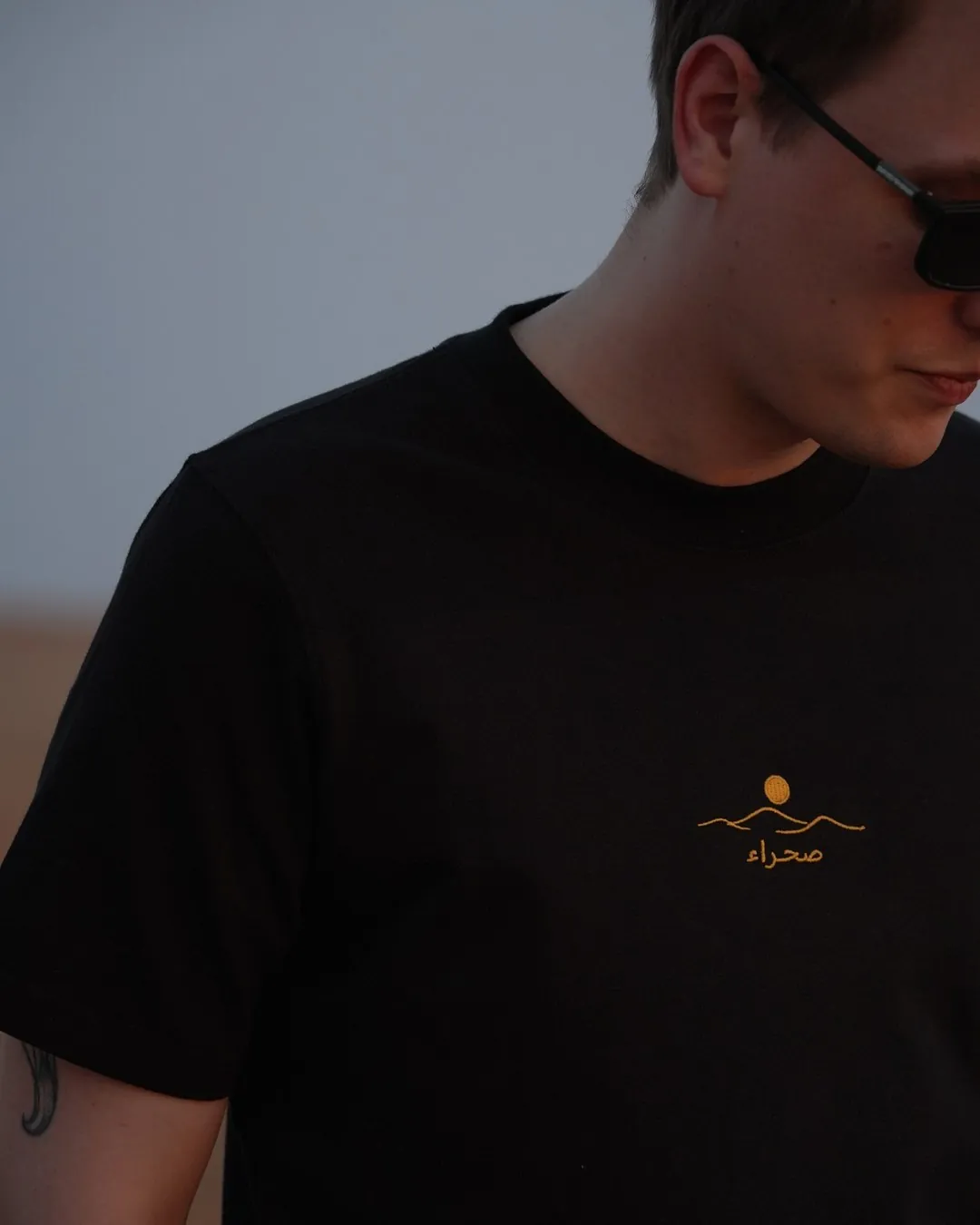
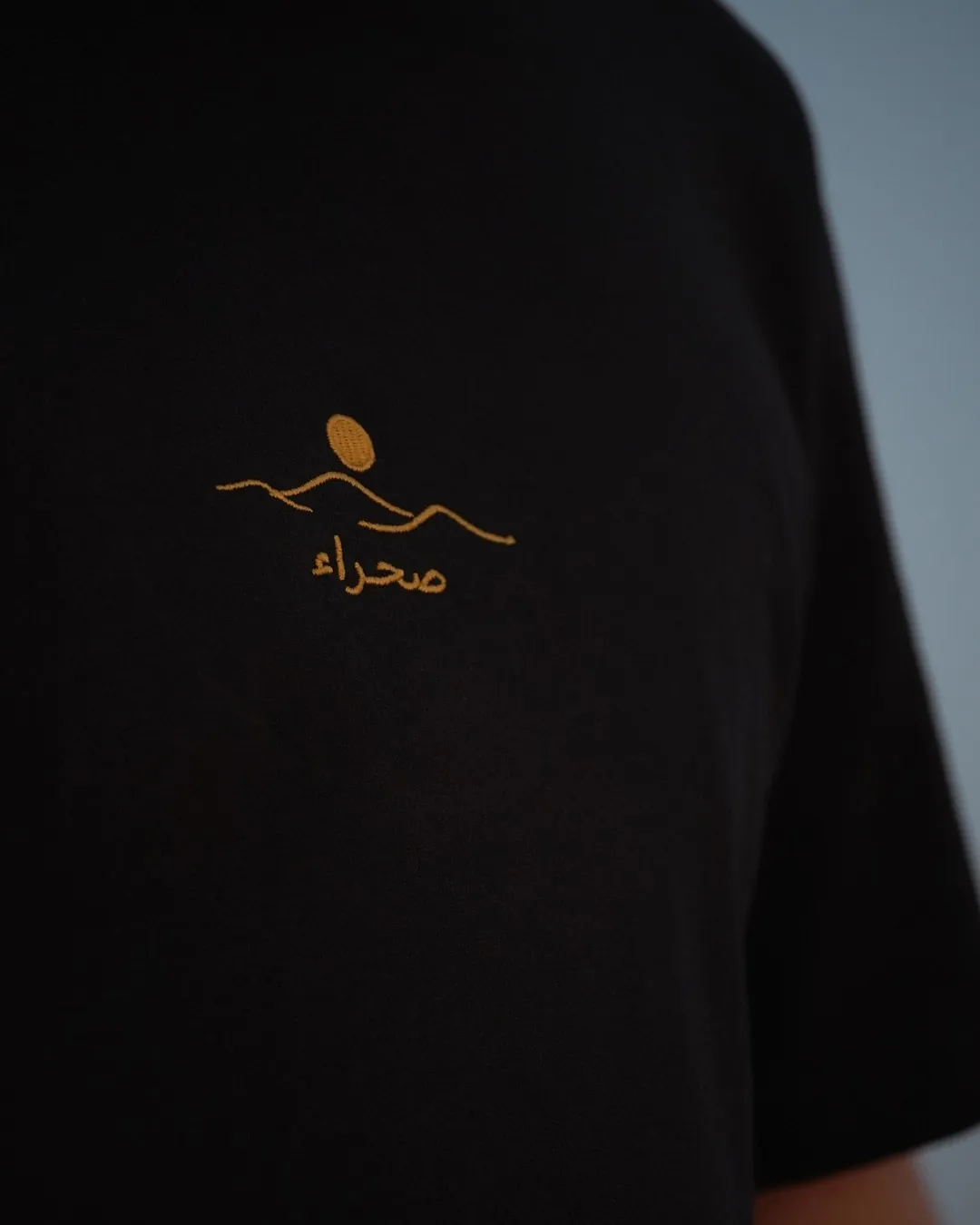
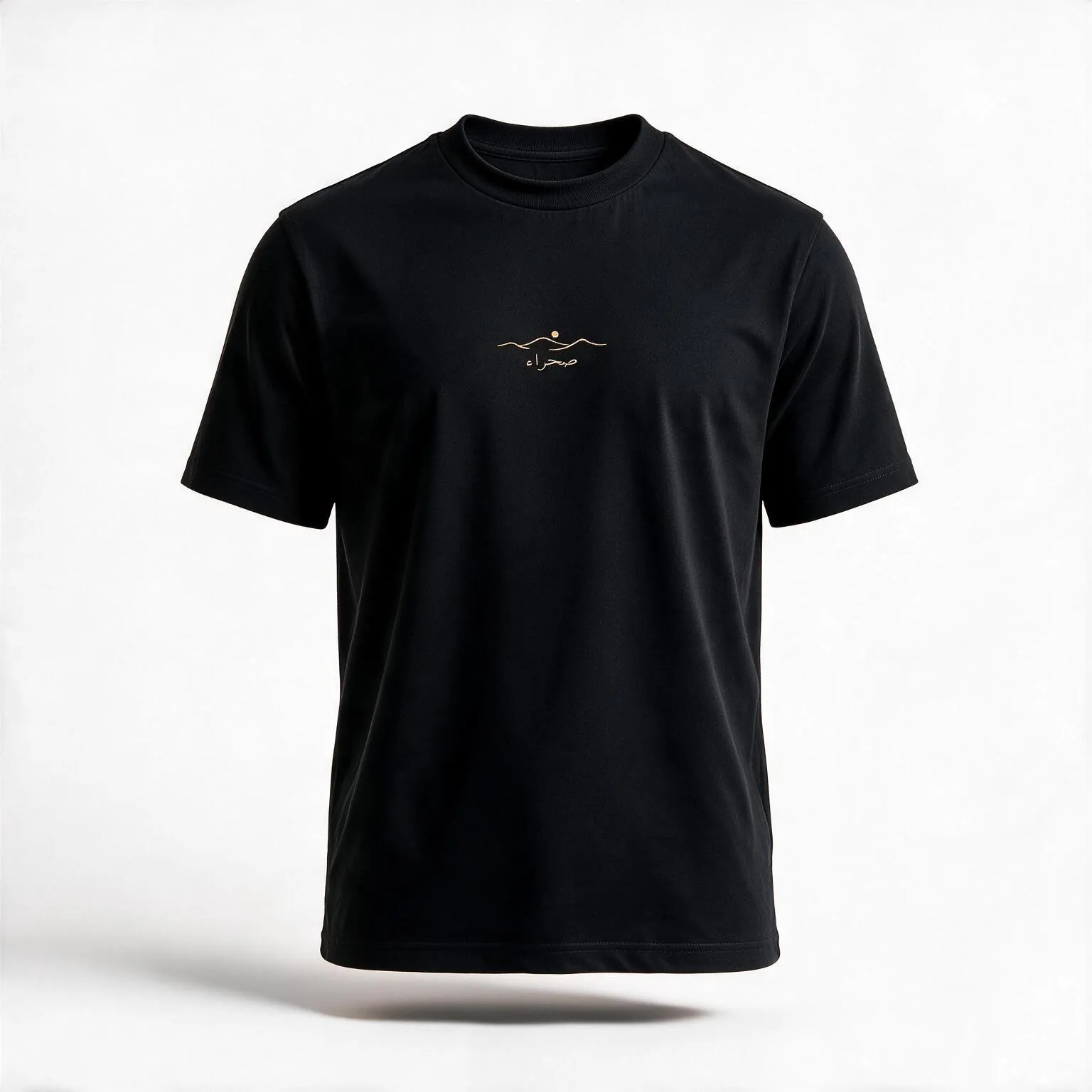
Al Quaa Galaxy t-shirt, a Milky Way desert tee in the regular fit — the galaxy printed across the backAl Quaa Galaxy — Regular, regular fit, front view showing the set-in shoulder and classic cutThe Al Quaa Galaxy tee worn in the dunes — the printed Milky Way running across the backThe Al Quaa Galaxy tee, back print close — the gold stipple of the Milky Way over the dune lineThe Al Quaa Galaxy tee, the printed band at an angle — the grain of the stars across the shoulderThe Al Quaa Galaxy tee, front, worn in the dunes — the embroidered sun-and-dune mark on the chestThe Al Quaa Galaxy tee, chest close — the embroidered mark on black cottonThe Al Quaa Galaxy tee, the embroidered صحراء mark in gold, close
The tee drawn from this place

Al Quaa Galaxy — Regular

Regular fit. The Milky Way over Al Quaa — one of the darkest accessible skies in the Emirates. 230gsm combed cotton. Limited first run.

AED 199DTG print · embroidered logo✦ Limited first run
See the tee →

Also in Oversized

More desert t-shirts

Sahra & Beyond · Drop 01 out now

Be first to see the next drop

Original tees drawn from real places across the Emirates — the first drop is live now. Join the list and you will hear about the next one first.

Shop the collection →

Back to Sahra & Beyond →