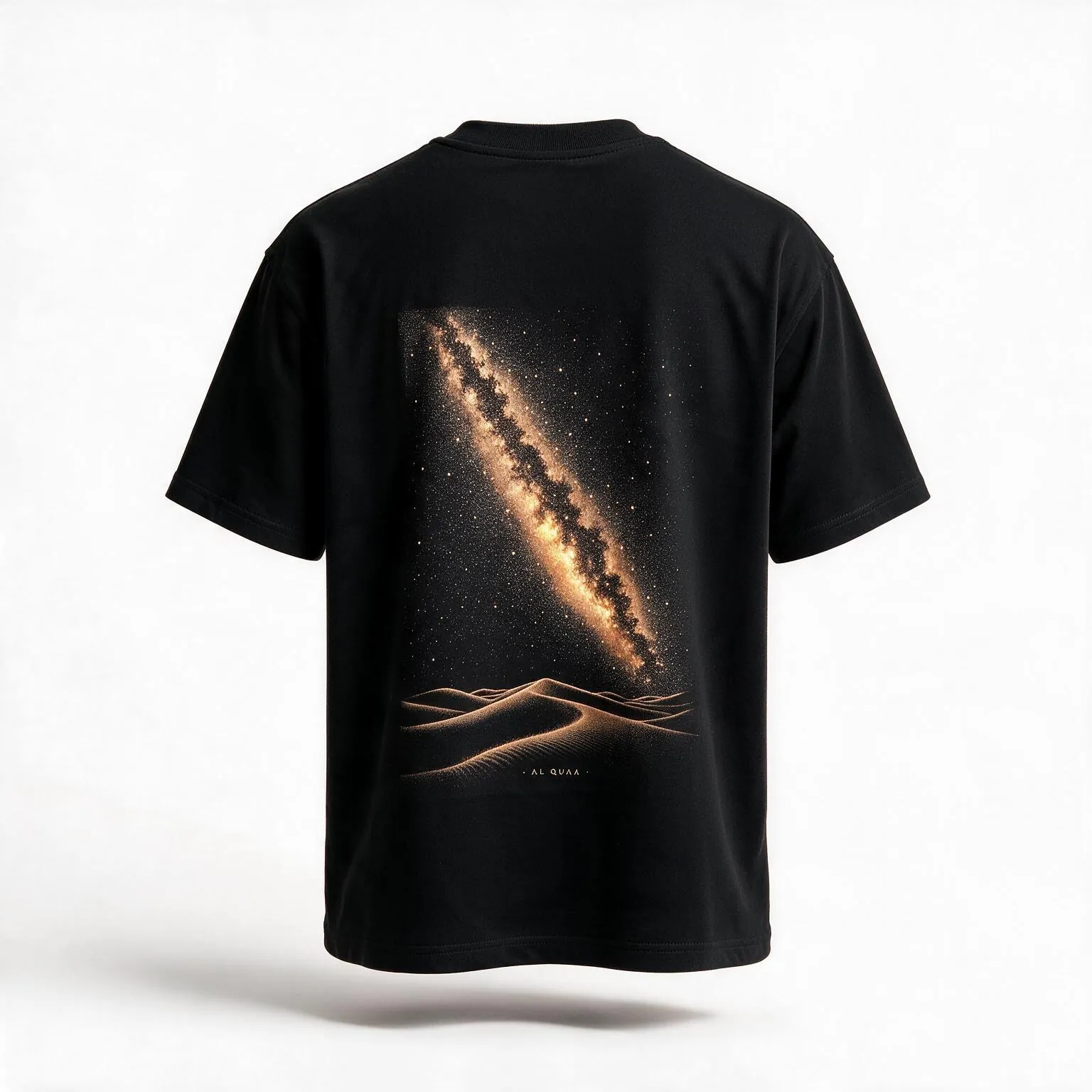
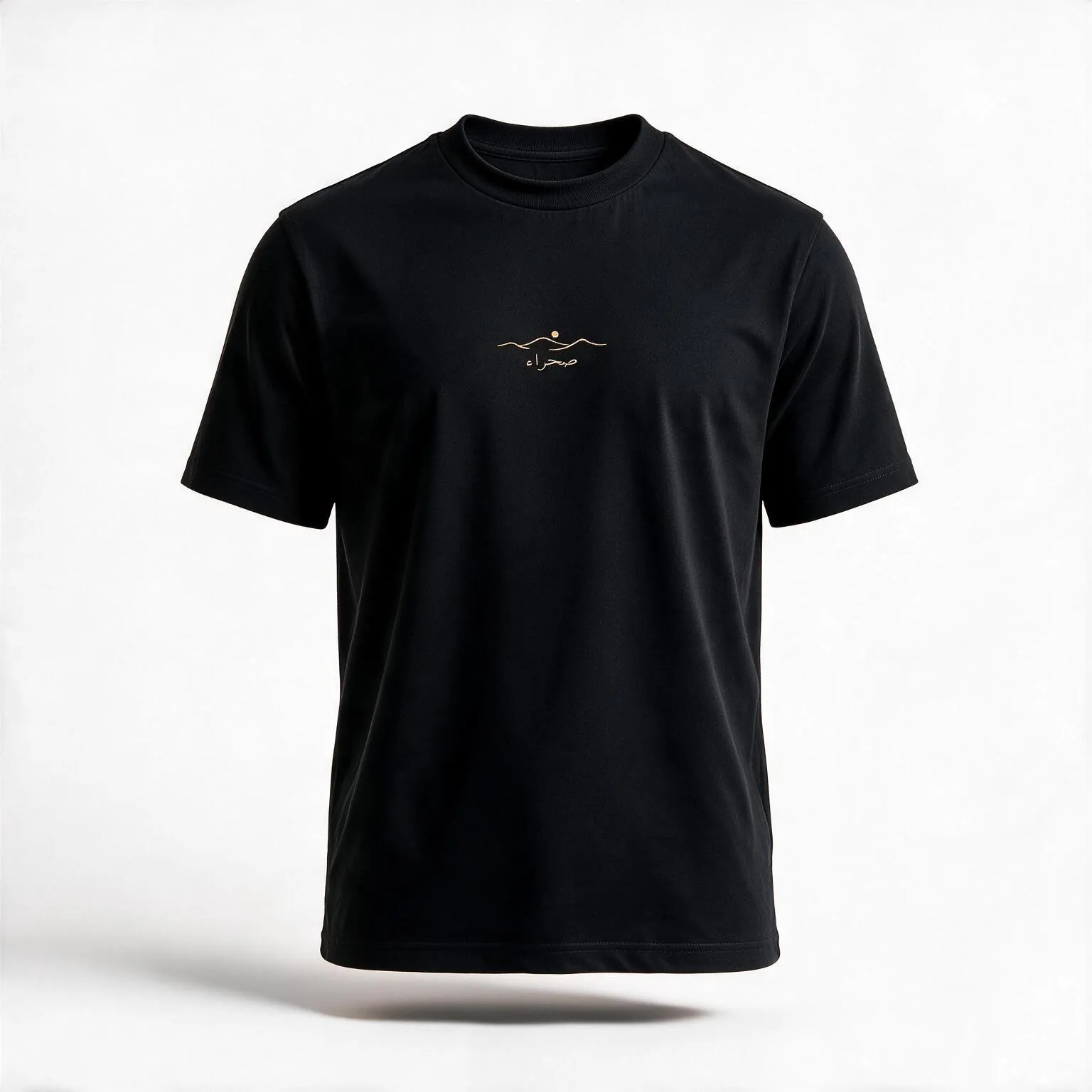
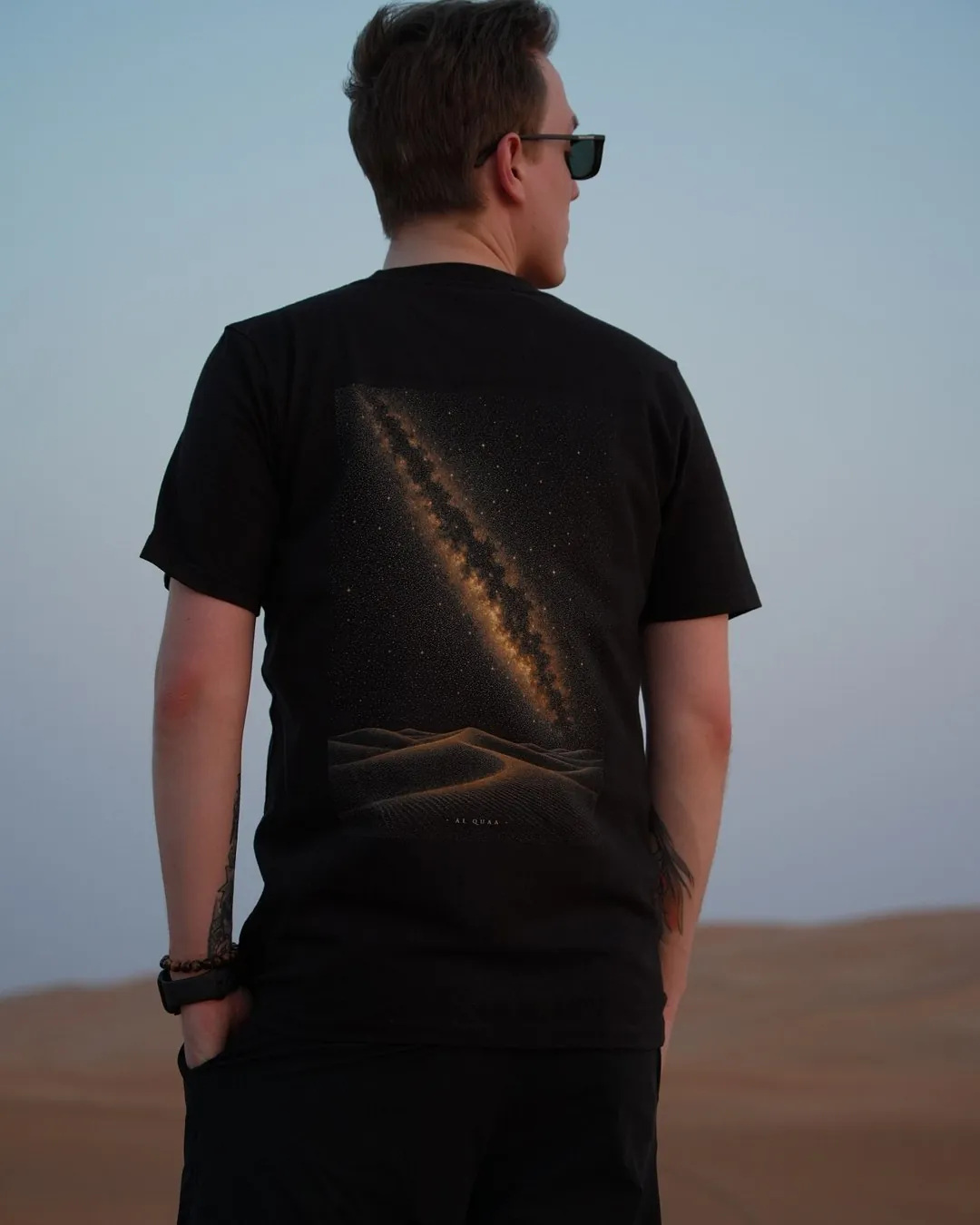
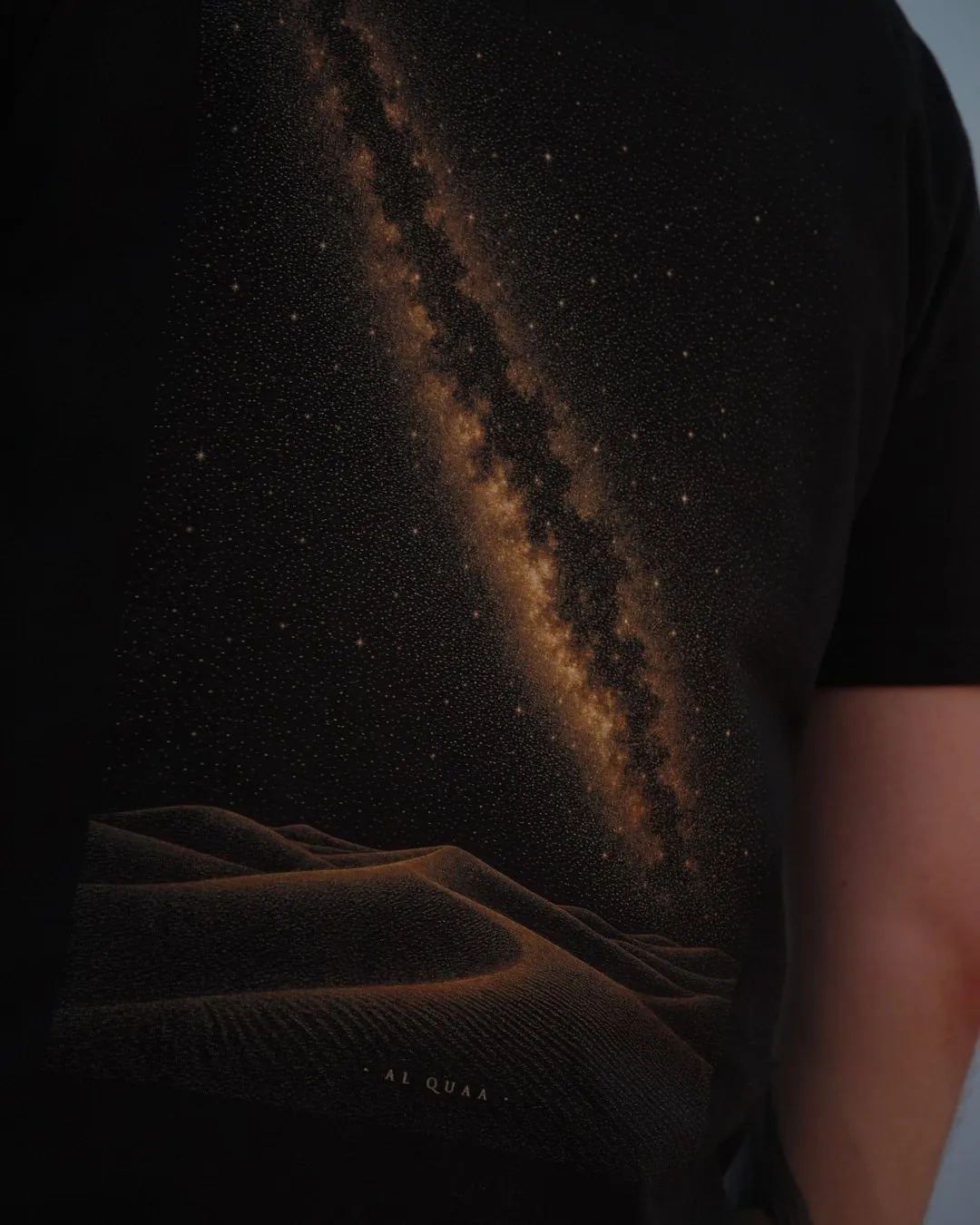
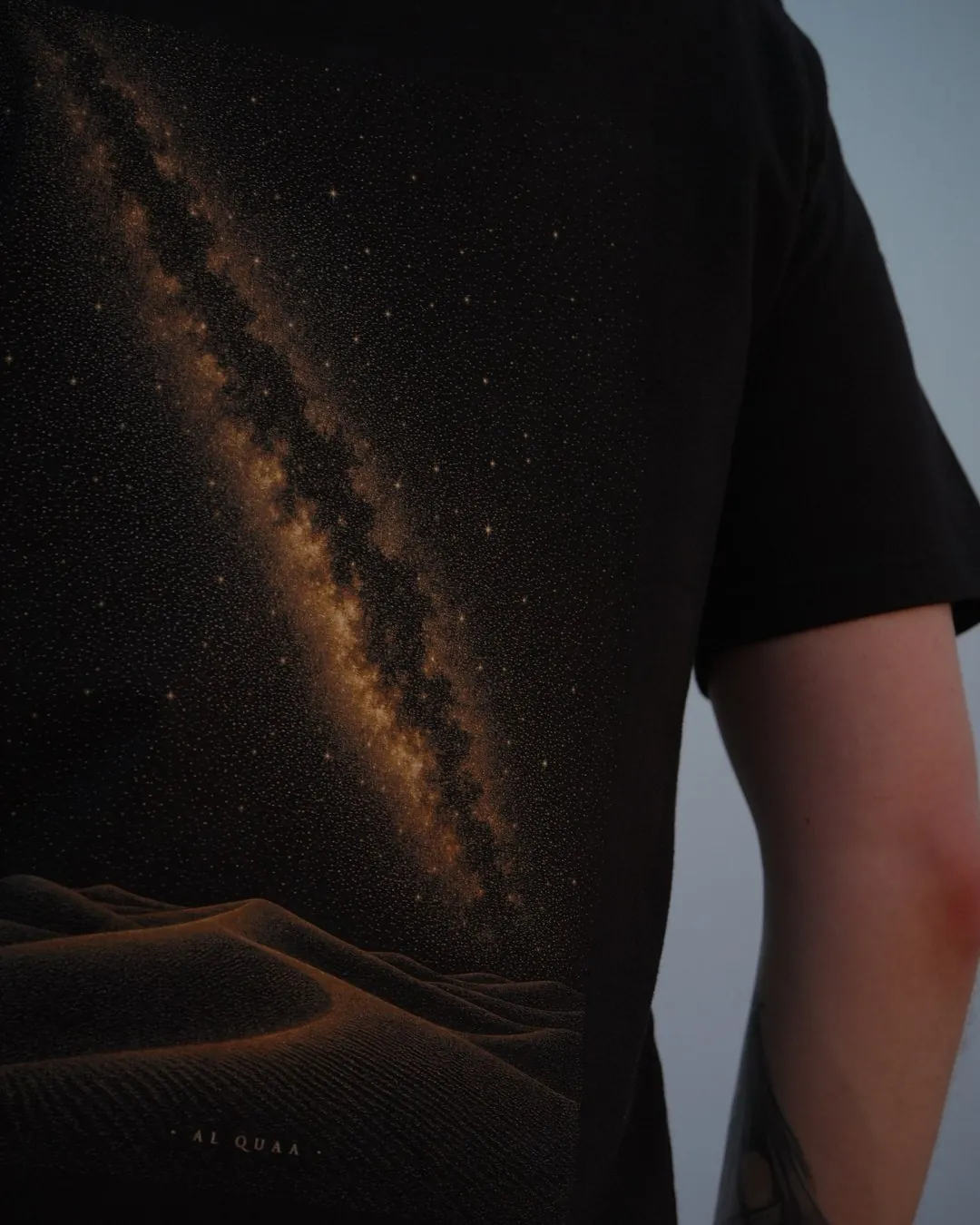
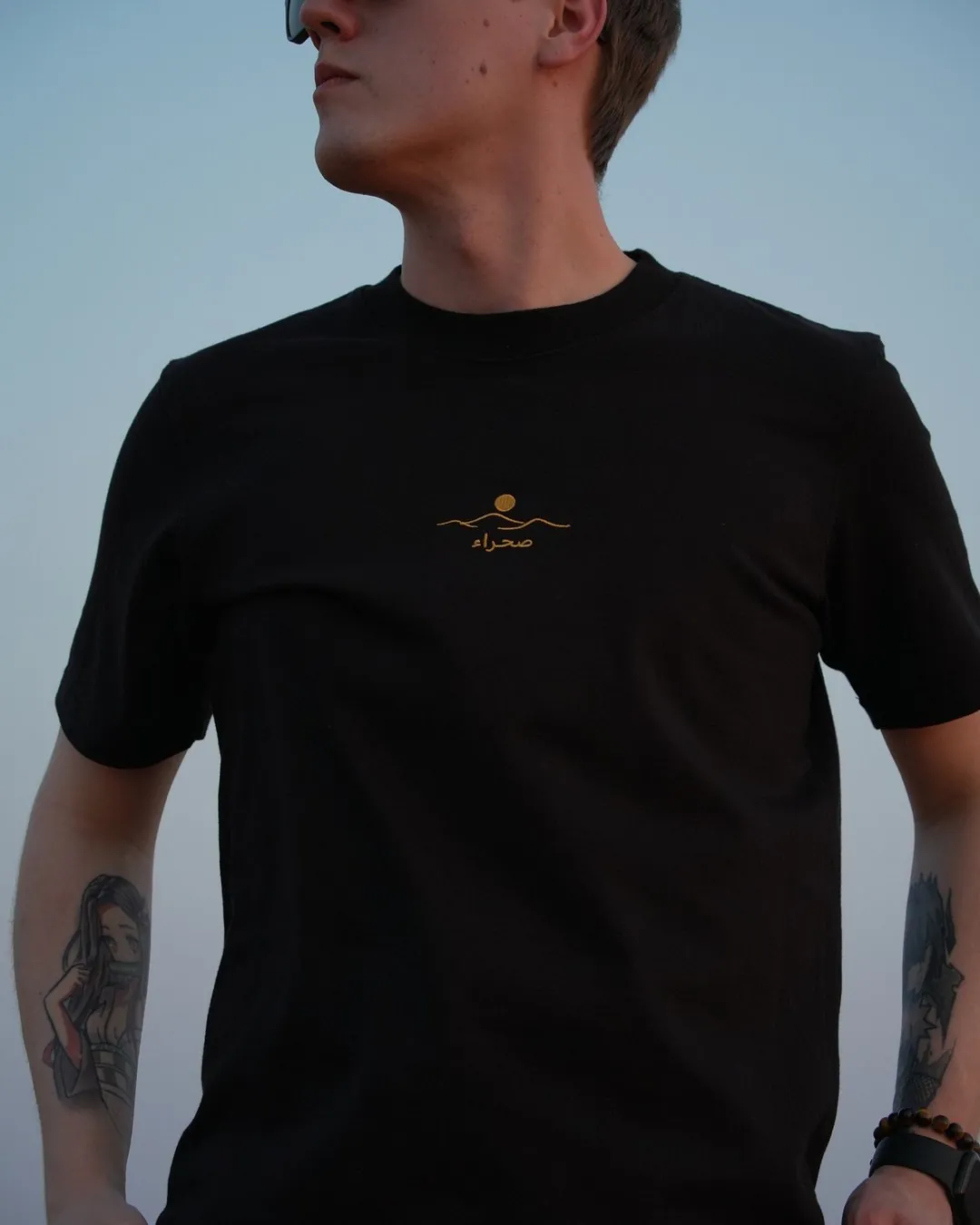
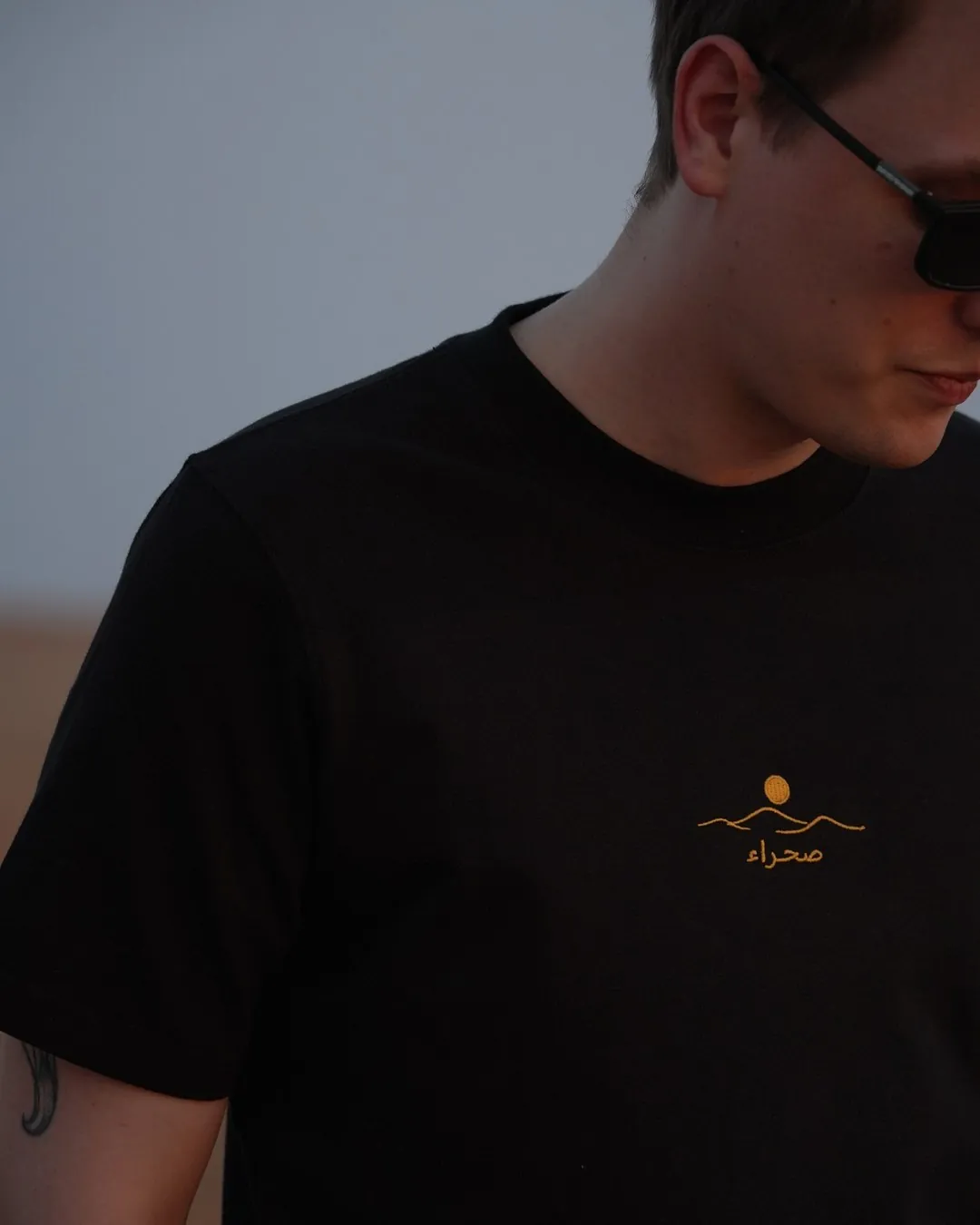
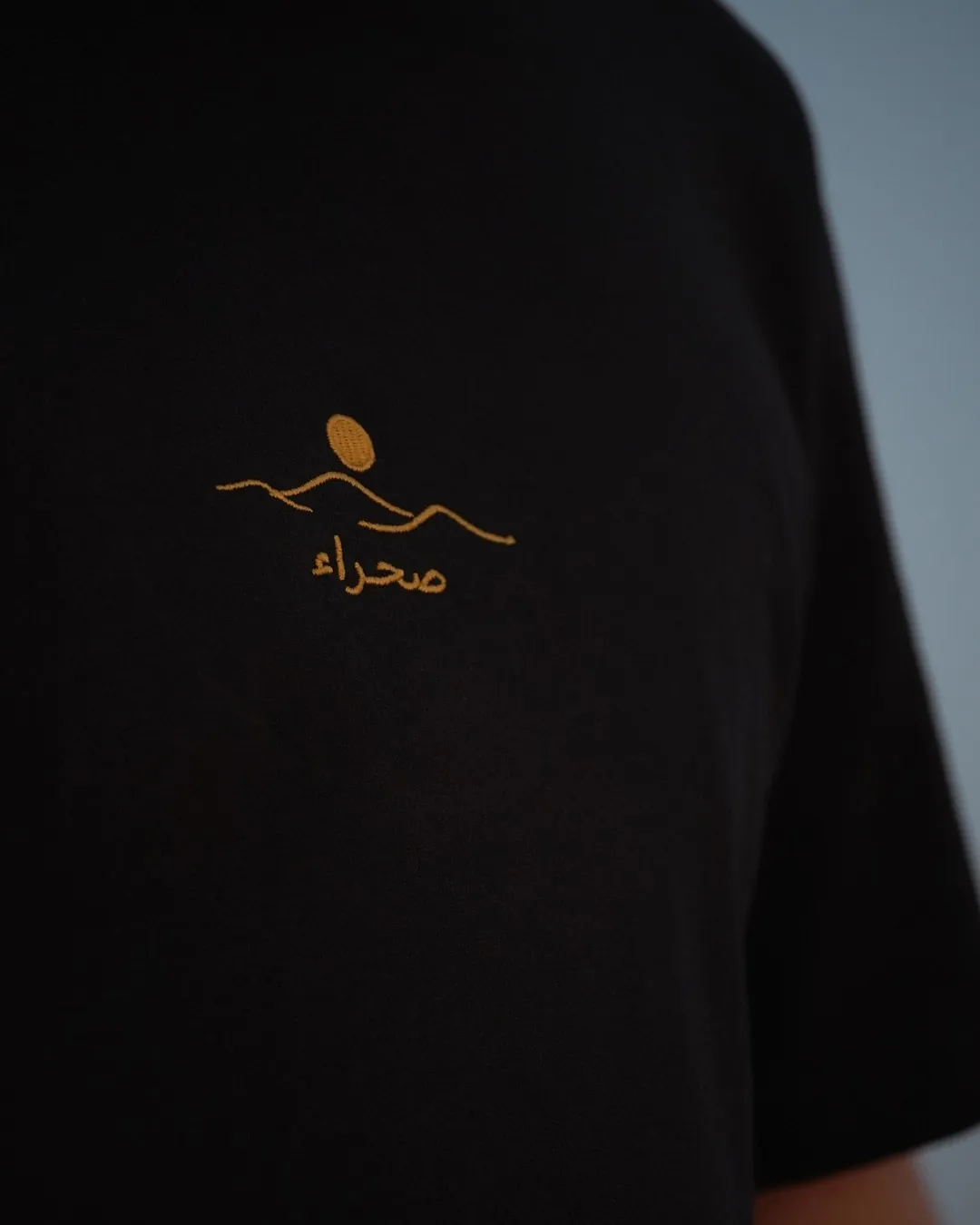
 Al Quaa Galaxy — Regular
5.0 · 2 reviews
Inspired by Al Quaa
230gsm cottonRegular fitDTG + embroideryUnisex S–XL
Salute
Any 2 tees · AED 359
AED 199Full details →
Al Quaa Galaxy — Regular
5.0 · 2 reviews
Inspired by Al Quaa
230gsm cottonRegular fitDTG + embroideryUnisex S–XL
Salute
Any 2 tees · AED 359
AED 199Full details →
 Sahra& Beyond
Inspired by the landscapes of the UAE — wear the wild side of it
Most t-shirt brands describe fabric in adjectives. Premium. Buttery. Luxe. None of those words mean anything you can check.
There is one number that does, and it is usually buried in a bullet list with no explanation: GSM. This page explains what it measures, what each point on the scale actually feels like to wear, which weight makes sense in this climate, and the specifications of what we make. If you only read one section, read the one on UAE summers.
Every t-shirt we make is drawn from a real place in the Emirates — heavyweight combed cotton, limited runs.
Al Quaa Galaxy — Regular
5.0 · 2 reviews
Inspired by Al Quaa
230gsm cottonRegular fitDTG + embroideryUnisex S–XL
Salute
Any 2 tees · AED 359
AED 199Full details →
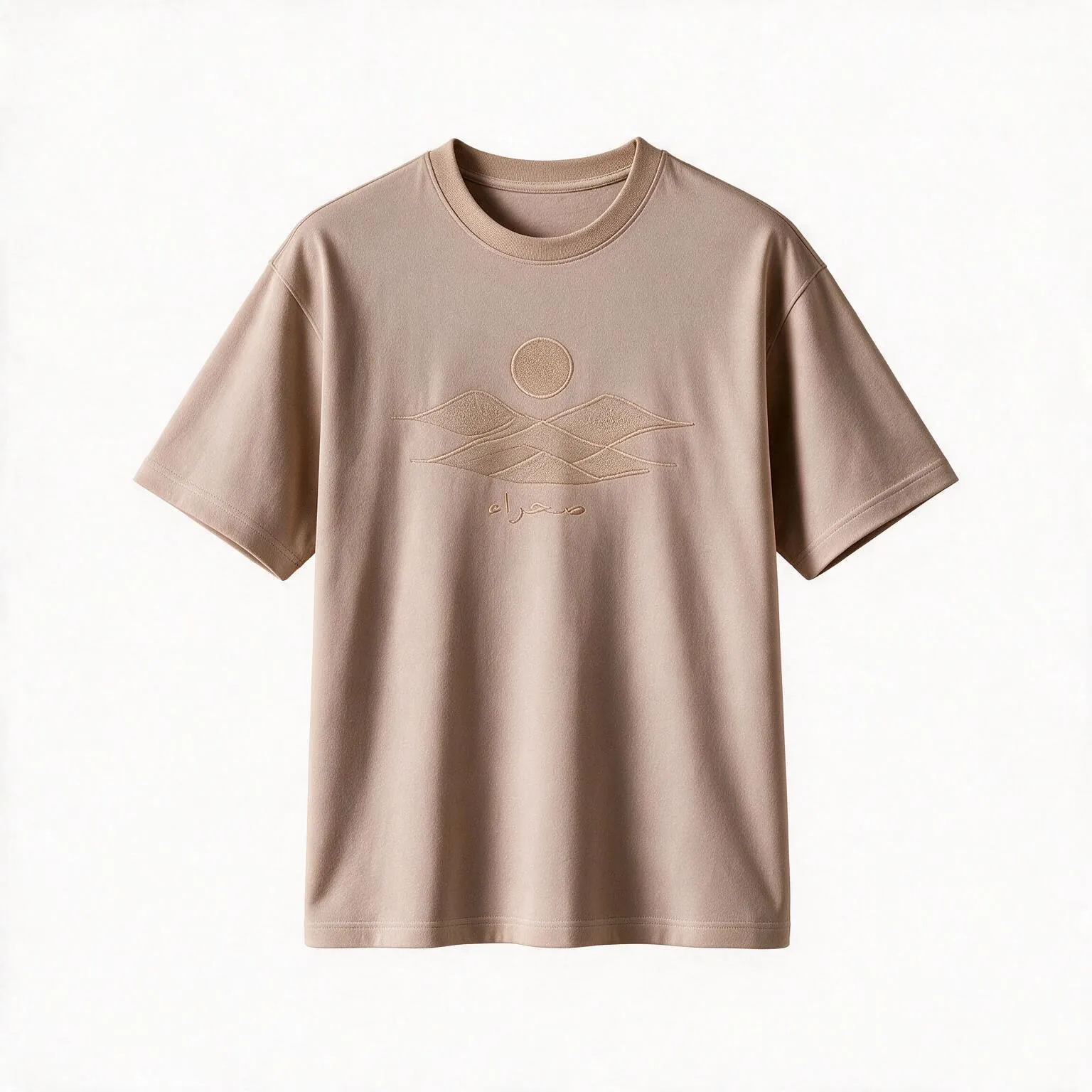
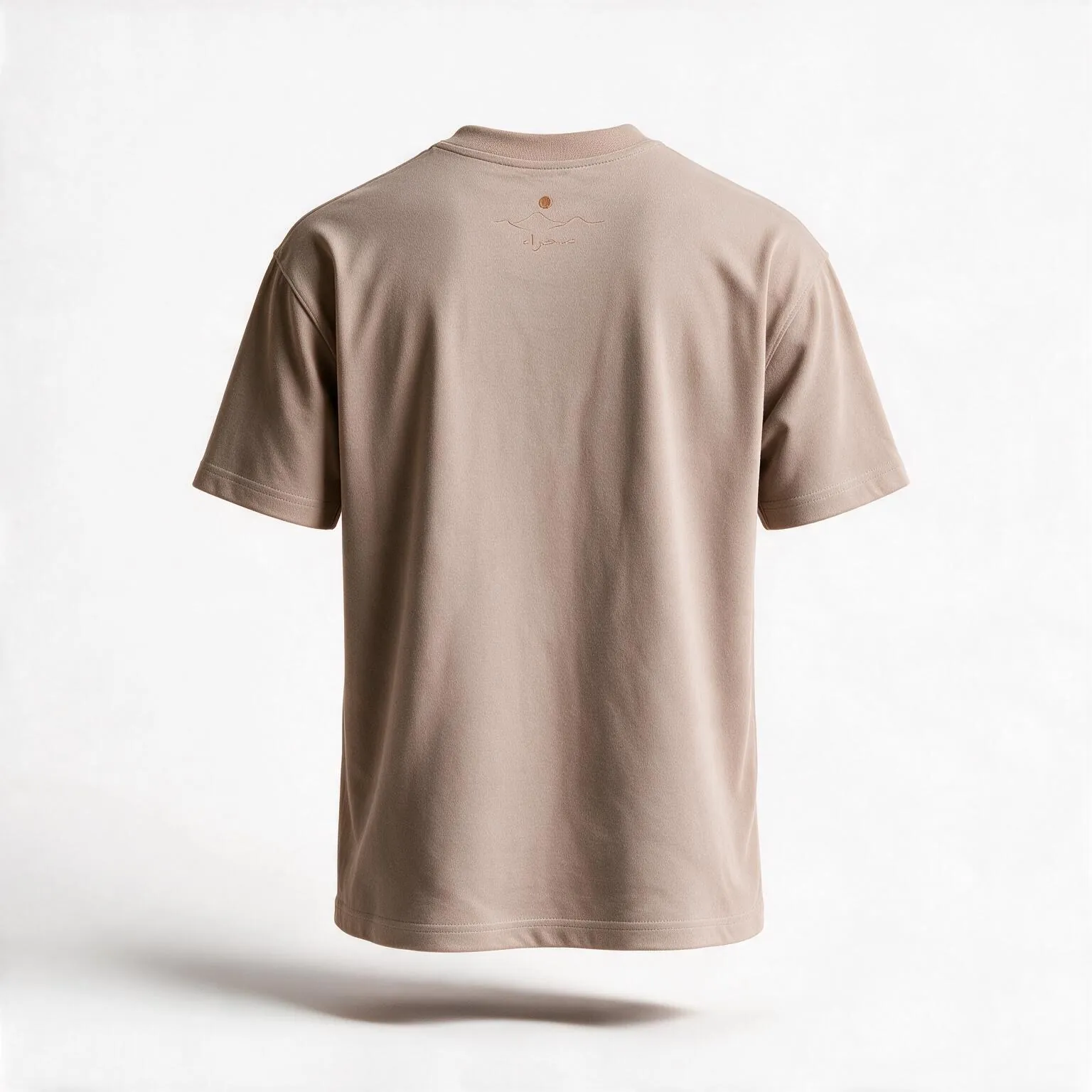
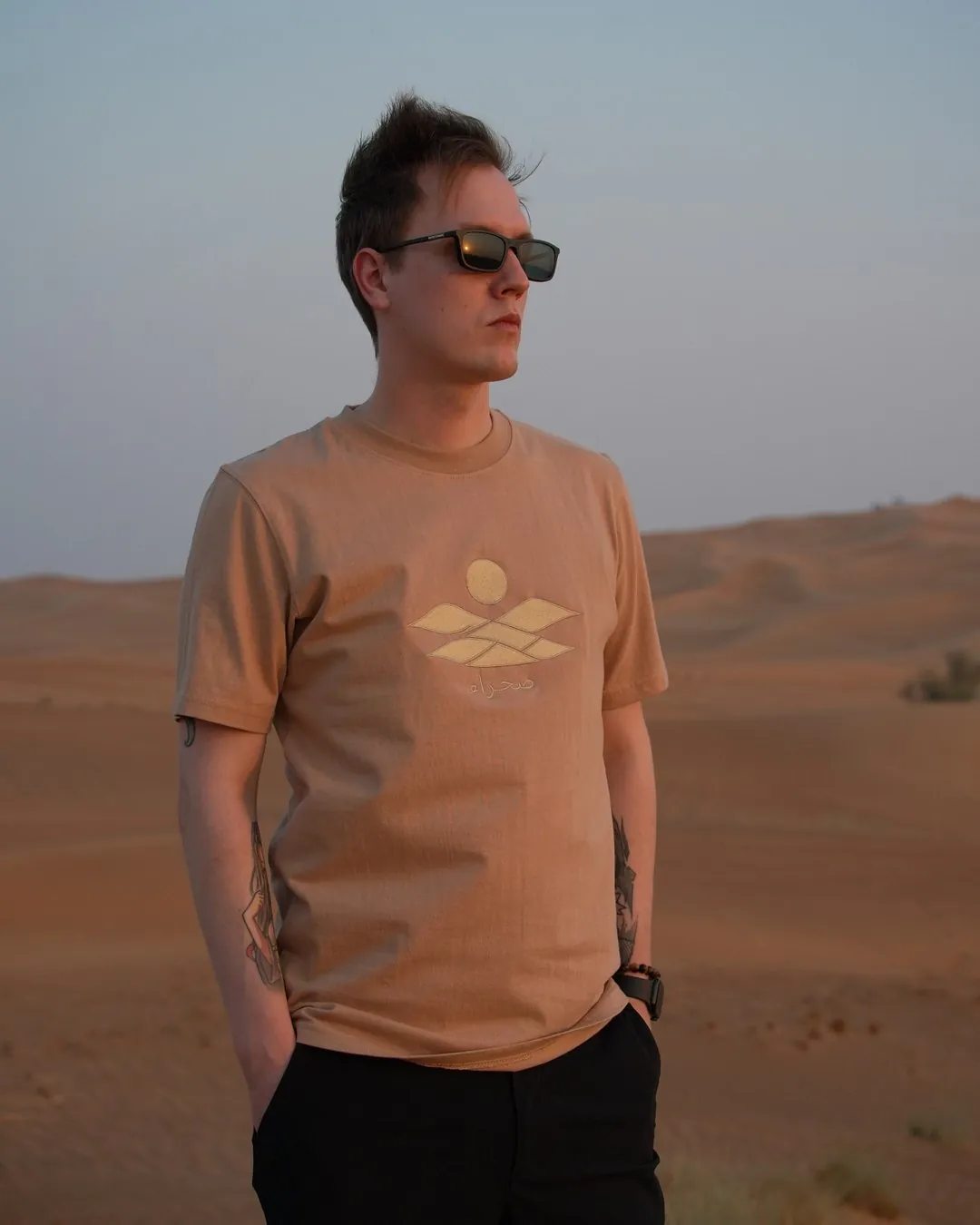
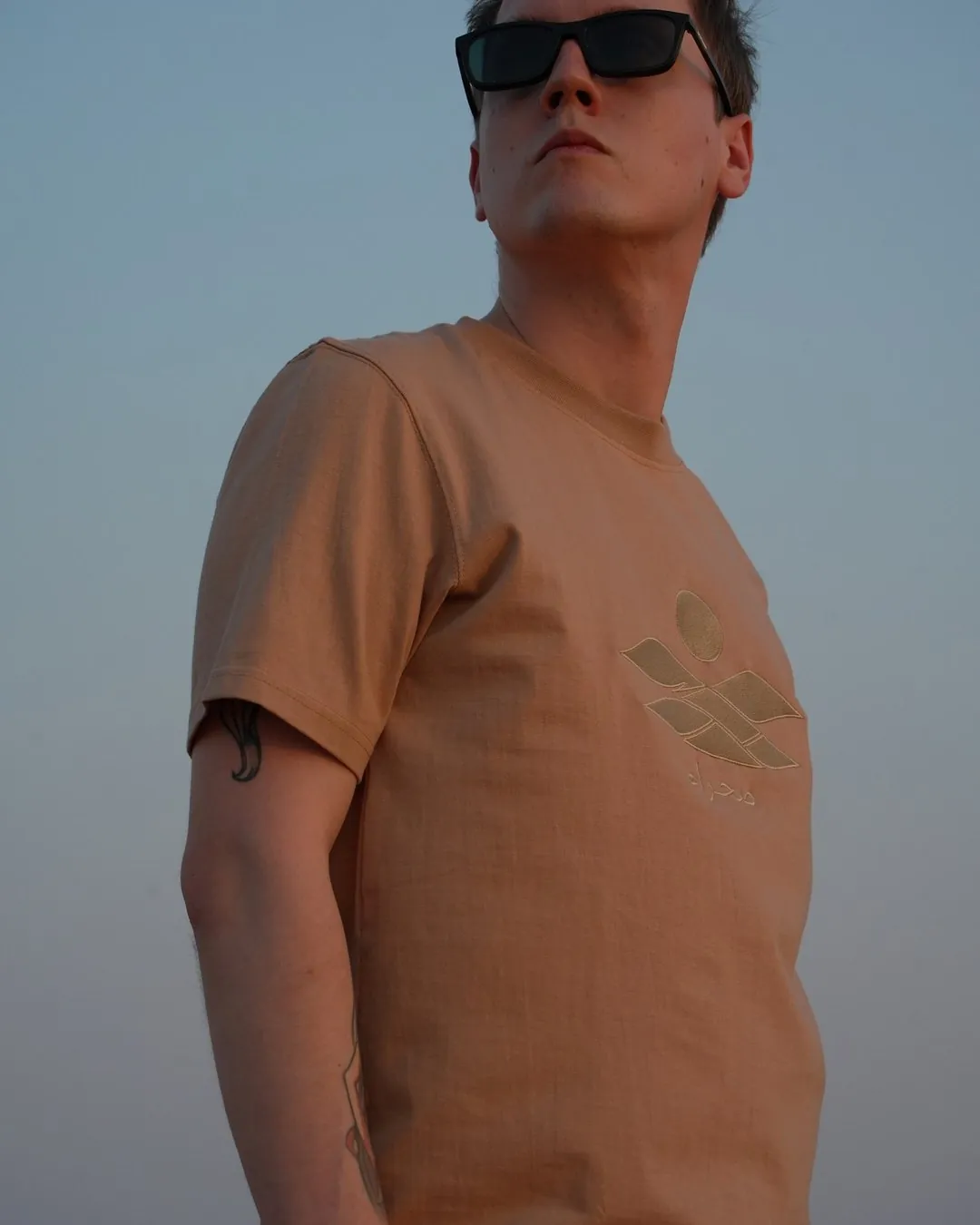
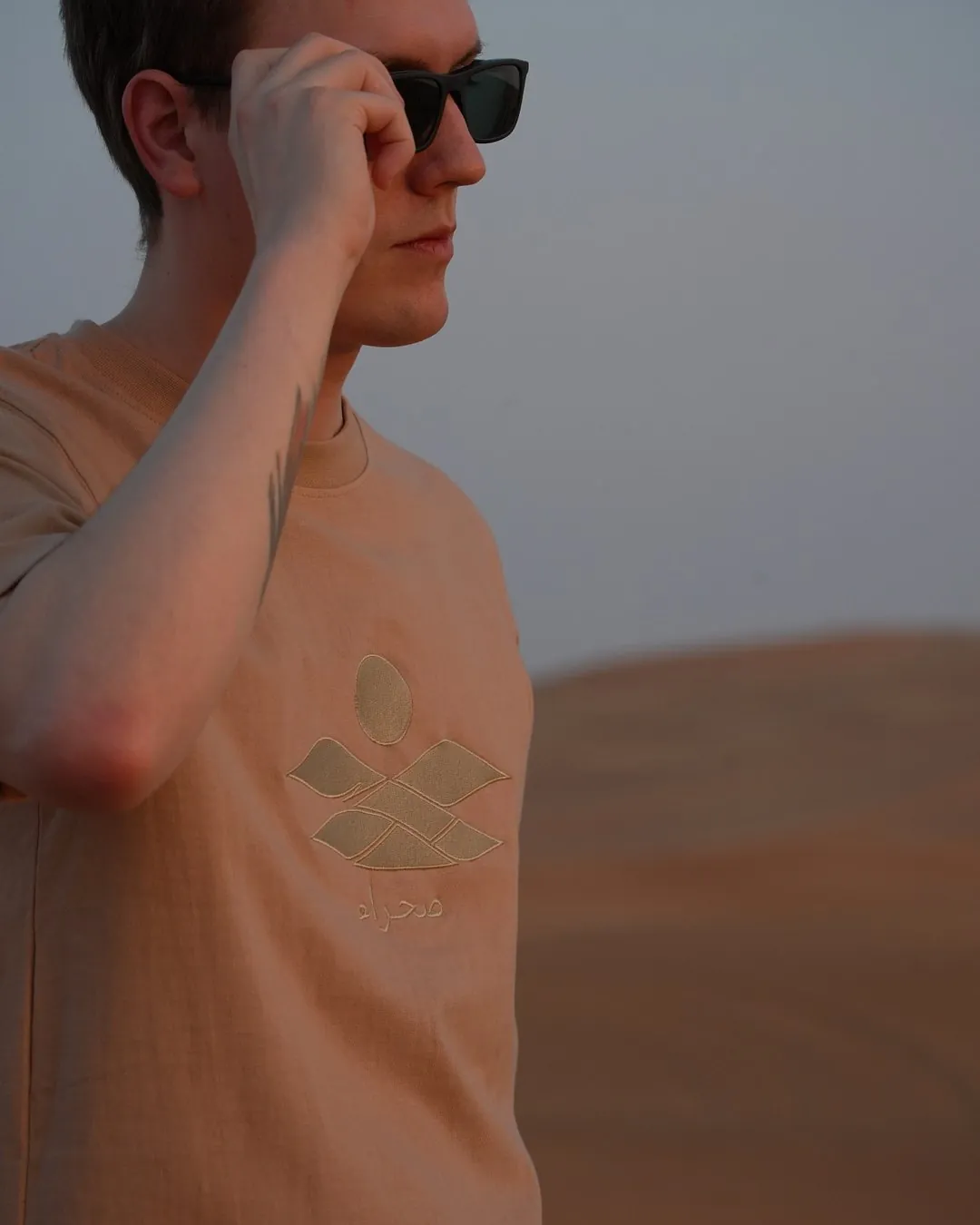
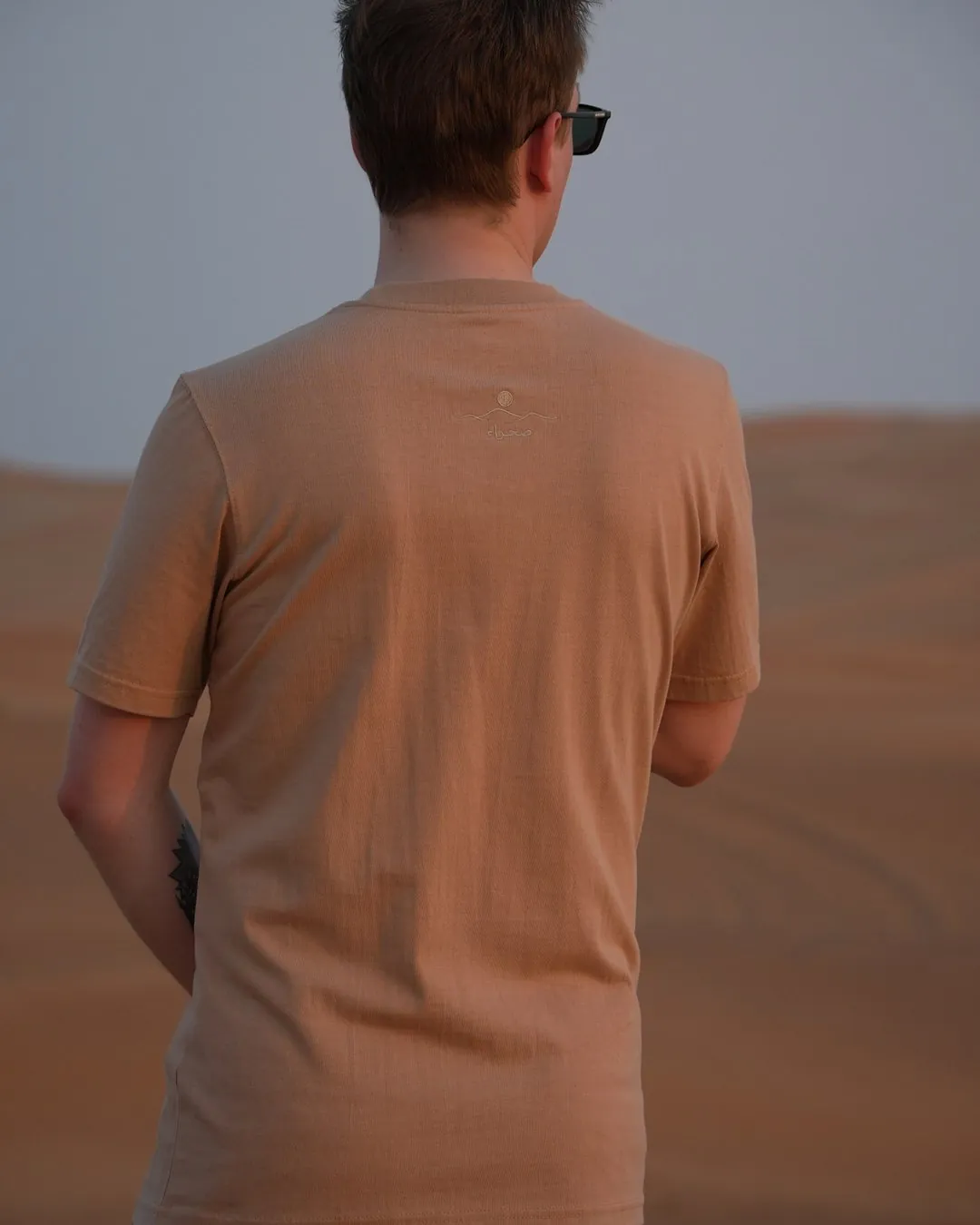
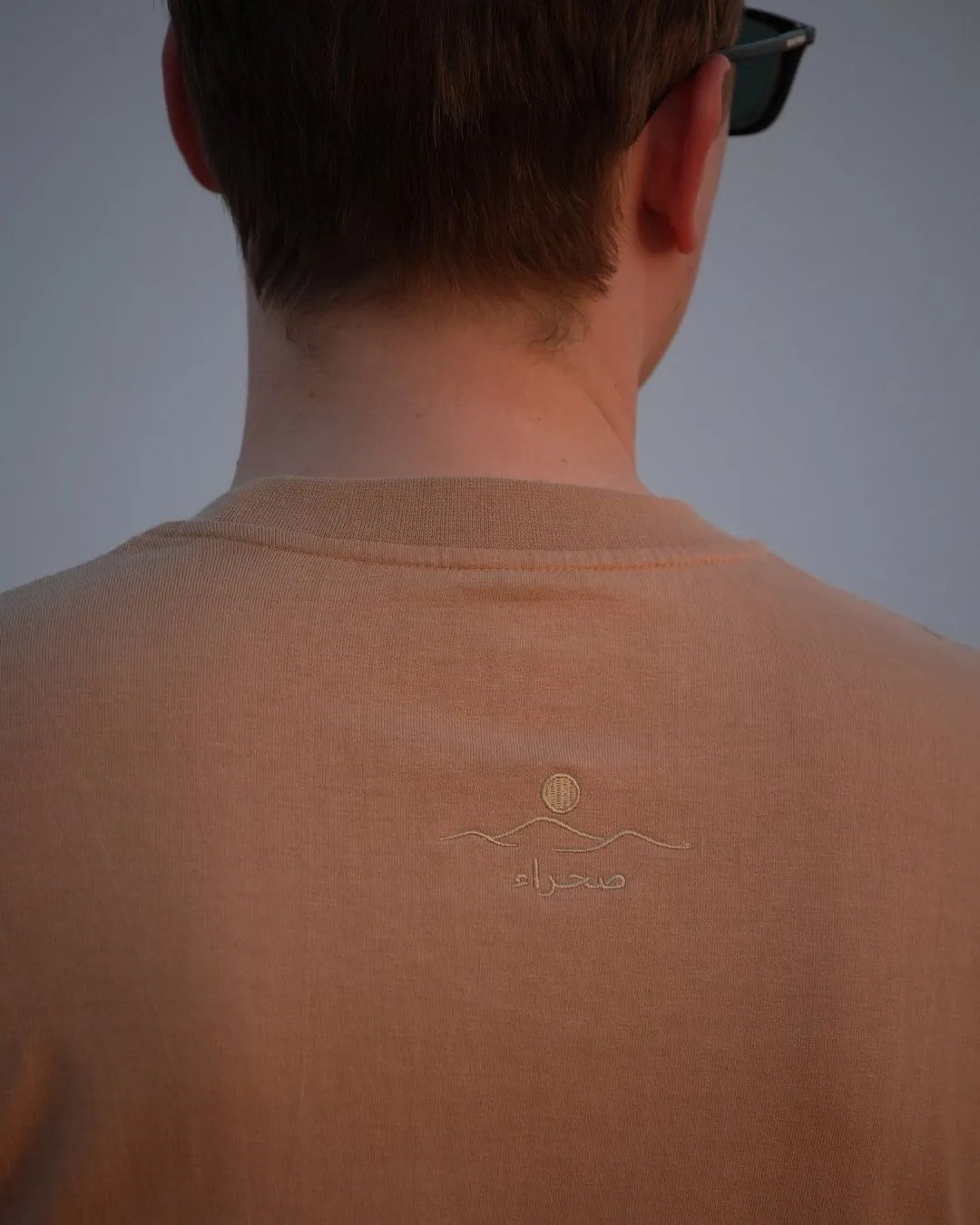 Empty Quarter — Regular
5.0 · 2 reviews
Inspired by Liwa
230gsm cottonRegular fitEmbroideredUnisex S–XL
Beige
Any 2 tees · AED 359
AED 199Full details →
Empty Quarter — Regular
5.0 · 2 reviews
Inspired by Liwa
230gsm cottonRegular fitEmbroideredUnisex S–XL
Beige
Any 2 tees · AED 359
AED 199Full details →
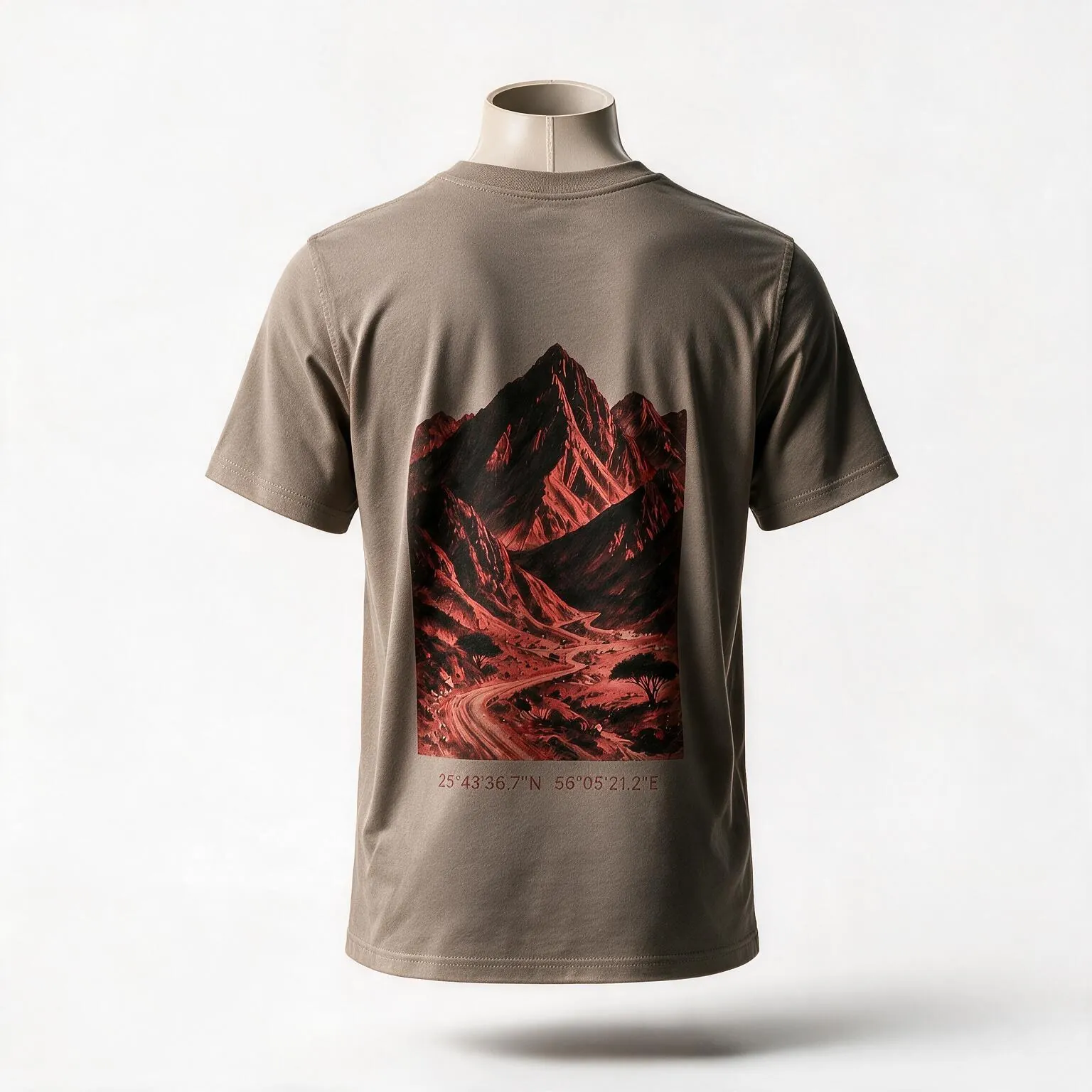
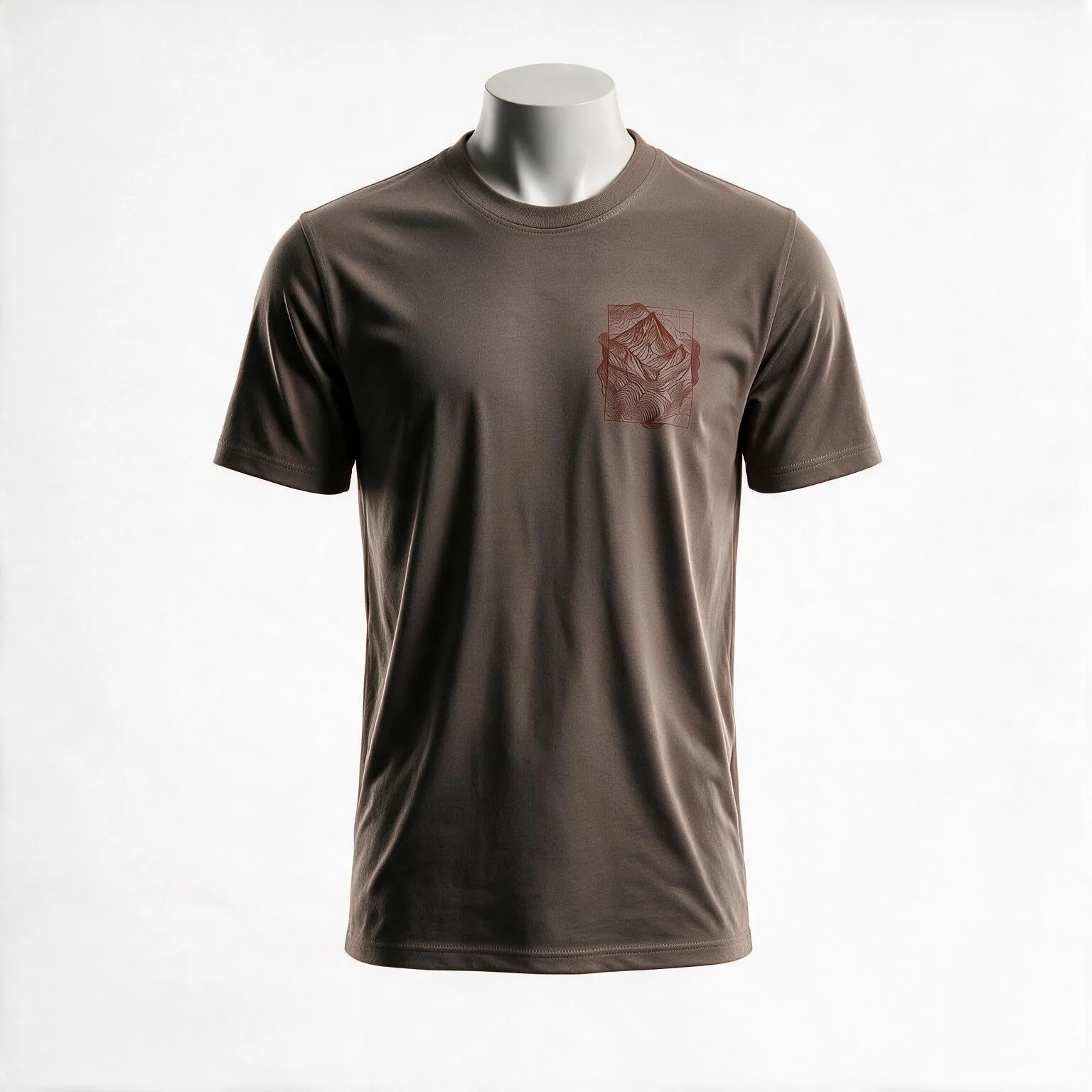
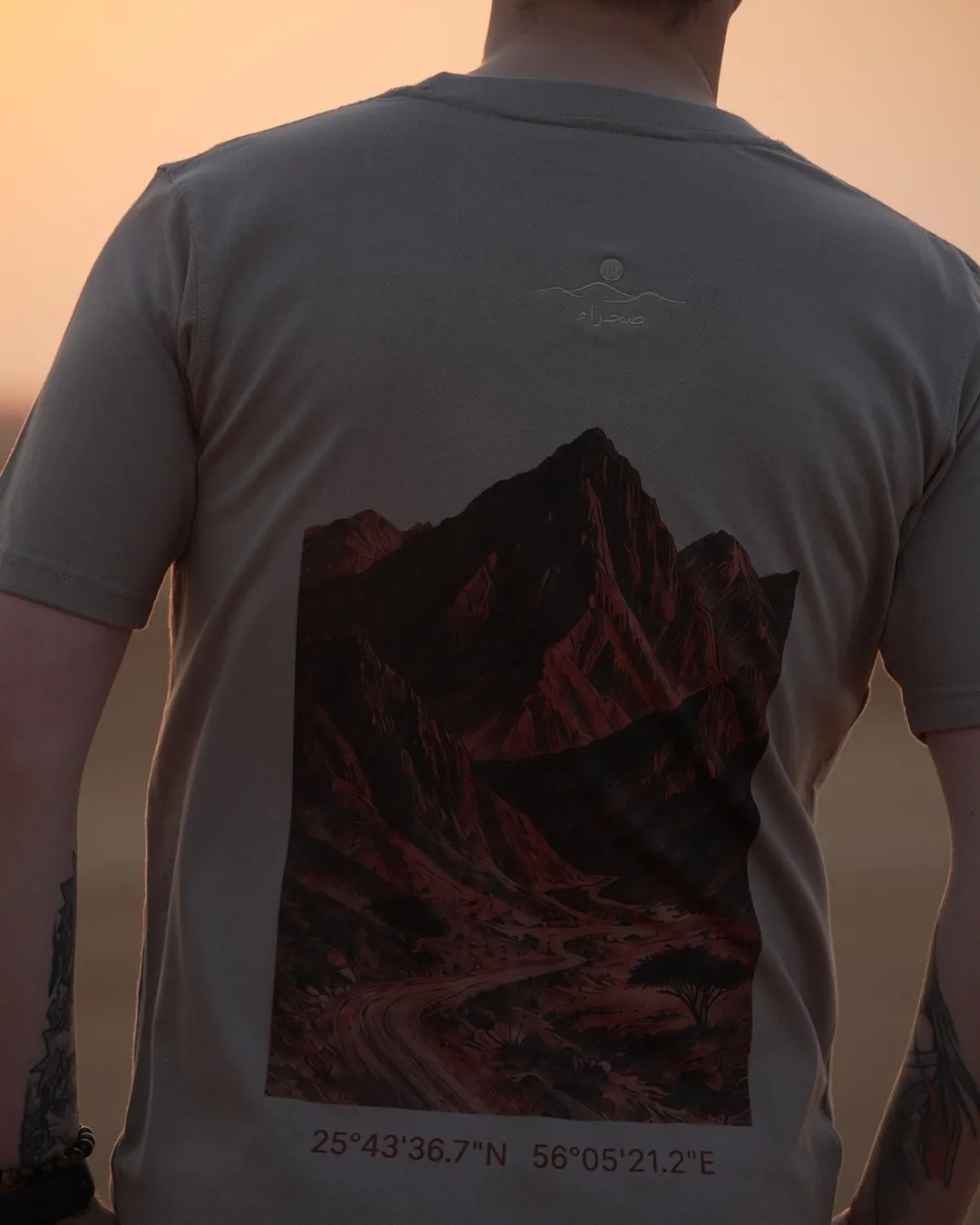
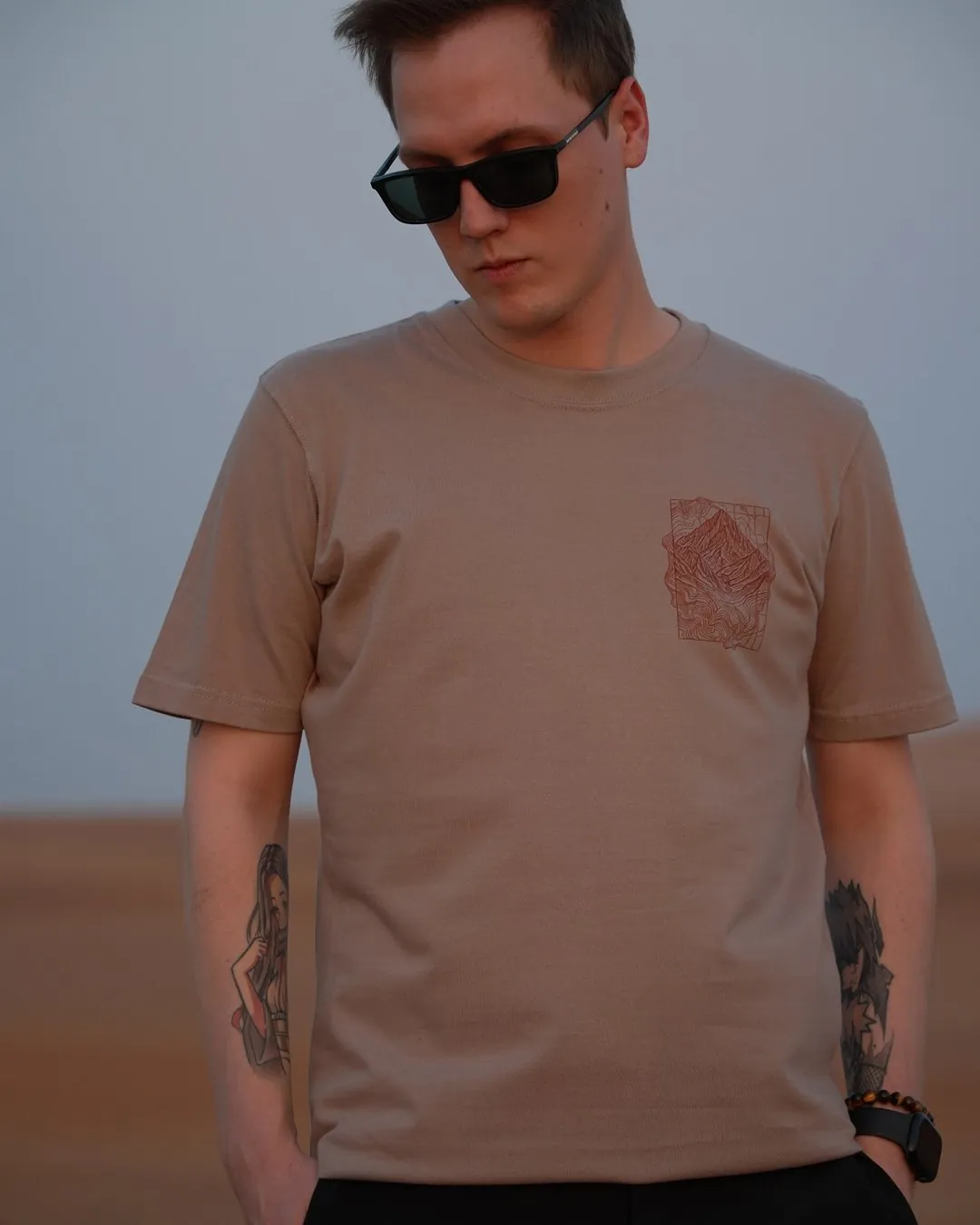 Hajar Mountains — Regular
Inspired by Wadi Naqab
230gsm cottonRegular fitDTG + embroideryUnisex S–XL
Flint Gray
Any 2 tees · AED 359
AED 199Full details →
Hajar Mountains — Regular
Inspired by Wadi Naqab
230gsm cottonRegular fitDTG + embroideryUnisex S–XL
Flint Gray
Any 2 tees · AED 359
AED 199Full details →
GSM is grams per square metre — how much a square metre of the cloth weighs. It is the single most useful number on a t-shirt spec, and almost nobody selling t-shirts in the UAE explains it. Here is the whole scale.
| Weight | Class | Where you find it | How it wears |
|---|---|---|---|
| 150 gsm | Lightweight | Promotional and fast-fashion tees. Thin enough that the light comes through it and the shoulder seams show under the fabric. | Cheap to produce and cheap to replace. Loses its shape within a season. |
| 180 gsm | Standard | The default for most high-street t-shirts, and what people usually picture when they think "t-shirt". | Fine on the body, but drapes onto it rather than holding its own shape. Collars go wavy first. |
| 200 gsm | Mid-heavy | The step where a shirt starts to feel considered rather than disposable. Common in mid-market basics. | Holds shape reasonably. Still thin enough to show what is underneath in strong light. |
| 230 gsm | Heavyweight | Our t-shirts, in both Regular and Oversized fits. Combed, ring-spun cotton. | Enough weight to hang away from the body instead of clinging, and enough cotton to survive repeated washing. |
| 240 gsm | Heavyweight piqué | The Sahra Polo. Not a heavier version of the tee fabric — piqué is a different knit structure. | The extra ten grams are what let a collar hold its shape rather than curling after a season. |
| 280 gsm | Ultra-heavy | Boxy streetwear and premium blanks. Approaching sweatshirt territory. | Structured to the point of stiffness, and genuinely warm. Hard to justify in a Gulf summer. |
Highlighted rows are the two weights we make.
GSM is grams per square metre — literally, what a square metre of the cloth weighs. It is not a quality score. A 280gsm shirt is not better than a 180gsm one; it is a different garment for a different purpose, and the number tells you which.
What it changes is structure. A lightweight cloth drapes onto the body, follows every line underneath it and shows what you are wearing beneath. A heavyweight one holds its own shape and hangs away from you. That is the whole difference, and it is why weight determines how a shirt looks far more than the cut does.
It also predicts lifespan. There is simply more cotton in a heavier shirt, so there is more to lose before it goes thin, and the collar has more to hold on to before it stretches out — which is how most t-shirts visibly die, long before they wear through.
Ours are 230gsm. That is heavyweight, two full steps above the high-street default.
The honest answer is that no cotton t-shirt is a hot-weather technical garment, and any brand telling you their heavyweight tee is cooling is selling you something.
What actually governs how a cotton shirt wears in 45°C is not the weight on the label but how much of it is touching you. Cotton moves heat away from skin by absorbing moisture; it does that whatever it weighs. What changes is airflow. Cloth held slightly off the skin lets air move underneath it. Cloth pulled taut against the skin does not.
So the useful guidance is the opposite of what people assume. If you are choosing for peak summer, the looser cut matters more than the lighter cloth. Our Oversized fit is the same 230gsm cotton as the Regular, cut 3.5″ wider through the chest at M with the shoulder seam dropped below the natural shoulder point — which means the fabric sits away from you rather than against you. That gap is doing more work than fifty grams either way would.
The rest is ordinary sense: light colours reflect more than dark ones, and a shirt you wear in the evening at Al Quaa is a different problem from one you wear at noon in August. We would rather say that plainly than claim a fabric property we cannot demonstrate.
This is the comparison worth understanding, because 180gsm is what you are almost certainly wearing now and 230gsm is what most people mean when they say a shirt feels expensive.
At 180gsm the cloth is thin enough to follow the body. In strong light you can often see the outline of what is underneath, and the shoulder seams show through. It is comfortable immediately and it stays that way, but it has little structure — the shape you get is your shape, not the garment's.
At 230gsm the cloth has enough body to stand slightly away from you. The hem hangs straight instead of clinging, the sleeve holds a line rather than collapsing, and nothing reads through it. It is a more substantial thing to put on, which some people love and some people do not, and that is a preference rather than a fact.
The durability difference is not a preference. Fifty grams per square metre is roughly a third more cotton, and it shows up in how long the shirt keeps its shape rather than in how it feels on day one. That is the trade you are making, and it is the reason we made it.
Two shirts at the same GSM can feel completely different, which is why weight alone is not enough to judge a garment by.
How the yarn is made matters. Ours is combed, ring-spun cotton. Combing strips the shorter fibres out before spinning and ring-spinning twists what remains into a finer, smoother yarn — so the same weight of cloth comes out denser and smoother rather than fuzzy. It is the difference between a heavyweight shirt that feels considered and one that just feels thick.
How it is knitted matters too. The tees are a jersey knit. The Sahra Polo is 240gsm piqué, and those ten grams are not the real difference between them — piqué is a different structure entirely, a fine waffle formed by how the yarn interlocks, which is what gives a polo its particular hand and lets a collar hold its shape instead of curling.
And whether the cotton was pre-shrunk before cutting matters, because otherwise the number on the label describes a shirt you will not own after the first wash. Ours is.
We use 100% cotton with no polyester in the blend. A poly-cotton shirt is cheaper to make and holds a print slightly longer, but it traps heat — which is the wrong trade in the Gulf. Cotton is fully breathable, which is not optional in this climate, and it takes direct-to-garment ink better than a blend, giving a sharper print.
The cotton is combed and ring-spun, and we describe it as exactly that. Combing removes the short fibres before spinning; ring-spinning twists the long ones that remain into a finer, smoother, stronger yarn. That is what makes a 230gsm cloth feel dense and considered rather than merely thick — and it is a description of the yarn we actually buy, not a label we cannot substantiate.
The collar is a ribbed crew neck. Ribbing is knitted with more elasticity than the body fabric, so the neckline returns to shape instead of stretching out and going wavy — which is how most t-shirts visibly die.
The collar and shoulder seams are taped: a strip of fabric bound over the seam on the inside. It stops the shoulders from twisting over time and takes the strain off the stitching. It is a small manufacturing cost that shows up years later.
Two of our designs carry a printed graphic. DTG sprays ink into the fibres rather than laying a film on top, so the graphic stays soft, the fabric keeps breathing, and there is no plastic panel across your back. It flexes with the cotton and is far less prone to cracking than a thick plastisol print. On both of those designs the logo itself is embroidered — so a single shirt carries two techniques, ink and thread.
The Empty Quarter design goes further and is embroidered throughout, with no print at all — thread stitched into the cloth, tonal against the fabric. Embroidery has a raised texture you can feel, catches light differently through the day, and tends to hold its colour better than a print over time. The polo is embroidered too.
Wash cold and inside out. Heat is what fades a print fastest, and washing inside out protects both print and embroidery from abrasion.
Hang to dry rather than tumble drying — tumble drying is the main cause of both shrinkage and cracking. Skip fabric softener; it coats the fibres and dulls the finish. Do not iron directly onto a print.
Our fabric is sourced from Pakistan, one of the world's major cotton-producing countries. The designs are created here in the UAE. We say designed in the UAE rather than made in the UAE, because that is the accurate description.
GSM is grams per square metre — what a square metre of the fabric weighs. It is a measure of weight, not of quality. Roughly: 150gsm is promotional and fast-fashion weight, 180gsm is the high-street standard, 230gsm is heavyweight, and 280gsm is approaching sweatshirt territory. The number tells you how much structure a shirt has and how long it will hold its shape. Our t-shirts are 230gsm and the polo is 240gsm piqué.
It is a heavyweight tee, so it is more substantial than a thin fast-fashion shirt. But weight is not what governs how a cotton shirt wears in the heat — airflow is. Cloth held slightly off the skin lets air move underneath it; cloth pulled taut against the skin does not. So for peak summer the looser cut matters more than the lighter cloth, and our Oversized fit sits further off the body than the Regular. It is 100% cotton with no polyester in it, because a poly blend traps heat. No cotton t-shirt is a technical hot-weather garment, and we would rather say that than claim otherwise.
About a third more cotton, and it shows up in structure and lifespan rather than on day one. At 180gsm — the high-street default — the cloth follows the body, and in strong light you can often see what is underneath. At the 230–240gsm end it stands slightly away from you, the hem hangs straight instead of clinging, and the collar has enough material to keep its shape rather than going wavy. Neither is better in the abstract; 180gsm is lighter to wear and 240gsm lasts considerably longer.
Not by itself. Shrinkage is determined by whether the cotton was pre-shrunk before cutting and by how you wash it, not by how much the fabric weighs. Our cotton is pre-shrunk before cutting, so you should see very little movement. What does cause shrinkage, at any weight, is a hot wash and a tumble dryer — heat is what makes untreated cotton fibres contract. Wash cold and hang dry and weight becomes irrelevant to the question.
DTG ink bonds into the cotton rather than sitting on top as a thick layer, so it flexes with the fabric and is far less prone to cracking than a thick plastisol print. Washing cold and hanging to dry rather than tumble drying is what makes the difference long term.
The fabric is pre-washed to minimise shrinkage. Wash cold, hang dry, and you should see very little movement. Hot washes and tumble dryers cause shrinkage.
It is 100% combed ring-spun cotton, with no polyester. We do not hold a fibre certification such as GOTS and we will not imply one — if that changes, it will be stated here with the certificate number.
Original tees drawn from real places across the Emirates — the first drop is live now. Join the list and you will hear about the next one first.
Shop the collection →