Sahra & BeyondSahra& Beyond
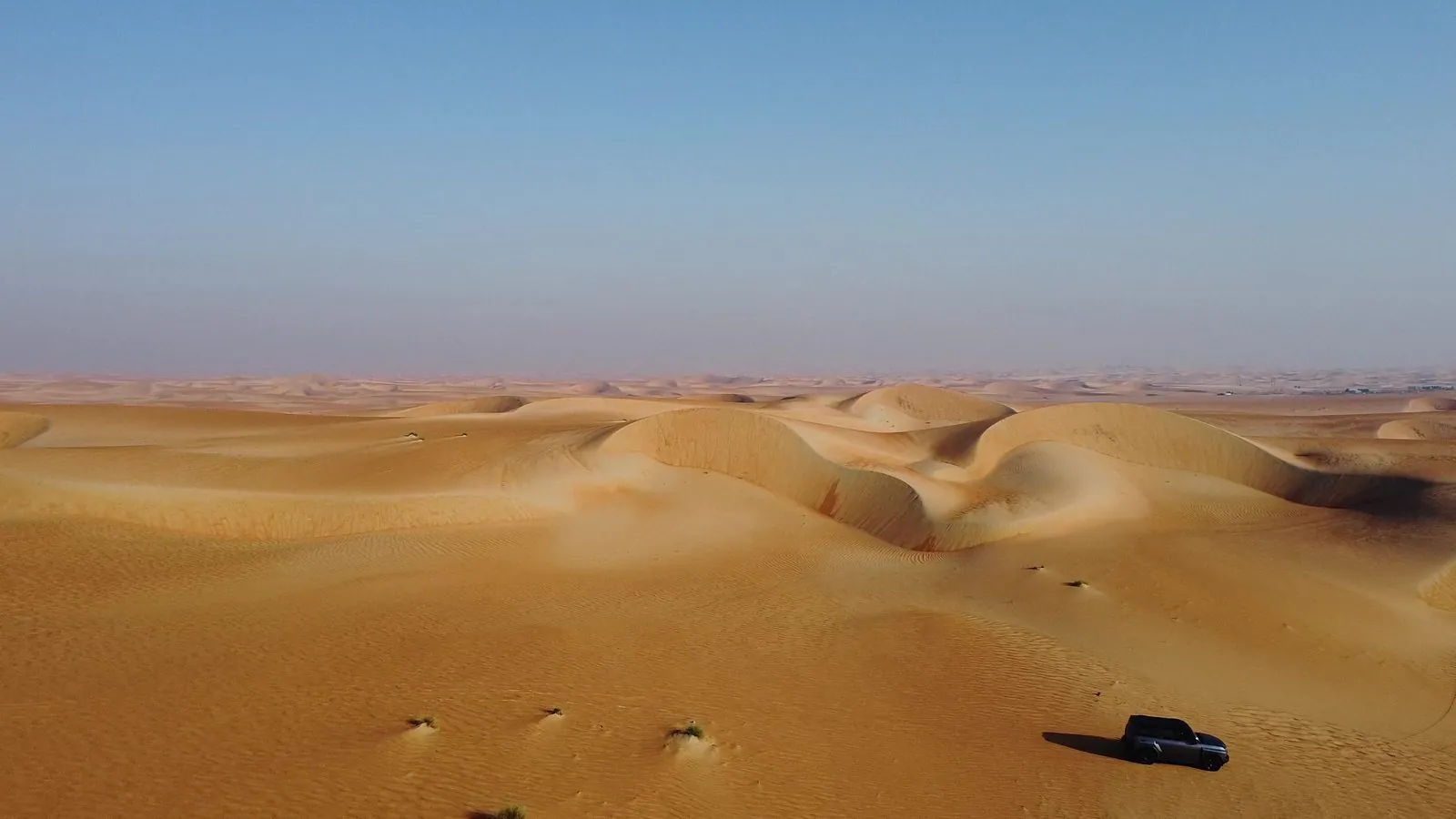
Soft sand dunes stretching to the horizon at Al Quaa, with a single 4x4 parked among them

Al Quaa Desert

Open desert south of the Abu Dhabi–Al Ain road (near Al Ain), southern Abu Dhabi emirate

CampingModerateBest May–Oct
Loading live weather…
Getting there4x4 for dunesPacked-sand pull-off by the road; guides differ on car or 4x4 there, and the dunes need a 4x4. Never go alone
Time neededA full night, or 3–4 hours after dark
Best timeMilky Way core May–Oct, peak Jul–Aug; camping weather Oct–Apr; pick a moonless night
CostFree
Toilets NoneFood NoneSignal Patchy
  1. January: possible
  2. February: possible
  3. March: possible
  4. April: possible
  5. May: best
  6. June: best
  7. July: best
  8. August: best
  9. September: best
  10. October: best
  11. November: possible
  12. December: possible

Before you go: Last Milky Way window of 2026: the new moon on 10 October gives the darkest evenings from about 6 to 14 October, when the core is up from about 6 pm to 10 pm (Khaleej Times). The core season ends with October (Gulf News: May to October); the next new-moon window within core season is in May 2027.

Quick answers

Where is it?
Open desert in southern Abu Dhabi emirate, south of the Abu Dhabi–Al Ain road, about 15 minutes past the last fuel and food.
Which coordinates?
Our pin is 23.52924, 54.75339. The National publishes 23.604633, 54.750256, about 8 km north of ours, and PropertyFinder gives 23.6054742, 54.7504395. Check your pin on your own map before you leave, and download offline maps.
How far is it?
About 2.5 hours from Dubai, and about 1.5 to 2 hours from Abu Dhabi city, mostly on paved road towards Al Ain.
Do I need a 4x4?
Guides differ. The National, PropertyFinder and Pit Stop Arabia say a regular car reaches the main stargazing spot on packed sand (stay on firm ground; Pit Stop Arabia warns that sedans can get stuck). Dubicars recommends a 4x4 but says it is not always required. For driving into the dunes the guides point to a 4x4, and we advise going with company rather than alone.
Best months
Milky Way core: May to October, peaking July to August (Gulf News; Khaleej Times, quoting the Emirates Astronomical Society), though summer is hot. Comfortable camping weather: October to April. A moonless night matters more than the month.
Permit and fee
Free, with no permit needed for a standard visit.
Facilities
None: no toilets, water, food, fuel or reliable signal. Bring everything, including more water than you expect to need.

Al Quaa is one of the darkest accessible skies in the UAE and one of the best-known places to see the Milky Way galaxy in the country. Set deep in the southern sands of Abu Dhabi, far from any city light, it's a pilgrimage spot for stargazers and astrophotographers — especially on clear, moonless nights between May and October, when the galaxy's bright core is above the horizon.

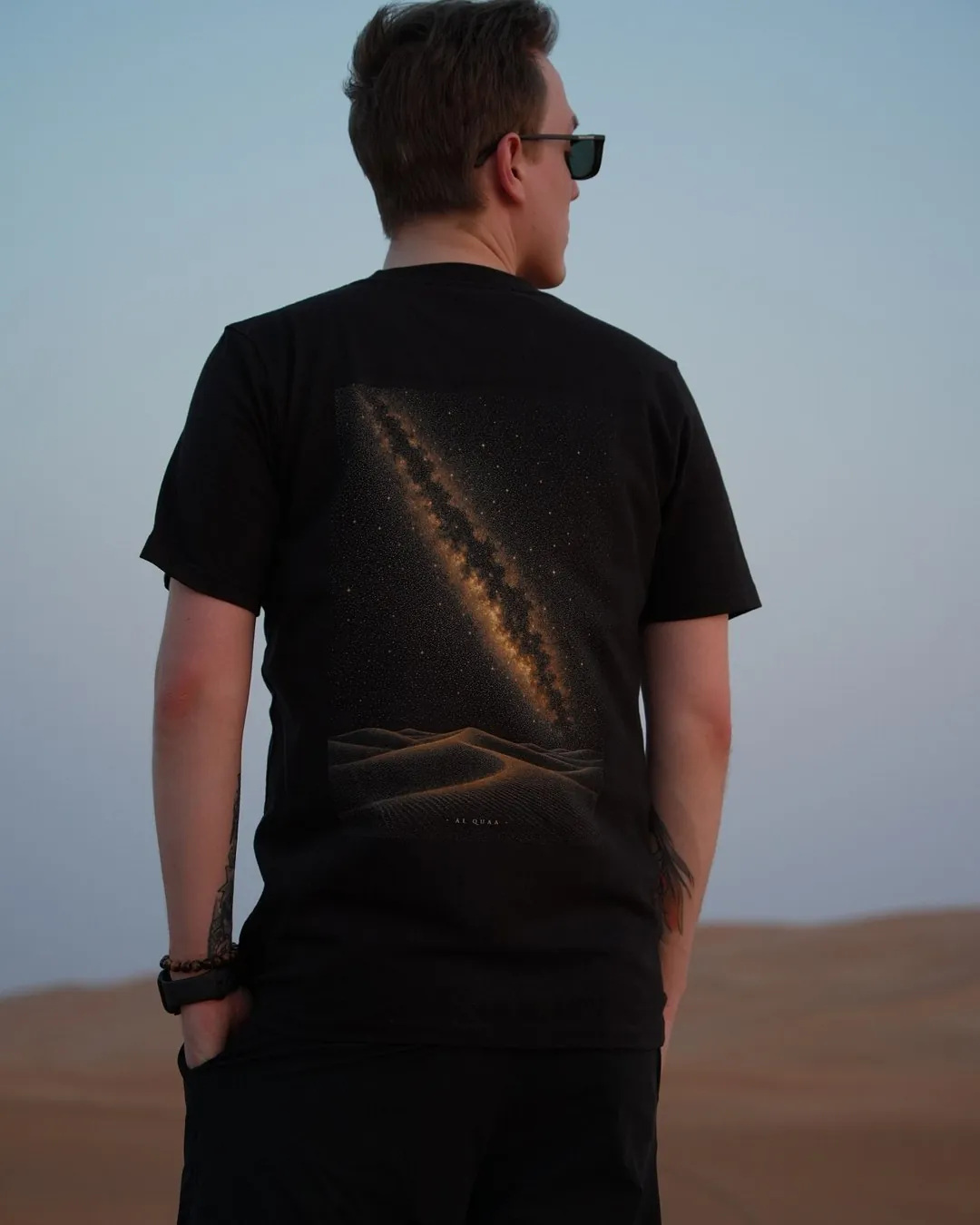
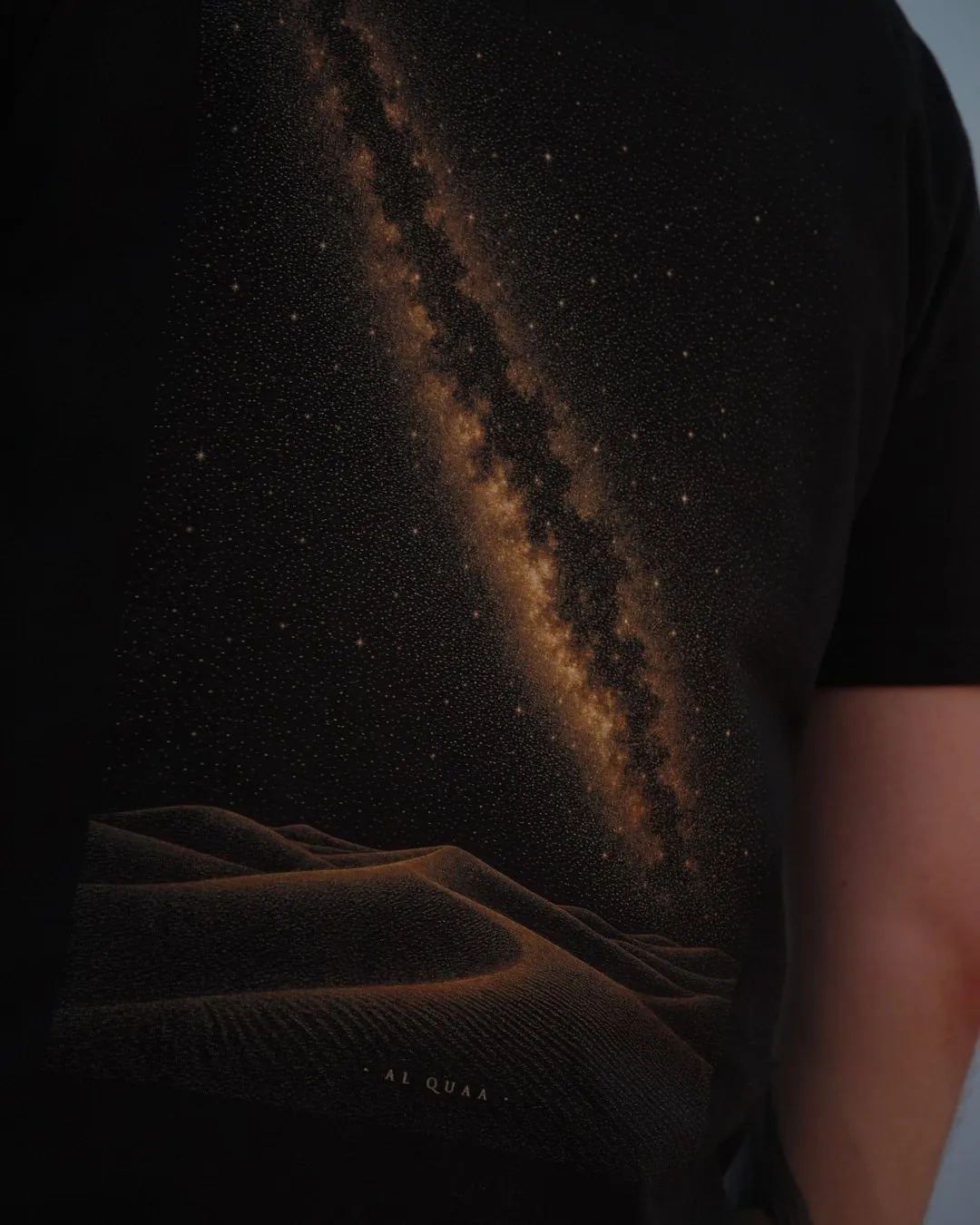
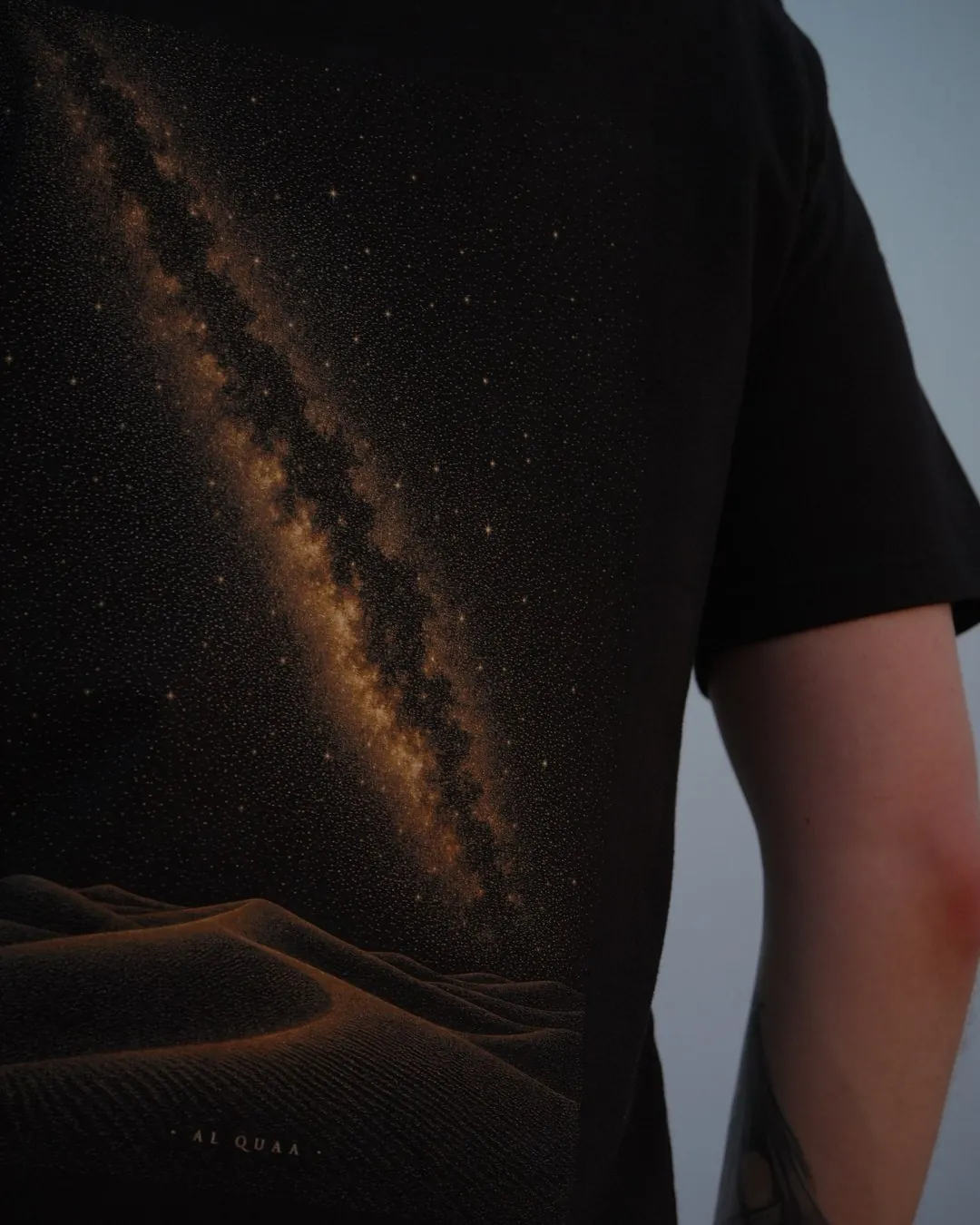
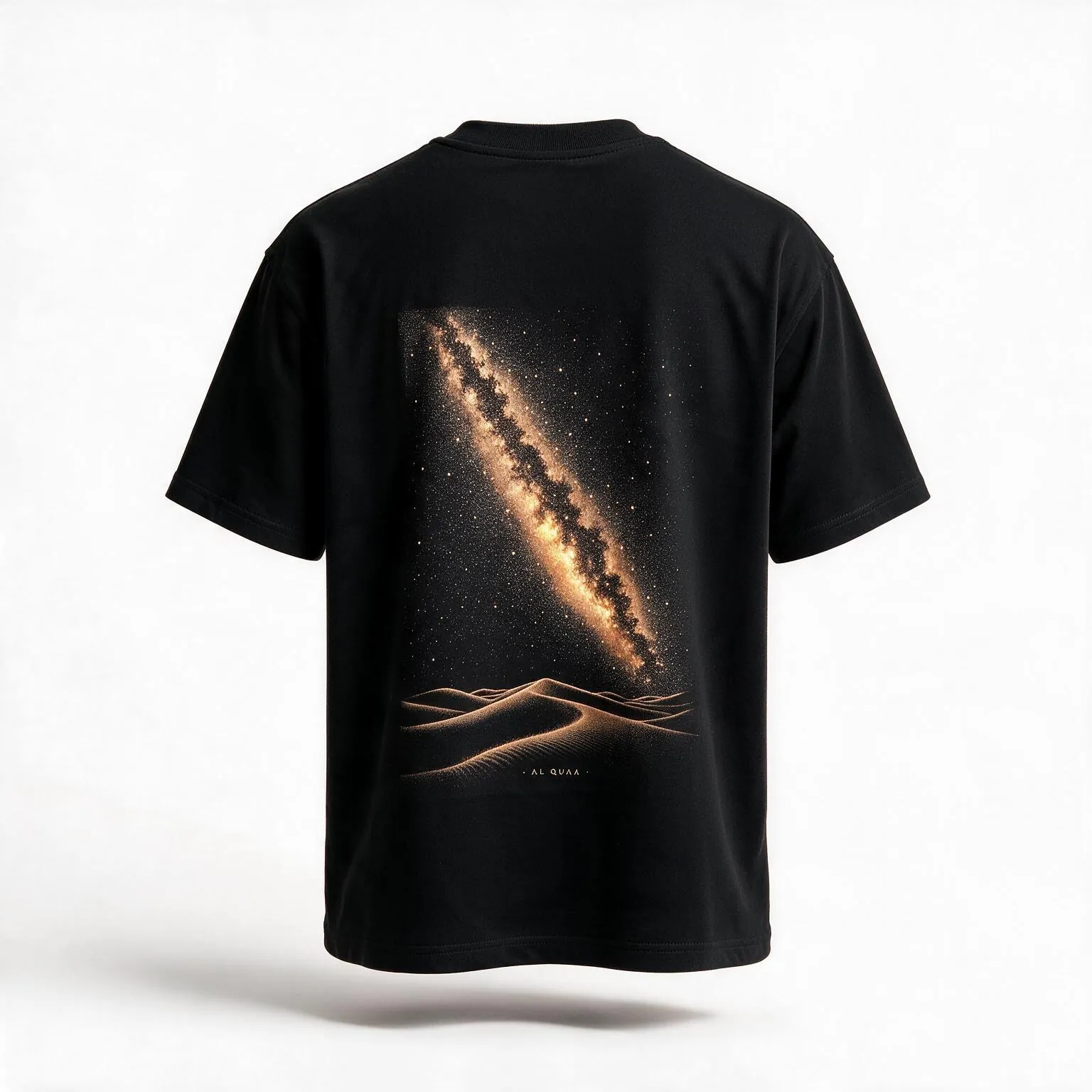
We mapped this sky onto a shirt — the Al Quaa Galaxy tee prints the Milky Way exactly as it rises here, on 230gsm cotton dark enough to read it against.

The bright core of the Milky Way rises over an empty horizon here, far from city lights to wash it out. Come prepared for a remote, self-sufficient overnight: plenty of water, warm layers for cold desert nights, a red-light torch to protect your night vision, and a 4x4 if you plan to drive into the dunes (guides differ on whether a regular car is enough for the main stargazing spot). There are no facilities — which is exactly why the skies are so spectacular.
Last checked 1 October 2026. Facts on this page come from the sources listed at the bottom. Spotted something out of date?

Seeing the Milky Way at Al Quaa

Season: the Milky Way is visible in the UAE sky from May to October, with the core at its…

Season: the Milky Way is visible in the UAE sky from May to October, with the core at its highest and clearest in July and August (Gulf News, 8 May 2025). Khaleej Times quotes Ibrahim Al-Jarwan, chairman of the Emirates Astronomical Society, saying July offers the clearest view. Comfortable camping weather is October to April, so the two seasons overlap only in October.

Moon phase: choose a new moon night or a weak crescent, and avoid full moon nights (The National; the Emirates Astronomical Society chairman, via Khaleej Times). The next window is around the new moon on 10 October 2026 (19:50, UAE time), which gives the darkest evenings from about 6 to 14 October. The new moon date is computed for UAE time and checked against published tables; the window is about four days either side.

Time of night: the core appears around midnight in May and about 11 pm in June, then earlier as the season goes on: 10 pm in July, 8:30 pm in August, 7 pm in September and 6 pm in October. It disappears around 4 am in May and 10 pm in October (Khaleej Times). The table below pairs each month with its nearest new moon.

How dark is it: Al Quaa is one of the darkest accessible skies in the UAE. We do not publish a numeric rating. To check for yourself, open lightpollutionmap.info, find your pin and compare it with the cities nearby.

Milky Way core by month, with the nearest new moon
MonthCore up (appears to disappears)Nearest new moon (UAE time) and darker nights
October 20266 pm to 10 pm10 Oct 2026, 19:50; about 6 to 14 Oct
May 202712 am to 4 am6 May 2027, 14:58; about 2 to 10 May
June 202711 pm to 3:30 am4 Jun 2027, 23:40; about 31 May to 8 Jun
July 202710 pm to 3 am4 Jul 2027, 07:01; about 30 Jun to 8 Jul
August 20278:30 pm to 2 am2 Aug 2027, 14:05; about 29 Jul to 6 Aug
September 20277 pm to 12:30 am31 Aug 2027, 21:41; about 27 Aug to 4 Sep

Core times are Khaleej Times' monthly guide (2025 article), checked 1 Oct 2026. New moon dates are computed for UAE time and cross-checked against two published new-moon tables. Source: Khaleej Times: Milky Way visible from May to October.

Core season or camping season

Core season is May to October, with the core highest in July and August. Comfortable…

Core season is May to October, with the core highest in July and August. Comfortable camping weather runs October to April, so the two overlap only in October. Chase the core and you are going in the summer heat; come for comfort and constellations and you are going in the cooler months, when the core is not the main event. It is a genuine trade-off, and worth deciding which trip you are making before you set off.

The moon decides more than the date

A bright moon can wash out the fainter stretches of the Milky Way almost as thoroughly as…

A bright moon can wash out the fainter stretches of the Milky Way almost as thoroughly as a nearby city would. Core season tells you which months to consider; the moon phase tells you which nights within them actually work.

New moon nights, and the few either side of one, give the sky room to show its faintest detail. A full moon rising mid-evening can flood even a genuinely dark site with enough scattered light to flatten the galaxy's band into a faint smear. Before settling on a date, check the moon's phase and what time it rises or sets — a late-rising moon can still leave several hours of proper darkness earlier in the night.

What you will see with nothing but your eyes

Give your eyes twenty to thirty minutes away from any white light — headlights, phone…

Give your eyes twenty to thirty minutes away from any white light — headlights, phone screens, torches — and they adapt properly to the dark. Once adapted, a genuinely dark sky shows thousands of individual stars, the pale arch of the Milky Way overhead, and on a clear night the odd meteor streaking through it.

Binoculars add real depth without the bulk of a telescope. Point them at the core and individual star fields resolve out of what looked like haze to the naked eye. They will also pull in the moons of Jupiter as pinpricks of light, texture on the lunar surface, and star clusters that are just smudges without them. A red-light torch, never white, keeps your night vision intact between looks.

Being honest about the hard parts

This is not a casual detour. Al Quaa is around two and a half hours from Dubai, deep in…

This is not a casual detour. Al Quaa is around two and a half hours from Dubai, deep in southern Abu Dhabi. Guides differ on the vehicle: The National, PropertyFinder and Pit Stop Arabia say a regular car reaches the main stargazing spot on packed sand, Dubicars recommends a 4x4 but not always required, and for the dunes the guides point to a 4x4. Fuel up, eat and carry plenty of water before you leave the city, because there are no facilities of any kind at the site itself.

Core season is also the hottest half of the year here, and the heat does not fully switch off after dark. Humidity near dawn can soften contrast even on a clear night. And if you are hoping to capture what you see, a phone camera on its own will mostly show black — night skies need a long exposure on a steady tripod, or a night mode pushed well past what it does automatically. The sensor cannot gather enough light in the split second it is built for.

Preparing for a night out there

Treat it as the overnight desert trip it is. Check the moon phase and the core's position…

Treat it as the overnight desert trip it is. Check the moon phase and the core's position for your dates before committing to a night. Tell someone your plan and your rough return time. Fill the tank before leaving, bring more water than you think you need, and pack for the season you are actually travelling in — summer nights stay warm, winter nights drop sharply.

A red-light torch protects your night vision far better than the white light on a phone. Download offline maps in advance rather than relying on a live connection once you are off the highway, and check your pin first: our coordinates are 23.52924, 54.75339, while The National publishes 23.604633, 54.750256, about 8 km north. Build in slack, too: an unpaved final stretch in low light takes longer than the same drive by day.

Getting there

From Dubai, Al Quaa is reached via the E-road network toward Al Ain and then south into…
Dubai Al Quaa Desert
194 km from Dubai as the crow fliesBy road: about 2.5h from Dubai

From Dubai, Al Quaa is reached via the E-road network toward Al Ain and then south into Abu Dhabi's southern desert, a drive of roughly two and a half hours; from Abu Dhabi city it's closer to ninety minutes, largely on paved road toward Al Ain. Look for a large roundabout on the approach, with a dirt track and gate just behind it leading into the desert. On the vehicle, the published guides differ. The National, PropertyFinder and Pit Stop Arabia say a regular car reaches the main stargazing spot on packed sand (stay on firm ground; Pit Stop Arabia warns that sedans can get stuck). Dubicars recommends a 4x4 but says it is not always required. For driving into the dunes the guides point to a 4x4, and we advise going with company rather than alone. PropertyFinder adds that the final stretch is unpaved, and Dubicars that most of the road is paved with a sandy stretch near the site. Fill the tank and eat before you leave the highway: the nearest fuel and food is about 15 minutes back the way you came, and there's nothing at the site itself. This is a self-drive destination only; there's no public transport or realistic taxi option this far out.

GPS 23.52924, 54.75339

When to go

The Milky Way's core season is May to October, with the core at its highest in July and…
  1. January: possible
  2. February: possible
  3. March: possible
  4. April: possible
  5. May: best
  6. June: best
  7. July: best
  8. August: best
  9. September: best
  10. October: best
  11. November: possible
  12. December: possible

Best Possible Avoid This month is marked

The Milky Way's core season is May to October, with the core at its highest in July and August (Gulf News; Khaleej Times, quoting the Emirates Astronomical Society). Comfortable camping weather runs October to April (PropertyFinder, Dubicars), so the two overlap only in October. For the core at its highest, aim for July–August despite the heat; for cooler nights, come November–April and expect constellations rather than the core. Whichever month, a clear, moonless night matters more than the date: aim for new moon or the nights either side of it, arriving well before dark to set up.

The next 14 nights

Darkest nights are around the new moon, when the Milky Way shows best. Moon phase is calculated, not forecast weather.

What to do there

Once your eyes adapt to the dark — allow twenty to thirty minutes away from any white…

Once your eyes adapt to the dark — allow twenty to thirty minutes away from any white light — the main draw is naked-eye: thousands of stars and the pale band of the Milky Way overhead, with meteors on a clear night. Binoculars add real depth without the setup of a telescope. Photographers use a tripod and a long exposure, or a manually-pushed night mode, since a phone camera alone will mostly show black. Dubai Astronomy Group also runs occasional public Milky Way observation events at Al Quaa in season, with telescopes and guided sessions, for anyone who'd rather not go it alone.

Safety and rules

This is a genuine overnight desert trip, not a casual detour: there's no fuel, water,…

This is a genuine overnight desert trip, not a casual detour: there's no fuel, water, food or reliable phone signal once you're off the highway, so carry more water than you think you'll need and tell someone your route and return time. Core season overlaps with the hottest half of the year, and the heat doesn't fully switch off after dark, so pace any walking around after sunset. Stay on the packed sand track unless you have a 4x4 and the experience to go further — soft sand off the main route can bog down a standard car quickly. Check the weather forecast before you go, since fog or cloud can wash out a night's stargazing entirely.

In an emergency
  • 999 Police
  • 998 Ambulance
  • 997 Civil Defence

Weather warnings: National Center of Meteorology. Tell someone where you are going and when you will be back.

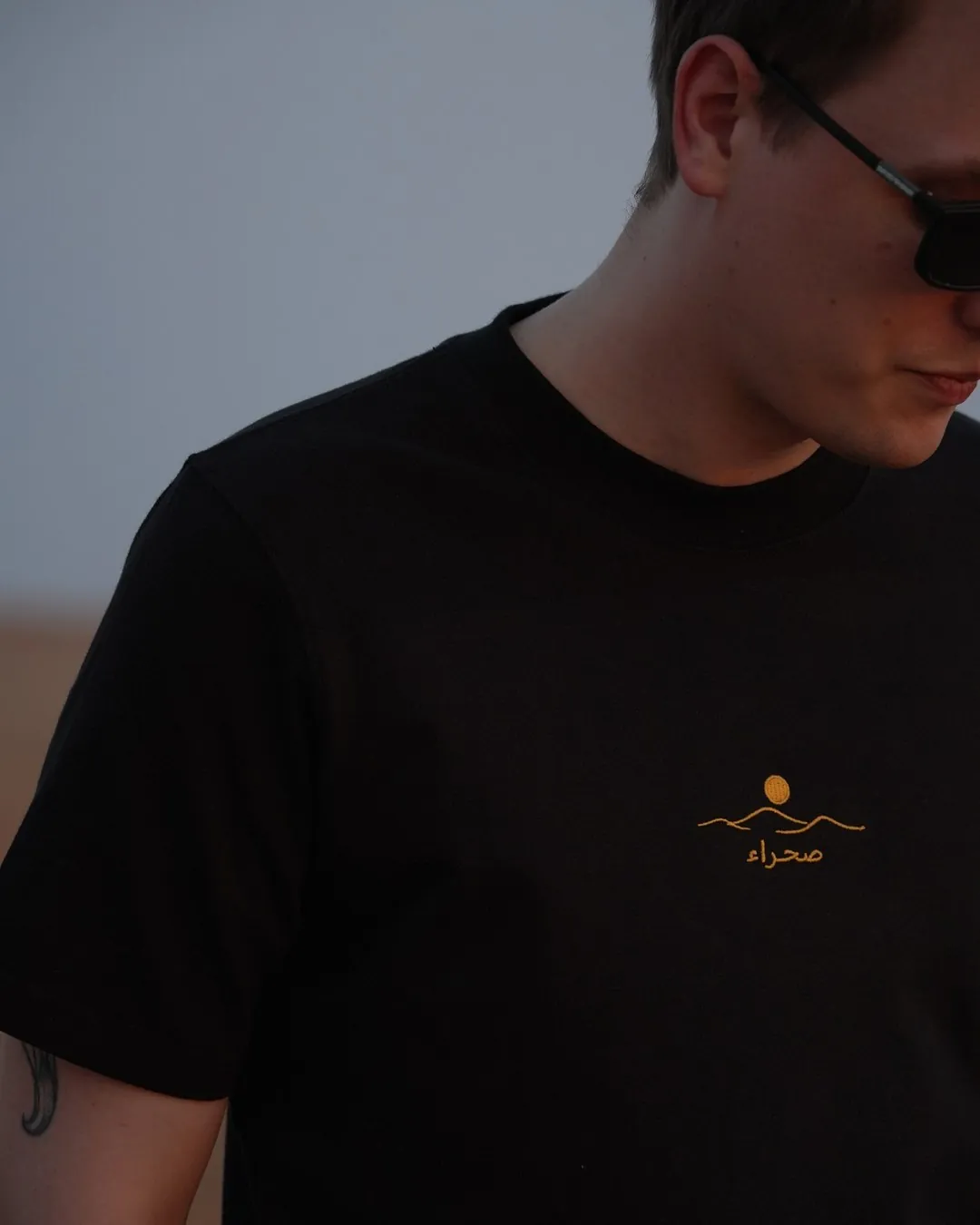
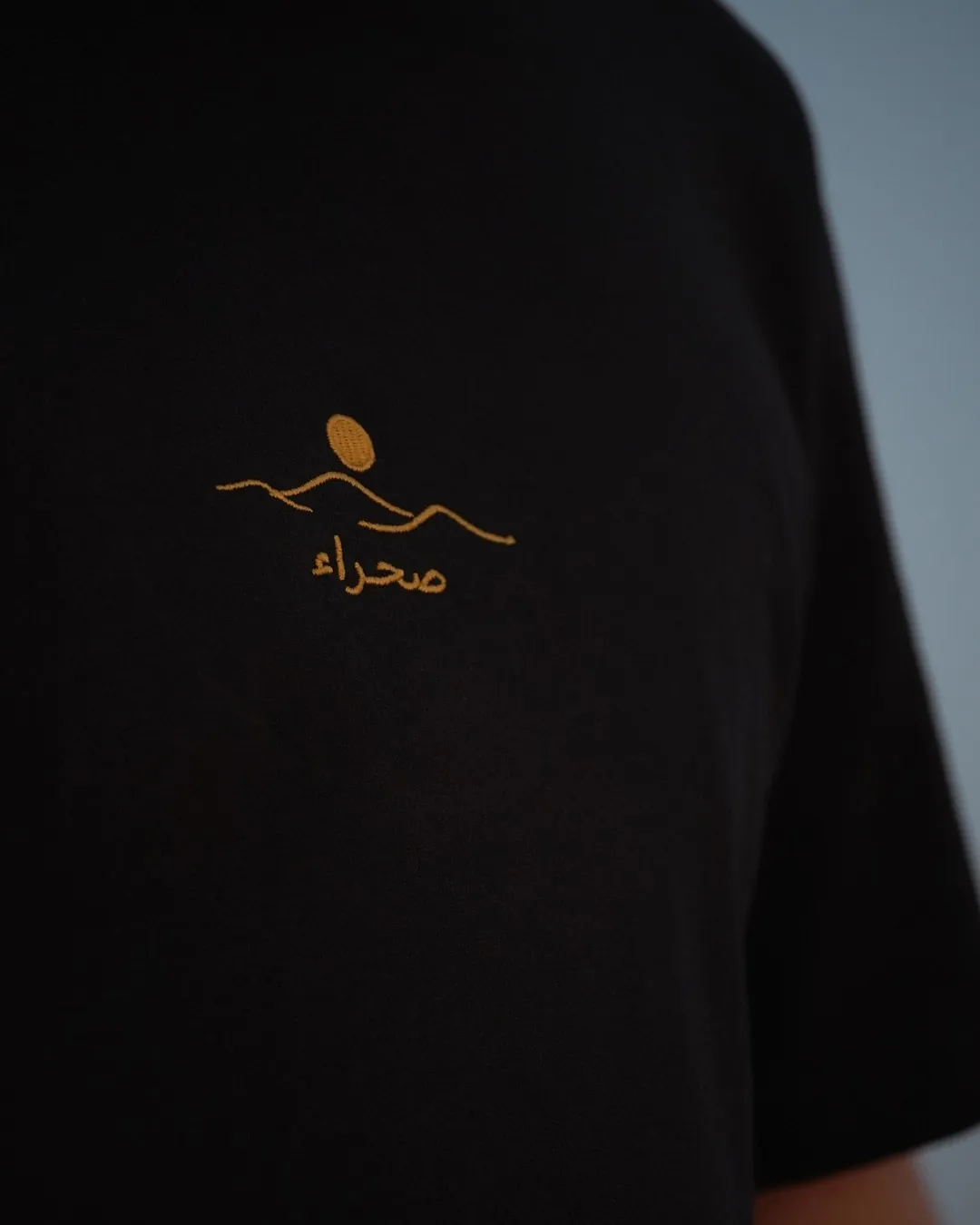
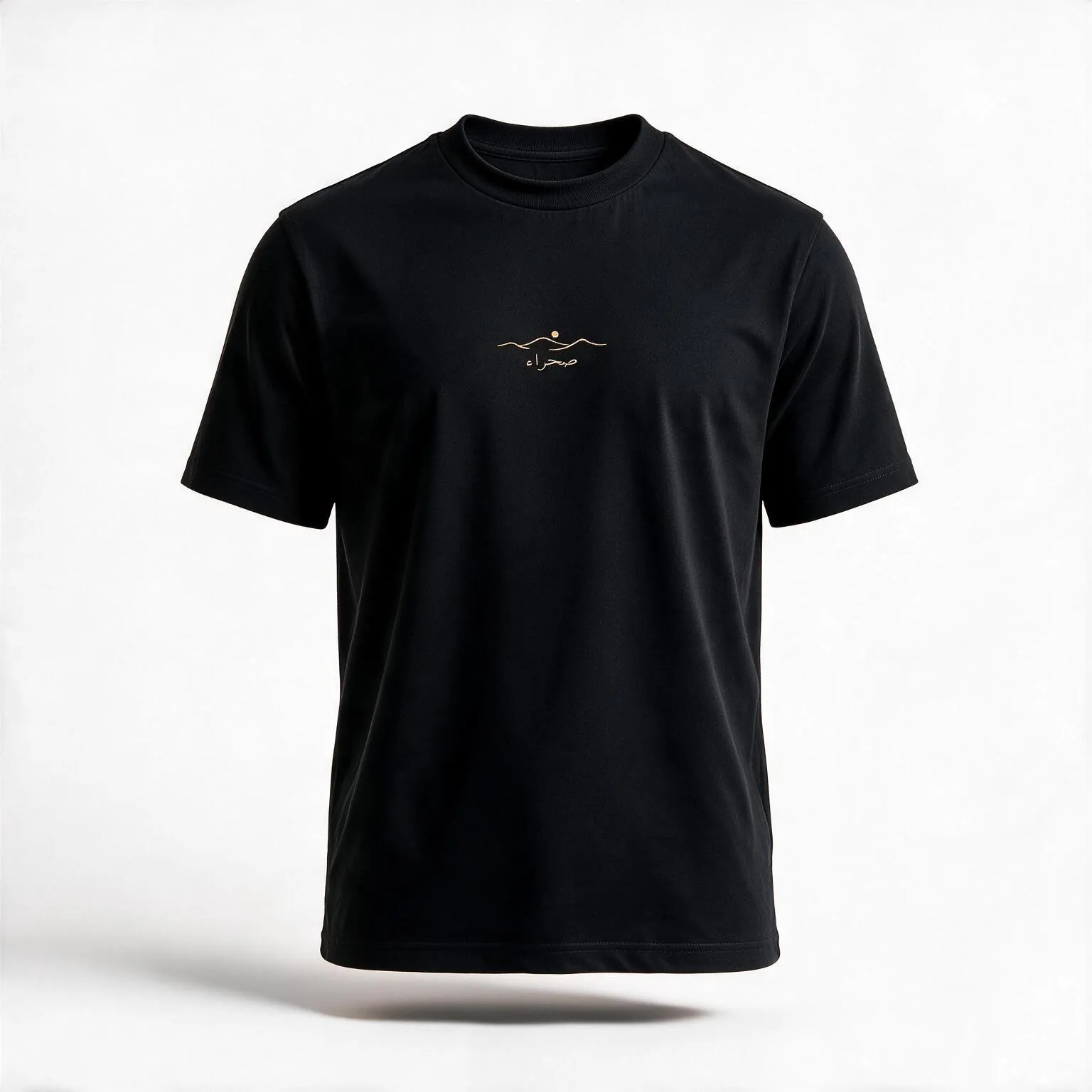
Al Quaa Galaxy t-shirt, a Milky Way desert tee in the regular fit — the galaxy printed across the backAl Quaa Galaxy — Regular, regular fit, front view showing the set-in shoulder and classic cutThe Al Quaa Galaxy tee worn in the dunes — the printed Milky Way running across the backThe Al Quaa Galaxy tee, back print close — the gold stipple of the Milky Way over the dune lineThe Al Quaa Galaxy tee, the printed band at an angle — the grain of the stars across the shoulderThe Al Quaa Galaxy tee, front, worn in the dunes — the embroidered sun-and-dune mark on the chestThe Al Quaa Galaxy tee, chest close — the embroidered mark on black cottonThe Al Quaa Galaxy tee, the embroidered صحراء mark in gold, close
The tee drawn from this place

Al Quaa Galaxy — Regular

Regular fit. The Milky Way over Al Quaa — one of the darkest accessible skies in the Emirates. 230gsm combed cotton. Limited first run.

AED 199DTG print · embroidered logo✦ Limited first run
See the tee →

Also in Oversized

More desert t-shirts

What to pack for Al Quaa Desert

Matched to how you get there and how long you stay. Tap items as you pack them; this list is saved on your phone.

0 packed

Take this list with you

Send it to yourself or the people you are going with. Ticked items are marked.

Questions people ask about Al Quaa Desert

Is Al Quaa the darkest place in the UAE?

It is one of the darkest accessible skies in the country, deep in southern Abu Dhabi and far from any city glow. We do not publish a numeric rating for it, but the absence of nearby light is what makes the Milky Way read so clearly from here.

How far is Al Quaa from Dubai?

Around two and a half hours by road. Plan a full evening or an overnight trip rather than an after-work detour.

What are the coordinates for Al Quaa?

Our pin is 23.52924, 54.75339. The National publishes 23.604633, 54.750256 (about 8 km north of ours) and PropertyFinder gives 23.6054742, 54.7504395. Check your pin on your own map before you leave, and download offline maps, since signal is patchy off the highway.

When is the next good night for the Milky Way at Al Quaa?

The new moon on 10 October 2026 gives the darkest evenings from about 6 to 14 October, when the core is up roughly 6 pm to 10 pm. After that the next window within core season is around the new moon on 6 May 2027. New moon dates are computed for UAE time.

Do I need a 4x4 to get to Al Quaa?

Guides differ. The National, PropertyFinder and Pit Stop Arabia say a regular car reaches the main stargazing spot on packed sand (stay on firm ground; Pit Stop Arabia warns that sedans can get stuck). Dubicars recommends a 4x4 but says it is not always required. For driving into the dunes the guides point to a 4x4, and we advise going with company rather than alone.

Are there any facilities at Al Quaa?

None at all — no fuel, food, water or toilets. Everything you need has to come with you, and that is precisely why the sky is as dark as it is.

When is the Milky Way visible at Al Quaa?

May to October, with the core at its highest in July and August (Gulf News; Khaleej Times, quoting the Emirates Astronomical Society). In October the core is up from about 6 pm to 10 pm. Comfortable camping weather is October to April, so the two seasons overlap only in October.

Do I need a telescope to see the Milky Way?

No. On a clear, moonless night the band is visible to the naked eye once your eyes have adapted for twenty minutes or so. Binoculars add noticeable detail without the setup a telescope needs.

Why will my phone camera not pick up the stars?

Phone cameras default to very short exposures built for daylight, which cannot gather enough light from faint stars. A proper night shot needs a long exposure on a steady tripod, or a night mode pushed manually well beyond its automatic setting.

What should I pack for a night at Al Quaa?

More water than you expect to drink, layers suited to the season you are travelling in, and a red-light torch to protect your night vision. Fill the tank before you leave the city, since there is nothing to buy once you arrive.

Does anyone run organised stargazing events at Al Quaa?

Yes — Dubai Astronomy Group holds occasional public Milky Way observation events there in season, with guided sessions and telescopes; check their listings for current dates.

Is there a fee to visit Al Quaa?

No — it's free, with no permit needed for a standard visit.

Will I have phone signal at Al Quaa?

Coverage is patchy at best once you're off the highway — download offline maps and save your coordinates before you leave.

SourcesWhere the facts on this page come from