
Sahra & BeyondSahra& Beyond
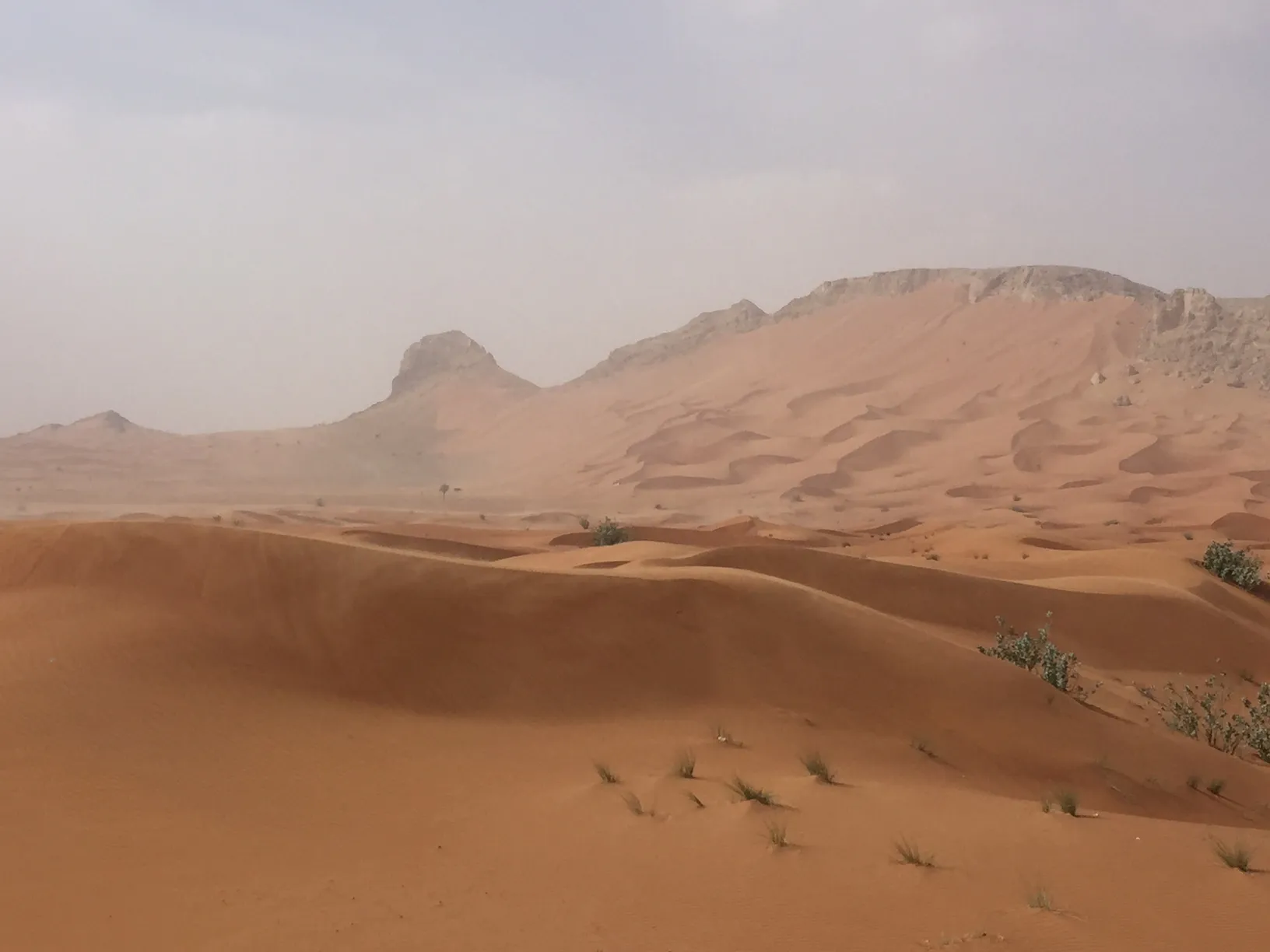
Dunes and rocky outcrops of the Mleiha desert, in the Fossil Rock area, in hazy desert light

Mleiha

مليحة

Central Region, Sharjah, around Jebel Faya and the Mleiha–Al Faya desert corridor, near Dhaid

DunesModerateBest Oct–Apr
Loading live weather…

Photo: Johnhpbarlow, CC BY-SA 4.0, Wikimedia Commons (resized)

Getting thereAny car, then 4x4Paved to the Archaeological Centre; Fossil Rock and Camel Rock need a 4x4
Time neededHalf a day
Best timeEarly morning or before sunset
CostCentre AED 25 adult, AED 15 child; activities extra
Toilets YesFood YesShade Some
  1. January: best
  2. February: best
  3. March: best
  4. April: possible
  5. May: avoid
  6. June: avoid
  7. July: avoid
  8. August: avoid
  9. September: avoid
  10. October: possible
  11. November: best
  12. December: best

Mleiha (sometimes written Maleiha) is a stretch of golden dunes and wind-carved limestone in Sharjah's Central Region, built around one of the richest archaeological landscapes in the Gulf. Sand gives way to pale rock outcrops — most famously Fossil Rock and the double-humped Camel Rock — while Bronze Age tombs and prehistoric campsites sit only a short drive from the visitor centre. It reads, at a glance, as pure desert scenery; look closer and it's also one of the longest-running records of human life in Arabia.

At the centre of the area is Mleiha National Park, built around the Mleiha Archaeological Centre, which opened in 2016 over a preserved Umm Al Nar-era tomb (roughly 2300 BC) and displays 40-plus years of finds from digs at Jebel Faya, Al Thuqeibah, Al Madam and Jebel Al-Buhais. Beyond the museum, the park runs bookable desert activities — guided archaeology and dune-buggy tours, horse riding, paragliding off the escarpment, glamping domes, an overnight camp and evening stargazing — through its own booking site rather than a walk-up ticket office.

The wider landscape now carries UNESCO World Heritage status: in July 2025, the Faya Palaeolandscape — a roughly 20km chain of limestone jebels and surrounding desert centred on Mleiha — was inscribed on the World Heritage List, after Al Ain's oasis and cultural sites in 2011. Excavations here have pushed the record of human presence in Arabia back more than 210,000 years, with stone tools at nearby Faya-1 dated to roughly 125,000–130,000 years old — evidence used to argue that early humans didn't just pass through this desert on the way out of Africa, but settled and adapted to it across repeated wet and dry cycles.

For most visitors the draw is simpler: a self-drive or guided dune route past Fossil Rock — reportedly visible from more than 25km away on the approach road — and Camel Rock a little further into the sand, with the rust-red ridge of Al Faya rising behind. It's technical driving in places, better suited to a capable 4x4 than a rental sedan, and the pay-off is some of the most otherworldly scenery within reach of Dubai or Sharjah in about an hour.
Last checked 27 September 2026. Facts on this page come from the sources listed at the bottom. Spotted something out of date?

Getting there

Mleiha sits in Sharjah's Central Region, close to Dhaid — about 50 minutes to just over…
Dubai Mleiha
60 km from Dubai as the crow fliesBy road: about 50min–1h15 from Dubai; roughly 45min from Sharjah city

Mleiha sits in Sharjah's Central Region, close to Dhaid — about 50 minutes to just over an hour from Dubai and roughly 45 minutes from Sharjah city, via Emirates Road (E611) and the roads through Dhaid. The Mleiha Archaeological Centre itself is on a paved approach road, so an ordinary car reaches the museum, car park and café without trouble; you only need a 4x4 for the dune sections around Fossil Rock, Camel Rock and any self-drive route further into the desert, where the sand is soft and technical in places. Dhaid is the last reliable town for fuel, a supermarket and a pharmacy before the turn-off toward the desert. There's no public bus route to the centre, so a taxi, private transfer or self-drive is the realistic option; some of the park's own packages include return transfers from Sharjah.

GPS 25.1264, 55.8575

When to go

October to April is the season here, as for most UAE desert destinations — daytime heat…
  1. January: best
  2. February: best
  3. March: best
  4. April: possible
  5. May: avoid
  6. June: avoid
  7. July: avoid
  8. August: avoid
  9. September: avoid
  10. October: possible
  11. November: best
  12. December: best

Best Possible Avoid This month is marked

October to April is the season here, as for most UAE desert destinations — daytime heat outside that window makes any time on foot at Fossil Rock or in the open dunes unpleasant and genuinely riskier. Early morning and the last couple of hours before sunset give the softest light on the sand and rock and the easiest temperatures for walking or climbing. The Archaeological Centre keeps slightly longer hours Thursday to Saturday (9am–9pm, per the official park website, checked 27 Sep 2026) than the rest of the week, and runs bookable evening stargazing sessions after dark. Weekdays are the quieter choice if you want Fossil Rock's viewpoints without a crowd.

The next 14 nights

Darkest nights are around the new moon, when the Milky Way shows best. Moon phase is calculated, not forecast weather.

What to do there

The Archaeological Centre's museum walks you through 40-plus years of local digs, built…

The Archaeological Centre's museum walks you through 40-plus years of local digs, built around a preserved Umm Al Nar tomb dating to about 2300 BC, with an on-site café. From there, most visitors head into the dunes: Fossil Rock, a limestone outcrop studded with marine fossils and visible from many kilometres off, and Camel Rock, a distinctive double-humped formation a little further into the sand — both reachable by 4x4, or on foot for the fitter. Bookable add-ons through the park include self-drive dune buggies, guided archaeology and 'Valley of the Caves' tours, horse riding, paragliding off the escarpment, and, after dark, stargazing sessions, glamping domes and an overnight desert camp. Budget half a day for the museum and a dune drive to the rocks; a full day or an overnight stay if you're adding any of the bookable activities.

Safety and rules

This is a working protected archaeological landscape as well as a desert, so the two sets…

This is a working protected archaeological landscape as well as a desert, so the two sets of risks overlap. Heat and sun are the everyday hazard — carry more water than you think you need, and avoid exposed walks at Fossil Rock in the middle of the day. Off the paved approach road, sand is soft and self-drive dune routes are described as technical in places: lower your tyre pressures, travel with at least one other vehicle, and carry recovery gear. Some areas within the Faya Palaeolandscape are designated core zones with entry restricted to private, guided tours rather than free access, so treat any track you're unsure of as off-limits and stick to marked routes. Removing fossils, artefacts or rock runs against the point of a protected site — leave everything as you find it. Phone signal out in the dunes themselves is unconfirmed either way, so don't rely on it.

In an emergency
  • 999 Police
  • 998 Ambulance
  • 997 Civil Defence

Weather warnings: National Center of Meteorology. Tell someone where you are going and when you will be back.

Heritage, nature and etiquette

Mleiha anchors the Faya Palaeolandscape, inscribed on the UNESCO World Heritage List in…

Mleiha anchors the Faya Palaeolandscape, inscribed on the UNESCO World Heritage List in July 2025, after Al Ain's oasis and cultural sites in 2011. Excavations at nearby Jebel Faya have found stone tools dated to roughly 125,000–130,000 years old, evidence used to argue that early modern humans settled this desert through wet-and-dry cycles rather than merely passing through on a route out of Africa. Mleiha's own Umm Al Nar tomb, from about 2300 BC, sits at the centre of the modern Archaeological Centre, alongside finds spanning the Neolithic through to a fortified, South Arabian-linked settlement dated to around 300 BC.

Etiquette. Treat the desert as a protected archaeological site as much as a scenic one: keep to existing tracks, don't dig or collect fossils and artefacts, and expect some areas to be off-limits to casual visitors and open only on a guided tour.

Wear the place

Empty Quarter — Regular

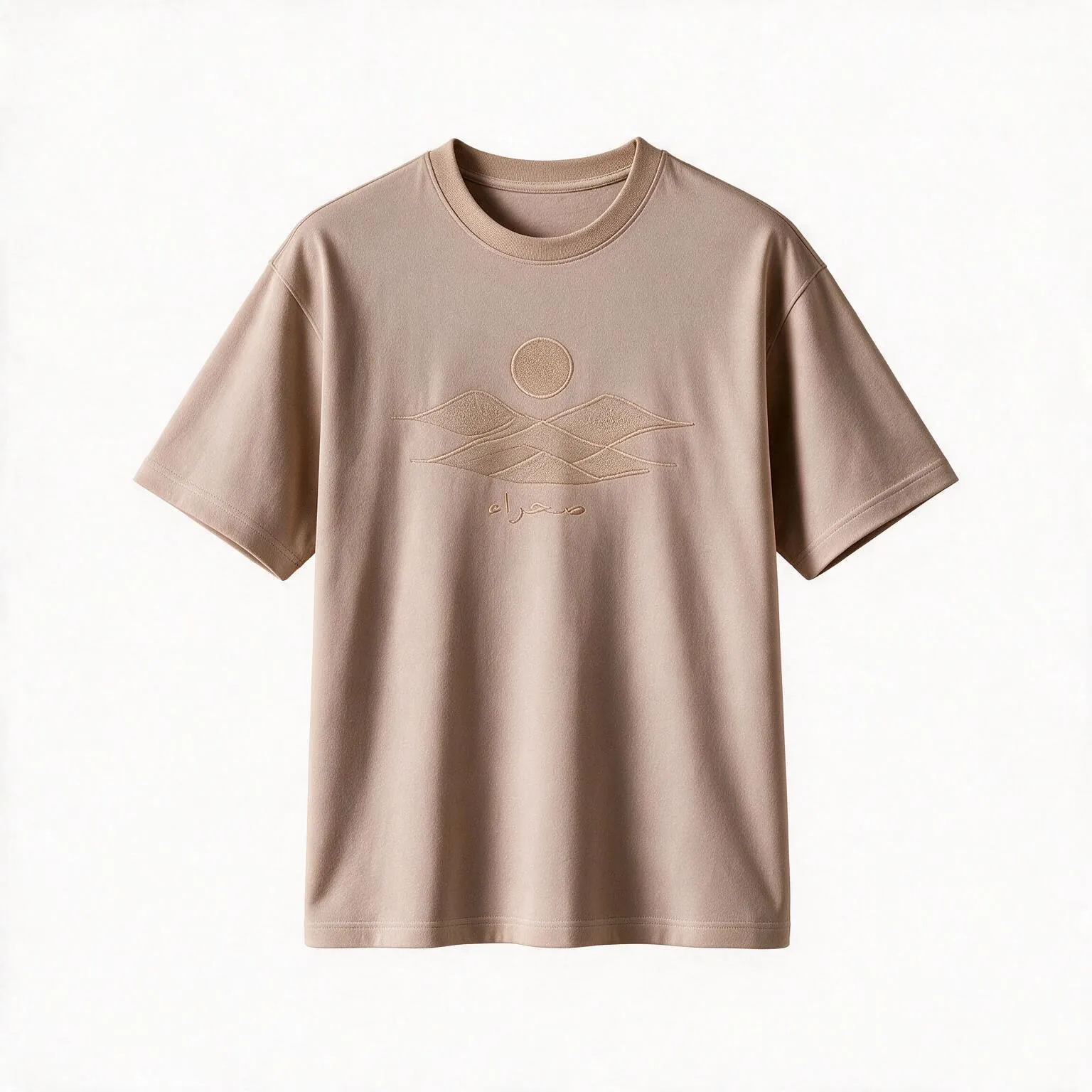
Fossil Rock and its wind-carved outcrops are a world away from the dunes on the Empty Quarter tee, which trace Liwa, well south of here.

AED 199 · 230gsm cotton · any 2 tees AED 359· 230gsm cotton

See the tee →

What to pack for Mleiha

Matched to how you get there and how long you stay. Tap items as you pack them; this list is saved on your phone.

0 packed

Take this list with you

Send it to yourself or the people you are going with. Ticked items are marked.

Questions people ask about Mleiha

Is there an entry fee for Mleiha?

Yes, for the Archaeological Centre and museum — AED 25 for adults and AED 15 for children up to 10 (under-5s free), with a family ticket at AED 75 (official park website, checked 27 Sep 2026). No separate fee was found for viewing Fossil Rock or Camel Rock out in the open desert.

What are the opening hours?

The Archaeological Centre runs Sunday to Wednesday, 9am–7pm, and Thursday to Saturday, 9am–9pm, per the official park website (checked 27 Sep 2026).

How do I get to Mleiha from Dubai?

It's about 50 minutes to just over an hour by car via Emirates Road (E611) and the roads through Dhaid. The museum and car park sit on a paved approach, though a 4x4 is needed for the dune sections.

Is Fossil Rock hard to reach?

The approach is technical in places — soft sand and some scrambling — so a 4x4 and reasonable fitness help; the rock itself is visible from many kilometres away if you'd rather just admire it from a distance.

Can I camp or stay overnight at Mleiha?

Yes — the park runs a bookable overnight camp and glamping domes, rather than allowing casual free camping across the protected desert.

Is Mleiha a UNESCO World Heritage Site?

The surrounding Faya Palaeolandscape was inscribed on the UNESCO World Heritage List in July 2025, and Mleiha's Archaeological Centre sits at its centre.

SourcesWhere the facts on this page come from