
Sahra & BeyondSahra& Beyond
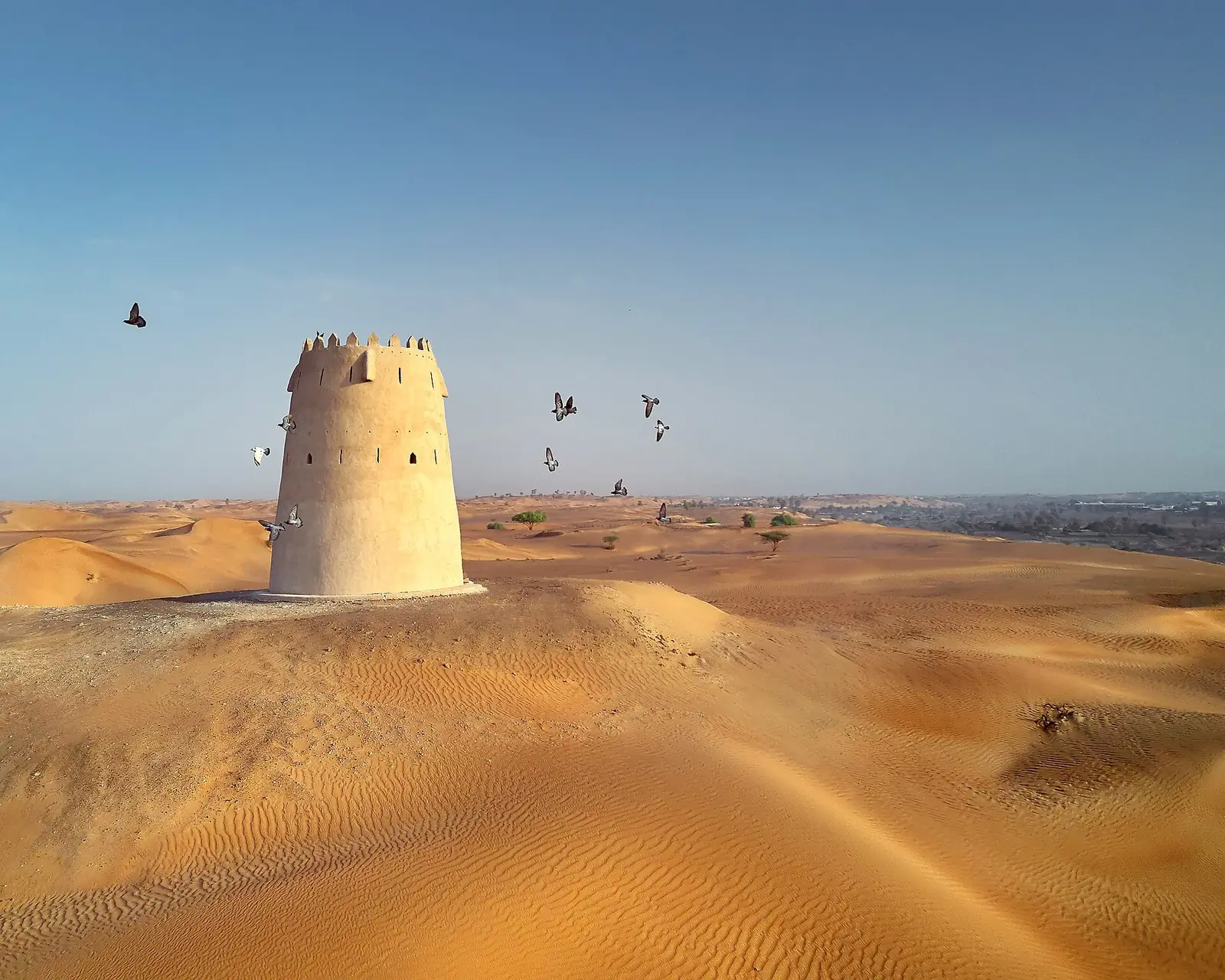
One of the watchtowers of Falaj Al Mualla (the west tower), standing alone in the dunes near the oasis.

Falaj Al Mualla

فلج المعلا

Falaj Al Mualla oasis, about 30km inland from Umm Al Quwain city

HeritageEasyBest Oct–Apr
Loading live weather…

Photo: Runo Zornak, CC BY-SA 4.0, Wikimedia Commons (resized)

Getting thereAny carSealed road to the fort car park; soft sand to the outer towers
Time needed1–2 hours
Best timeLate afternoon, within museum hours
CostAbout AED 5 for the fort (reported)
Food Nearby
  1. January: best
  2. February: best
  3. March: best
  4. April: possible
  5. May: avoid
  6. June: avoid
  7. July: avoid
  8. August: avoid
  9. September: avoid
  10. October: possible
  11. November: best
  12. December: best

Falaj Al Mualla is a historic oasis settlement about 30km inland from Umm Al Quwain city, built around a fort, a scatter of old watchtowers and date-palm groves that have been irrigated by falaj water for centuries. There isn't one single "lone tower" here, despite how the site is sometimes pictured — three watchtowers (east, west and north) stand apart from each other in the dunes around the village, each a plain, striking silhouette against sand and sky, and this page covers them collectively rather than pointing to just one.

The settlement was founded by the Al Ali tribe, the same family that established Umm Al Quwain, after they moved from the island of Sinniyah when its water supply ran out. The fort at its centre dates to around 1825, built by the ruler Abdullah bin Rashid Al Mualla; it was restored in 2015 and today houses a small museum, including an archaeology room with finds ranging from the first century AD back to around 6000 BC. A nearby bathing house from the same period was restored in 2014.

"Falaj" refers to the traditional irrigation channels that carry water down from aquifers in the Hajar Mountains — the same system that let some 60 families historically live here off roughly 5,000 date palms. The watchtowers, set higher on the dunes than the village itself, gave clear sightlines against raiders in an era before the fort's walls offered protection of their own.

Today it's a quiet stop rather than a major attraction: a genuine piece of Emirati heritage a short drive off the beaten desert-drive route, at its best in the low light of sunrise or sunset, when the sand goes gold and the towers throw long shadows. Treat the fort's opening hours and modest entry fee as approximate and worth confirming locally, since sources don't fully agree on either.
Last checked 27 September 2026. Facts on this page come from the sources listed at the bottom. Spotted something out of date?

Getting there

From Dubai, take the E11 or E611 north towards Umm Al Quwain and follow signs inland…
Dubai Falaj Al Mualla
61 km from Dubai as the crow fliesBy road: about 1h from Dubai

From Dubai, take the E11 or E611 north towards Umm Al Quwain and follow signs inland towards Falaj Al Mualla village — it's roughly an hour's drive on sealed roads the whole way, with Al Shawi Supermarket in the village a useful landmark near the fort. A regular car manages the drive and reaches the fort's car park without difficulty; only the final approach to some of the more scattered watchtowers crosses soft sand, where care (or a higher-clearance vehicle) helps. There's no realistic way to reach this by public transport or on foot from Umm Al Quwain city — it's a self-drive or taxi destination, and not somewhere a casual tourist without a car is likely to reach easily.

GPS 25.353, 55.853

When to go

October to April gives the most comfortable conditions for wandering around the fort and…
  1. January: best
  2. February: best
  3. March: best
  4. April: possible
  5. May: avoid
  6. June: avoid
  7. July: avoid
  8. August: avoid
  9. September: avoid
  10. October: possible
  11. November: best
  12. December: best

Best Possible Avoid This month is marked

October to April gives the most comfortable conditions for wandering around the fort and towers in the open air. Late afternoon into sunset is the best single window, when low light picks out the texture of the sand and throws long shadows from the towers — useful for photography and much more comfortable than a midday visit in summer. The fort itself only opens within its stated hours, so a photography-only visit to the outlying towers can happen any time, but seeing the museum means timing your trip around opening hours.

What to do there

The centrepiece is the roughly 200-year-old fort, now a small museum with a courtyard, a…

The centrepiece is the roughly 200-year-old fort, now a small museum with a courtyard, a restored bathing house nearby, and exhibits that include an archaeology room spanning the first century AD back to around 6000 BC. Scattered around the village and dunes are three separate watchtowers (east, west and north) — plain, tapering structures that once gave lookouts clear sightlines over the oasis — with the ones shown in most photographs standing alone against open desert a short distance from the fort itself. Between the fort, the towers and the date-palm groves that the falaj system still waters, this is a compact, easy stop: most people spend one to two hours here, split between the museum and a walk or drive out to photograph the towers in good light.

Safety and rules

This is a low-risk, easy destination compared with the UAE's wadis and mountains — the…

This is a low-risk, easy destination compared with the UAE's wadis and mountains — the main things to plan for are heat and sun, so bring water and sun protection, especially if you're walking out to the more distant watchtowers in the open desert. The final approach to some towers crosses soft sand, so carry a tyre pressure gauge and know how to deflate and re-inflate your tyres if you get stuck, or stick to the towers reachable from sealed roads. It's a lived-in oasis village and a protected heritage site, not open land, so stay on tracks, don't climb on the fort or the towers, and treat the museum's opening hours as fixed. UAE emergency numbers are 999 (police), 998 (ambulance) and 997 (civil defence).

In an emergency
  • 999 Police
  • 998 Ambulance
  • 997 Civil Defence

Weather warnings: National Center of Meteorology. Tell someone where you are going and when you will be back.

Heritage, nature and etiquette

A falaj is a traditional gravity-fed irrigation channel that carries groundwater — here,…

A falaj is a traditional gravity-fed irrigation channel that carries groundwater — here, aquifers draining from the Hajar Mountains — down to fields and palm groves, letting a community farm date palms in what would otherwise be open desert. Falaj Al Mualla takes its name from exactly this system, and its roughly 5,000 date palms once supported around 60 families. The fort, bathing house and watchtowers built by the ruling Al Mualla family in the early 19th century protected that same irrigated oasis, making the whole settlement — water system, farmland and defences — a single historic unit rather than separate curiosities.

Etiquette. It's a real village as well as a heritage site, so keep to tracks and public areas, dress modestly if you visit the fort/museum, and ask before photographing any residents you meet.

Wear the place

Empty Quarter — Regular

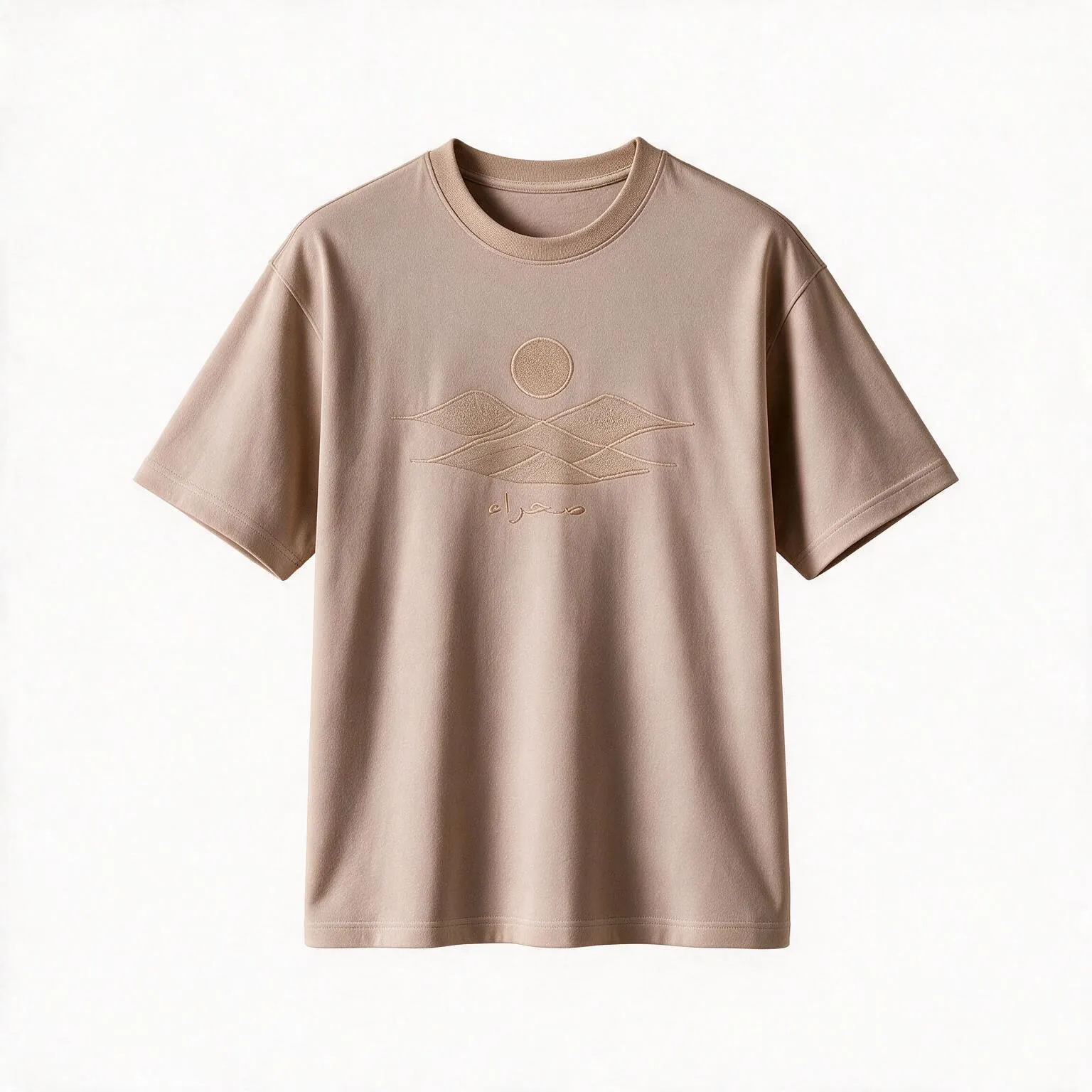
The dunes embroidered across the Empty Quarter tee are Liwa's, several hours south-west of this old watchtower, deep in the true Empty Quarter.

AED 199 · 230gsm cotton · any 2 tees AED 359· 230gsm cotton

See the tee →

What to pack for Falaj Al Mualla

Matched to how you get there. Tap items as you pack them; this list is saved on your phone.

0 packed

Take this list with you

Send it to yourself or the people you are going with. Ticked items are marked.

Questions people ask about Falaj Al Mualla

Is there an entry fee for Falaj Al Mualla?

The fort/museum reportedly charges around AED 5; the outlying watchtowers and village themselves are open, unticketed desert.

What are the opening hours?

Sources differ slightly, but the fort/museum is generally open Saturday to Thursday mornings and early evenings, with shorter Friday hours — check locally before a special trip.

How do I get to Falaj Al Mualla from Dubai?

About an hour's drive north via the E11/E611 towards Umm Al Quwain, then inland on sealed roads to the village.

Is there really just one tower?

No — three watchtowers (east, west and north) stand around the oasis, guarding the fertile wadi; 'the tower' seen in photographs is usually one of these, not the only one.

Is it safe to visit?

Yes, it's an easy, low-risk stop — the main precautions are sun protection and care on soft sand near some of the towers.

Can I combine it with other Umm Al Quwain sights?

Yes — it's a natural stop on a wider Umm Al Quwain desert drive alongside the emirate's other heritage sites.

SourcesWhere the facts on this page come from