
Sahra & BeyondSahra& Beyond
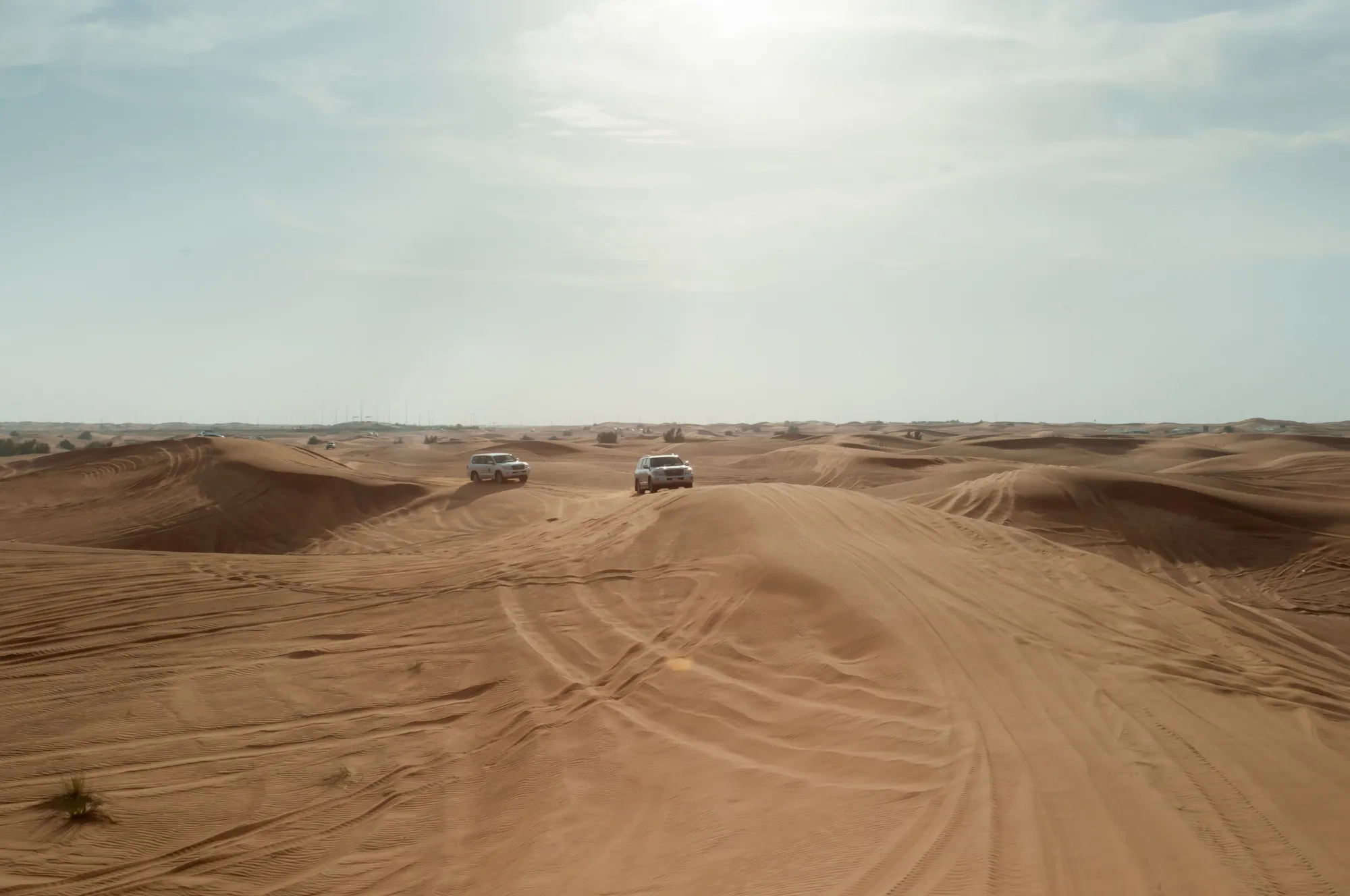
4x4s among red dunes at Al Madam, near Big Red

Big Red

Al Madam / Al Badayer, on the Dubai–Hatta road (E44) · Sharjah

DunesModerateBest Oct–Mar
Loading live weather…

Photo: Oiva Eskola, CC BY-SA 2.0, Wikimedia Commons (resized)

Getting thereAny car to the baseA 4x4 only to drive on the sand; the climb is on foot
Time needed1–3 hours
Best timeLate afternoon into sunset
CostFree; tours and quads extra
Toilets NoneShade NoneSignal Patchy
  1. January: best
  2. February: best
  3. March: best
  4. April: avoid
  5. May: avoid
  6. June: avoid
  7. July: avoid
  8. August: avoid
  9. September: avoid
  10. October: possible
  11. November: best
  12. December: best

Big Red is the tall red dune that gave the whole Al Badayer desert its nickname: a single sweeping face of iron-oxide sand rising somewhere between 60 and 100 metres, right where Sharjah's Al Madam plateau meets the flatter gravel plains toward Dubai. It sits directly on the Dubai–Hatta road (E44), which is why almost every desert-safari operator in the region uses it as a base — you'll usually arrive to find quad bikes, dune buggies and 4x4s parked along the roadside well before you've had a chance to look at the dune itself.

The colour comes from a thin coating of iron oxide on the sand grains, the same chemistry that reddens rock and soil elsewhere in the Hajar foothills — not a dye or a trick of the light, though a low sun does deepen it. On foot, the climb to the ridge takes most people 20 to 30 minutes and counts as a proper scramble rather than a stroll: the sand gives way underfoot, and there's no shade anywhere on the slope.

Most visitors come for the driving rather than the view — dune bashing, quad biking and sandboarding down the north face are the standard activities, either through a tour operator or with your own rented 4x4. None of that requires a permit as far as any source records, and there's no fee to park roadside and walk up. What you won't find at the dune itself is any kind of facility: no toilets, no shop, no shaded seating. Rental outfits line the road nearby, so fuel and basic supplies are a short drive away rather than on site.

Because Big Red sits almost exactly on the stretch where Sharjah's Al Madam desert and Dubai's tour routes meet, you'll see it marketed by both emirates — Visit Sharjah lists it under Al Badayer, Visit Dubai promotes tours to it under its own name. Either way, it's the same dune, and one of the most recognisable single landmarks in the UAE's desert.

Last checked 27 September 2026. Facts on this page come from the sources listed at the bottom. Spotted something out of date?

Getting there

Big Red sits directly on the Dubai–Hatta road (E44), about 50km from central Dubai —…
Dubai Big Red
51 km from Dubai as the crow fliesBy road: about 45–60 min from Dubai

Big Red sits directly on the Dubai–Hatta road (E44), about 50km from central Dubai — reckon on 45 minutes to an hour depending on where you start and traffic through the Al Ain Road interchanges. Heading southeast on the E44 past Al Lisaili, the dune and its roadside pull-offs appear on your left, before you reach Al Madam town itself. There's no formal car park, just hard-packed sand shoulders where safari vehicles and rental 4x4s gather. A regular saloon car gets you to the roadside and the base of the dune; you'll need a 4x4 to drive out onto the sand. The last reliable fuel and shops are back toward Al Lisaili or in Al Madam — there's nothing at the dune. Without your own car, the practical option is a desert-safari tour; nearly every Dubai operator stops here.

GPS 24.9643, 55.7059

When to go

Big Red is best visited October to March, when daytime temperatures make the climb and…
  1. January: best
  2. February: best
  3. March: best
  4. April: avoid
  5. May: avoid
  6. June: avoid
  7. July: avoid
  8. August: avoid
  9. September: avoid
  10. October: possible
  11. November: best
  12. December: best

Best Possible Avoid This month is marked

Big Red is best visited October to March, when daytime temperatures make the climb and any time on open sand bearable; several operators explicitly steer clients away from summer visits, and one recommends going before 9am or after 5pm if you do go in the hotter months. Within the cooler season, late afternoon into sunset is the strongest recommendation found for light and temperature, with one operator naming roughly 4:50–5:50pm in December as the deepest red. Early morning works too, with softer colour and fewer people. Weekends bring more traffic — quad bikes, buggies and safari convoys — so a weekday visit is quieter if you have the choice.

What to do there

The main draw is the dune itself: a 60–100 metre wall of red sand you can climb on foot…

The main draw is the dune itself: a 60–100 metre wall of red sand you can climb on foot in 20–30 minutes, or tackle by 4x4, quad bike or dune buggy through a tour operator or rental outfit. Sandboarding down the north face is the other standard activity. If you're not driving or climbing, plenty of people simply picnic at the base and watch the sun go down over the dunes — a lower-key way to spend an hour here. Photographers tend to work the dune from a few angles along the ridge, since the light and colour shift quickly as the sun drops. There's genuinely nothing else on site: no viewpoint structure, no cafe, no shaded seating, so most of a visit is either active (driving, climbing, boarding) or a short, unstructured stop.

Safety and rules

The two real risks here are heat and soft sand. Carry water — a litre per person in…

The two real risks here are heat and soft sand. Carry water — a litre per person in winter, closer to two in summer — wear closed shoes rather than sandals for the climb, and avoid climbing alone after dark, since there's no lighting and no one to call if you slip. If you're driving, dune bashing on soft sand carries a real risk of rolling or bogging a vehicle; go with an experienced driver or a licensed operator if you haven't done it before, and travel with at least one other vehicle if you're self-driving off the tarmac. Mobile signal is reported as fine at the roadside but patchy once you're out in the dunes, so don't rely on it for recovery. No official body publishes rules specific to Big Red itself; general UAE desert-safety guidance applies.

In an emergency
  • 999 Police
  • 998 Ambulance
  • 997 Civil Defence

Weather warnings: National Center of Meteorology. Tell someone where you are going and when you will be back.

Heritage, nature and etiquette

Big Red's colour is a genuine piece of desert geology rather than a marketing name: a…

Big Red's colour is a genuine piece of desert geology rather than a marketing name: a thin coating of iron oxide on the individual sand grains gives the dune its red cast, most visible in low light. It's part of the wider Al Badayer desert, an ecotourism area recognised by the UAE's Ministry of Climate Change and Environment, on the plateau above Al Madam — one of the inland desert belts separating the coastal cities from the Hajar Mountains further east.

Etiquette. Stick to existing tracks rather than cutting new ones across untouched dune faces, and take your rubbish home — there are no bins here.

Wear the place

Al Quaa Galaxy — Regular

For a properly dark sky, go far from the city lights: the Milky Way on the Al Quaa Galaxy tee was drawn rising over the dunes at Al Quaa, in southern Abu Dhabi.

AED 199 · 230gsm cotton · any 2 tees AED 359· 230gsm cotton

See the tee →

What to pack for Big Red

Matched to how you get there. Tap items as you pack them; this list is saved on your phone.

0 packed

Take this list with you

Send it to yourself or the people you are going with. Ticked items are marked.

Questions people ask about Big Red

Is there an entry fee for Big Red?

No fee is charged to park roadside and climb the dune; you only pay if you book a quad bike, buggy or guided dune-bashing tour.

Do I need a 4x4 to visit Big Red?

A normal car will get you to the roadside and the base of the dune, but you need a 4x4 — your own or a rental — to actually drive on the sand.

How far is Big Red from Dubai?

About 50km, roughly 45 minutes to an hour by road on the E44, depending on traffic and your starting point.

What emirate is Big Red in?

It sits right on the Sharjah–Dubai boundary at Al Madam; Sharjah's tourism board lists it under Al Badayer, though Dubai operators run tours there too.

Is Big Red safe to climb?

Yes for most people if prepared — carry water, wear closed shoes, and avoid climbing alone after dark, since the slope is a genuine scramble with no lighting.

Are there toilets or shops at Big Red?

No — there are no facilities at the dune itself; the nearest fuel, shops and rental outfits are a short drive back toward Al Lisaili or Al Madam.

SourcesWhere the facts on this page come from