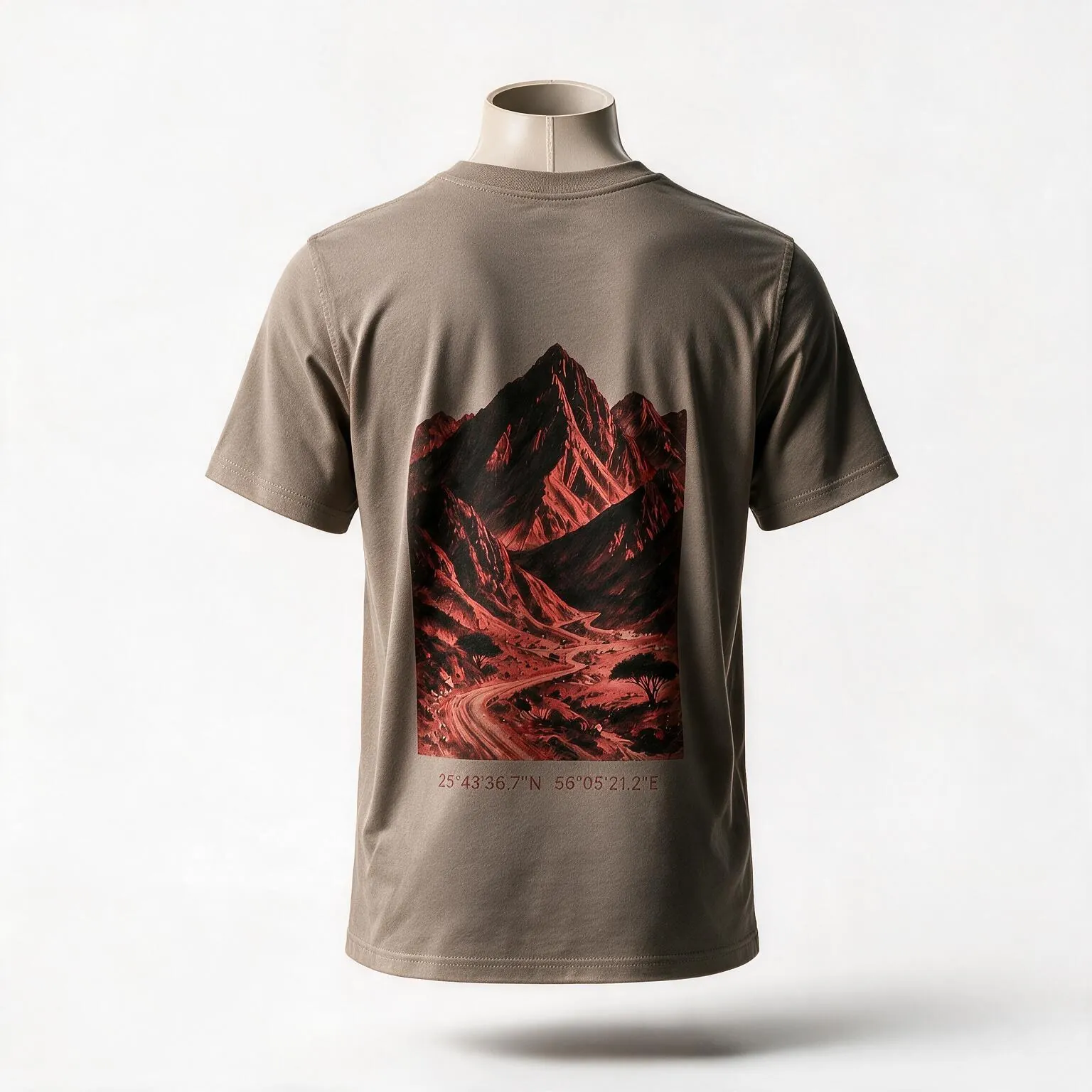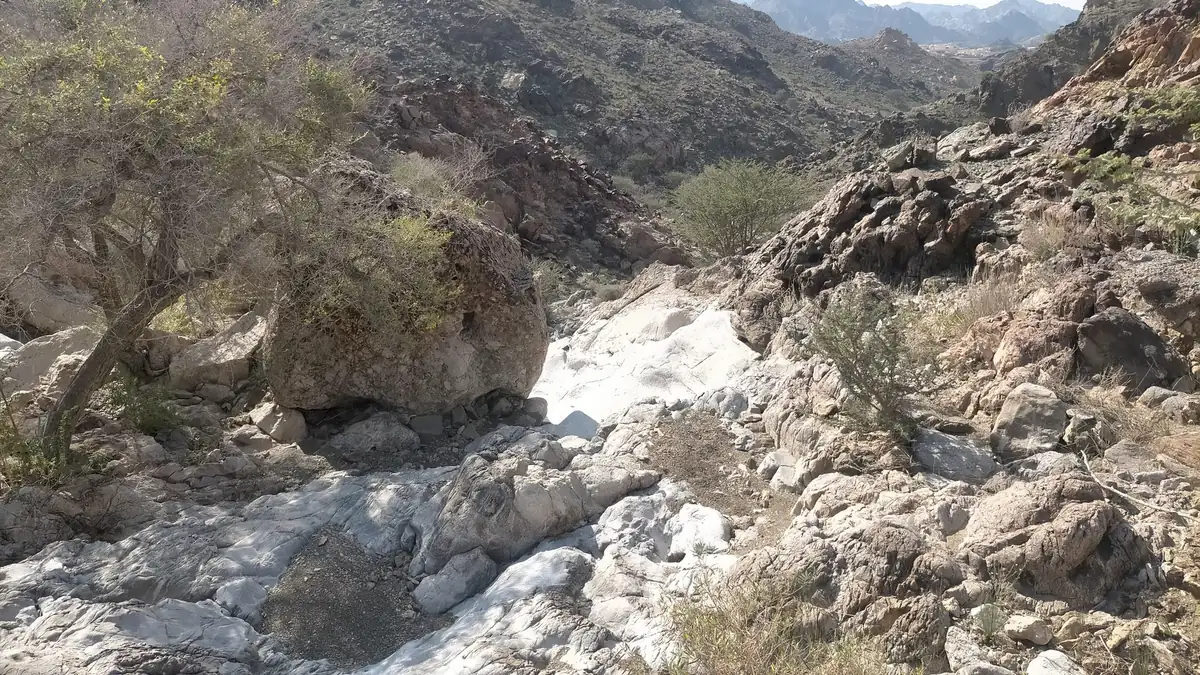
Wadi Kub is a quiet valley in the Hajar Mountains near Masafi, close to where Ras Al Khaimah meets Fujairah. It's one of the range's low-key wild-camping spots: a rocky, folded landscape of grey and red-brown stone, dry riverbed and open sky, without the crowds that gather at better-known wadis further north.
The name is often explained locally as coming from the Arabic word for "cups" — a reference to the natural cavities that floodwater has carved into the rock — though this isn't confirmed by an official source. Along the trail stand Sidr trees reported to be more than a hundred years old, among the hardiest plants in the UAE's mountains and a source of real shade in an otherwise exposed landscape. After rain, seasonal waterfalls appear and the gravel flats put on a brief show of wildflowers — reason enough for some visitors to time a trip for just after a storm, weather permitting.
A regular car can reach the signposted trailhead off the Gragrah–Ghub road, though a higher-clearance vehicle helps once you're following the wadi bed itself or heading to the more remote camping spots. There are no facilities of any kind, which is the point: this is a place for people who are comfortable being fully self-sufficient for a night or two. Wadi Naqab, a more demanding hike with its own dramatic gorge, sits in the same range a little further north; some hiking guides describe a longer, technical route linking a narrow gorge with Wadi Naqab, though it isn't clear this is the same spot as the accessible camping trailhead described here.
Historically this stretch of the Hajar was grazing and small-scale farming country for the Mazari tribe, part of the wider Bani Yas federation — a reminder that these mountains have supported people for a very long time before anyone came here to camp for fun.