
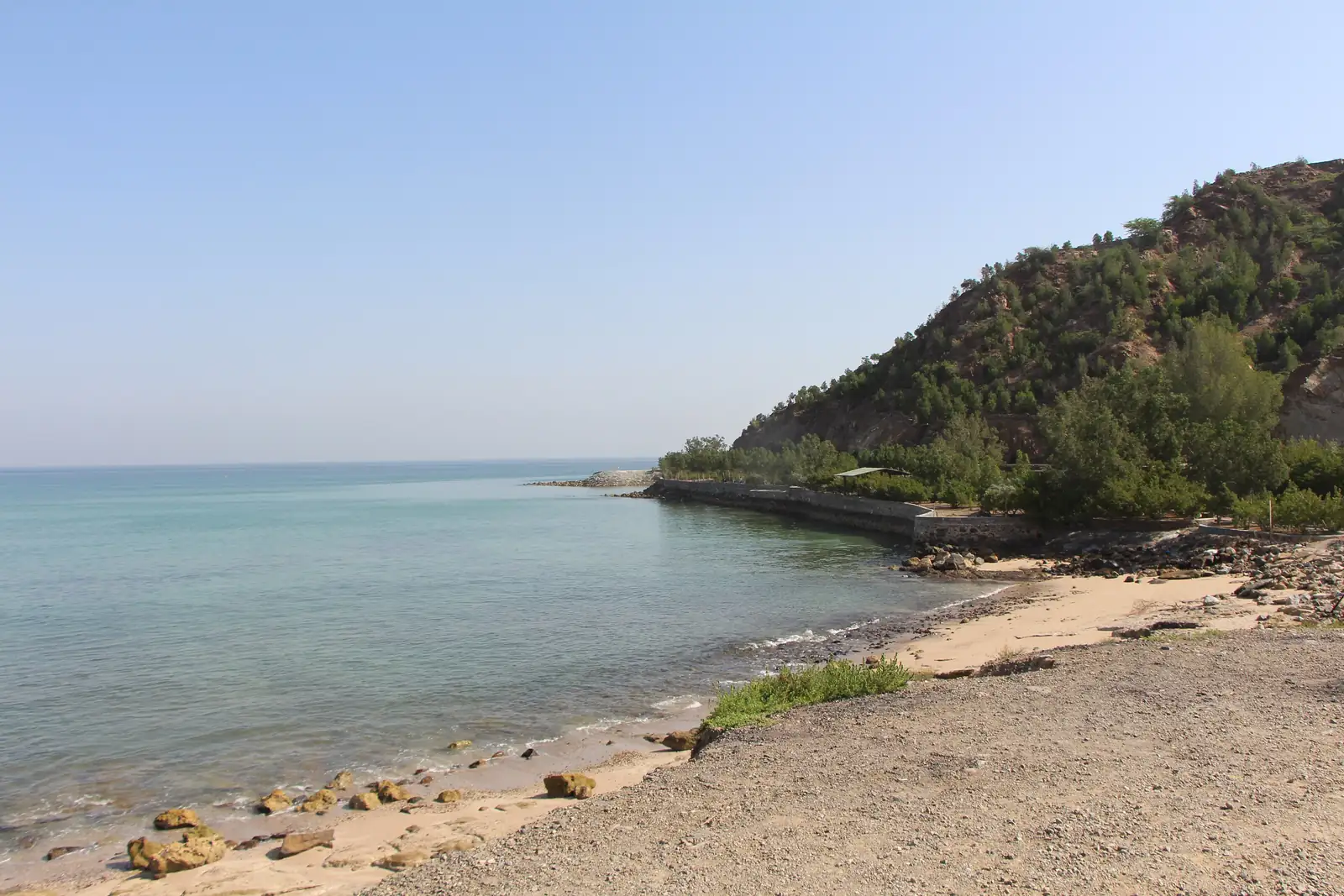
Dibba Rock is a small limestone outcrop a short boat ride off Fujairah's northern coast, at the point where the Hajar Mountains meet the Gulf of Oman. It isn't a beach you walk to — it's a dive and snorkel site, reached by boats that leave from the hotels and dive centres around Dibba and Al Aqah, and it's one of the more reliable places on the East Coast to see coral, reef fish and turtles without travelling as far as Musandam.
The rock itself is compact, but its sides slope from shallow shelves down to about 30 metres, so the same trip suits snorkellers staying near the surface and divers going deeper. Boulder and soft corals cover the slopes, and green turtles turn up regularly enough that operators build them into the pitch — sleeping turtles are a highlight of the night dives here, one reason Dibba Rock has a solid local reputation among East Coast dive sites. Clownfish, jawfish and reef fish fill the shallower ledges, and visibility on a good day is said to reach 30 metres or more, though that shifts with the season and the plankton bloom.
Dibba itself is a genuinely three-way town — one part Fujairah, one part Sharjah (Dibba Al-Hisn), and one part Oman (Dibba Al-Baya, across a fenced border) — and the rock sits on the Fujairah side. That split matters more for logistics than for the dive itself: if your boat or hotel happens to operate from the Omani side of town, non-GCC UAE residents need a passport and advance paperwork to cross, so it's worth checking which Dibba your operator is based in before you book.
There's no walk-in access and no fixed price: a snorkelling or diving trip is arranged through a dive centre or hotel, typically as a half-day outing that includes the boat, a guide and sometimes gear. It rewards a little planning rather than a spontaneous drive-past, but for the marine life on offer, it's one of the East Coast's better mornings out.
 Al Quaa Galaxy
 Empty Quarter
 Hajar Mountains