Sahra & BeyondSahra& Beyond
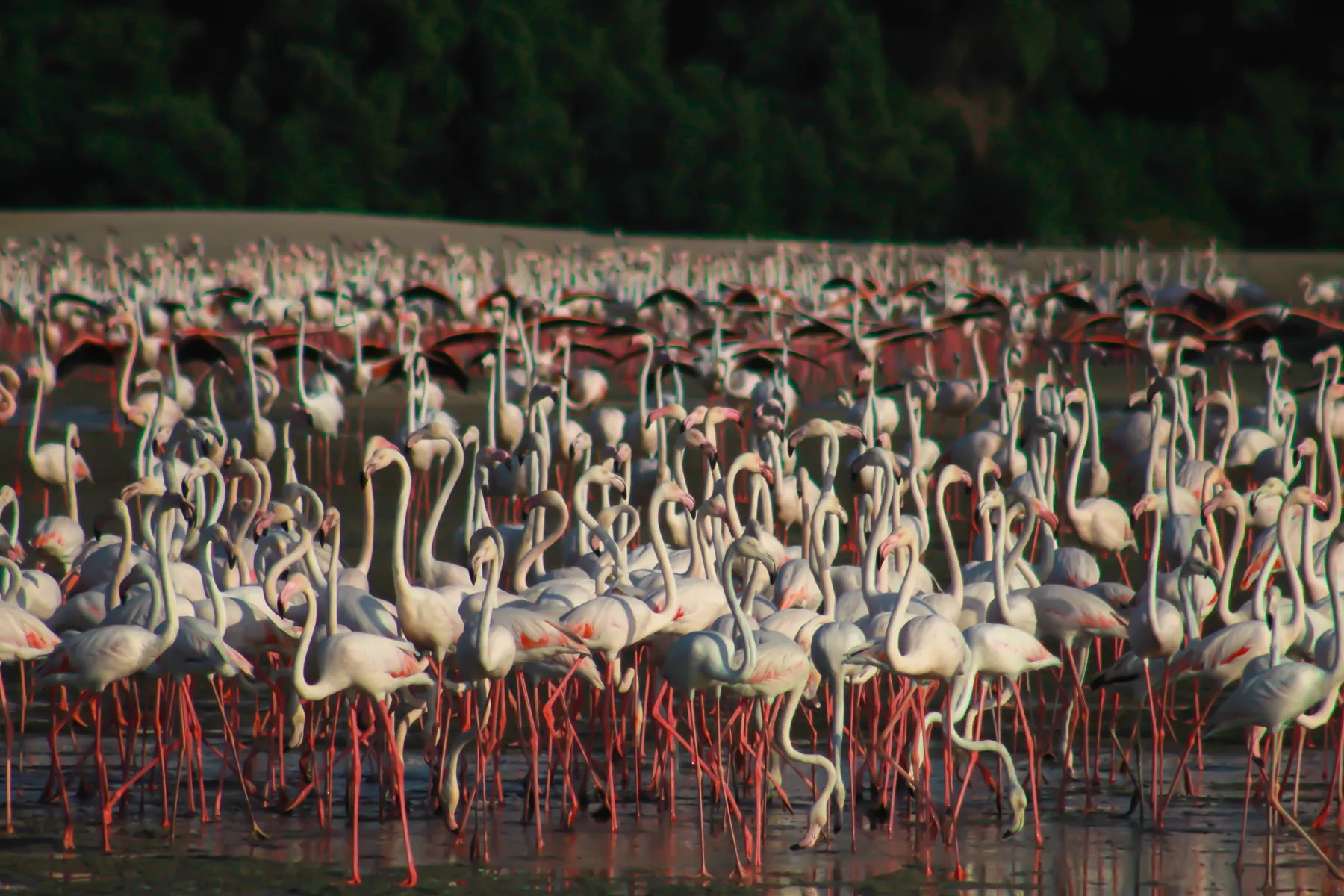
Hundreds of greater flamingos standing in shallow water at Ras Al Khor, with mangroves behind

Ras Al Khor Wildlife Sanctuary

رأس الخور للحياة الفطرية

Head of Dubai Creek, Dubai, with hides on the E66 and the Dubai to Hatta road (E44)

CoastEasyBest Oct–Mar
Loading live weather…

Photo: Mohammed Abdul Haris, CC BY-SA 4.0, Wikimedia Commons (resized)

Getting thereBird hidesDrive or taxi to lay-bys beside the hides; walk-in registration required
Time neededAbout 1 to 2 hours
Best timeOctober to March, mornings; confirm it is open first
CostNo fee listed; hides described as free
  1. January: best
  2. February: best
  3. March: best
  4. April: possible
  5. May: avoid
  6. June: avoid
  7. July: avoid
  8. August: avoid
  9. September: possible
  10. October: best
  11. November: best
  12. December: best

Ras Al Khor Wildlife Sanctuary is a protected wetland at the head of Dubai Creek, in the middle of the city. The name translates as Head of the Creek (Wikipedia). Dubai Municipality describes it as a wetland of international importance in a hyper-arid setting, formally designated under the Ramsar Convention in 2007 as the first wetland in the country, and also an Important Bird Area under BirdLife International. Its habitats are mangroves, intertidal areas, mudflats and sabkhas. Sources disagree on its size: the Municipality gives 10.13 km2, while the Ramsar information sheet gives 620 hectares, so no single figure is used here.

The first thing to know is that access is unclear. Khaleej Times reported on 4 July 2025 that the sanctuary had temporarily closed as part of a Dh650-million development, and the uaebirding site noted in September 2025 that the reserve appeared to be temporarily closed. Dubai Municipality's own statement on the project says the first phase is expected to finish by the end of 2026. Yet the Municipality's Book a visit page, last checked October 2026, marks only the Mangrove Hide as temporarily closed and lists the Flamingo Hide and Lagoon Hide without a closure note. We could not reconcile these. Call the Municipality helpline on 800900 before you travel. There are three bird hides, built by Dubai Municipality around the fenced reserve. The Mangrove Hide is described by the Municipality as the place for migratory ducks, snipes, shanks, greater cormorants and Eurasian spoonbills, with storks possible in winter; its Book a visit entry says Temporarily closed as of October 2026. The Flamingo Hide is the one the Municipality advertises for flamingos all year round. The Lagoon Hide opens onto the creek water and is pitched at keen birdwatchers, with waders through to raptors; uaebirding says it is reached by a sandy road from the Flamingo Hide. Inside any hide, the Municipality asks for a quiet zone with no phones, pets, food, drink or smoking, and allows only 15 people at a time.

The sanctuary is mainly known for migratory birds. The Municipality says winter numbers may reach up to 25,000 birds, and counts 201 bird species on its wildlife page. The Ramsar information sheet gives a different picture, more than 20,000 waterbirds of 67 species in winter and more than 3,000 greater flamingos counted, without a year in the text we read. Flamingos are present year-round at the Flamingo Hide according to the Municipality and uaebirding. Other seasonal patterns come from uaebirding: Broad-billed Sandpipers from July to April, and Greater Spotted Eagles in view from October to April. It adds that high tide pushes waders toward the Mangrove Hide. The Municipality lists Socotra Cormorant, Ferruginous Duck and Sociable Lapwing as globally threatened species the site supports.

Both open hides sit beside main roads. uaebirding gives a lay-by for the Flamingo Hide off the E66 at 25.190992, 55.310547, with an exit it calls un-signposted, and a lay-by for the Mangrove Hide off the westbound lane of the Dubai to Hatta road (E44) at 25.185125, 55.331003. PropertyFinder suggests the Dubai Metro Green Line to Al Jadaf or Creek station and then a short taxi ride; we have not confirmed bus routes. The Municipality's listed hours are 7:30am to 5:30pm in winter (October to March) and 6:00am to 6:00pm in summer (April to September), last checked October 2026. Entry is not priced on the Municipality's pages and Khaleej Times and Visit Dubai describe the hides as free, but walk-in registration is required and you may be asked for an Emirates ID. Bring binoculars, a camera and a field guide, as the Municipality suggests, keep behind the fence and No Entry signs, and treat the wetland as the birds' home first. Parking outside designated areas, approaching wildlife and making noise can bring heavy fines.

Last checked 6 October 2026. Facts on this page come from the sources listed at the bottom. Spotted something out of date?

Getting there

Ras Al Khor is inside Dubai, so there is no long drive. uaebirding describes two…
Dubai Ras Al Khor Wildlife Sanctuary
4 km from Dubai as the crow fliesBy road: Inside Dubai, at the head of Dubai Creek; no source gives a drive time

Ras Al Khor is inside Dubai, so there is no long drive. uaebirding describes two entrances on the roads that wrap the wetland. For the Flamingo Hide, take the E66 round the inlet to an exit it calls un-signposted, with a lay-by at 25.190992, 55.310547. For the Mangrove Hide, you need to be on the Dubai to Hatta road (E44) heading west, back toward the city, where the lay-by turn-off is poorly signposted at 25.185125, 55.331003. The Municipality gives Makani numbers for the hides: 31623 86559 (Mangrove), 29772 87328 (Flamingo) and 30487 87923 (Lagoon). The two lay-bys are about 2.73 km apart by road (uaebirding), and walking between the Mangrove and Flamingo hides is not permitted. Without a car, PropertyFinder suggests the Green Line to Al Jadaf or Creek station and a short taxi ride, and uaebirding says most taxi drivers know the Mangrove Hide.

GPS 25.190992, 55.310547

When to go

Dubai Municipality splits the year into a winter season (October to March, 7:30am to…
  1. January: best
  2. February: best
  3. March: best
  4. April: possible
  5. May: avoid
  6. June: avoid
  7. July: avoid
  8. August: avoid
  9. September: possible
  10. October: best
  11. November: best
  12. December: best

Best Possible Avoid This month is marked

Dubai Municipality splits the year into a winter season (October to March, 7:30am to 5:30pm) and a summer season (April to September, 6:00am to 6:00pm), last checked October 2026. Bird numbers are highest in winter: the Municipality says up to 25,000 birds, and the Ramsar information sheet gives more than 20,000 waterbirds. Flamingos are reported year-round at the Flamingo Hide. uaebirding says Broad-billed Sandpipers are present from July to April and Greater Spotted Eagles are always in view from October to April. The Municipality asks visitors to check air quality and weather before planning. Because of the redevelopment, confirm opening with the helpline (800900) whatever the season.

What to do there

Plan around the hides, not a trail. The Mangrove Hide is the place for waders and, per…

Plan around the hides, not a trail. The Mangrove Hide is the place for waders and, per uaebirding, for Broad-billed Sandpipers and Pacific Golden Plovers right in front of it; the Municipality lists migratory ducks, snipes, shanks, greater cormorants, Eurasian spoonbills and, in winter, storks. The Flamingo Hide looks over the flamingo water and, in winter, uaebirding says Greater Spotted Eagles soar overhead. The Lagoon Hide opens onto the creek water and is for experienced birdwatchers. The Municipality suggests binoculars, a camera and a bird and nature guide. Once the first phase is complete, Economy Middle East, reporting the Municipality's project statement, describes a visitor centre and birdwatching towers; the second phase adds 3 km of walking trails and 5.6 km of cycling tracks (Gulf Construction), at a later stage.

Safety and rules

The Municipality asks visitors to take responsibility for their own safety: no more than…

The Municipality asks visitors to take responsibility for their own safety: no more than 15 people at a time in a hide, do not sit on the window plank, keep hydrated, no rushing or pushing, and mind your belongings. Do not go beyond No Entry signs or the fenced area. Summer heat is the obvious hazard, and the summer opening hours run from 6:00am. The exits to the Flamingo and Mangrove hide lay-bys come off fast roads and are poorly signposted (uaebirding), so slow down early. Dubai Municipality's helpline is 800900.

In an emergency
  • 999 Police
  • 998 Ambulance
  • 997 Civil Defence

Weather warnings: National Center of Meteorology. Tell someone where you are going and when you will be back.

Heritage, nature and etiquette

Dubai Municipality says Ras Al Khor was an important spawning area for fish, which…

Dubai Municipality says Ras Al Khor was an important spawning area for fish, which supported traditional fishing that led to the early 18th-century settlements of Deira, Shindaga and Bur Dubai. It was declared a protected area on 1 March 1998 (Local Order No. 2 of 1998) and designated a Ramsar site in 2007, the first wetland in the country. Wikipedia notes it was formerly the end of Dubai Creek, before the Dubai Canal was built. The Municipality's own Protected Areas page records the 2015 GCC Award for Environment and Wildlife.

Etiquette. Keep quiet in the hides and keep phones put away, as Dubai Municipality asks. Stay behind the fence, park only in designated areas, bring no pets, and do not approach, disturb or feed the birds: the Municipality lists approaching or harming wildlife, noise, polluting, collecting plants or animals and hunting as prohibited and subject to heavy fines. Walk-in registration is required, and you may be asked for an Emirates ID. Commercial photography and filming need a No Objection Certificate from the Municipality's Natural Reserves Section. Do not fly a drone without written approval.

The coast is next

Sahel, the Coast Edition

Our next edition is drawn from the coast of the UAE. It is launching soon.

Be first to know →See the page

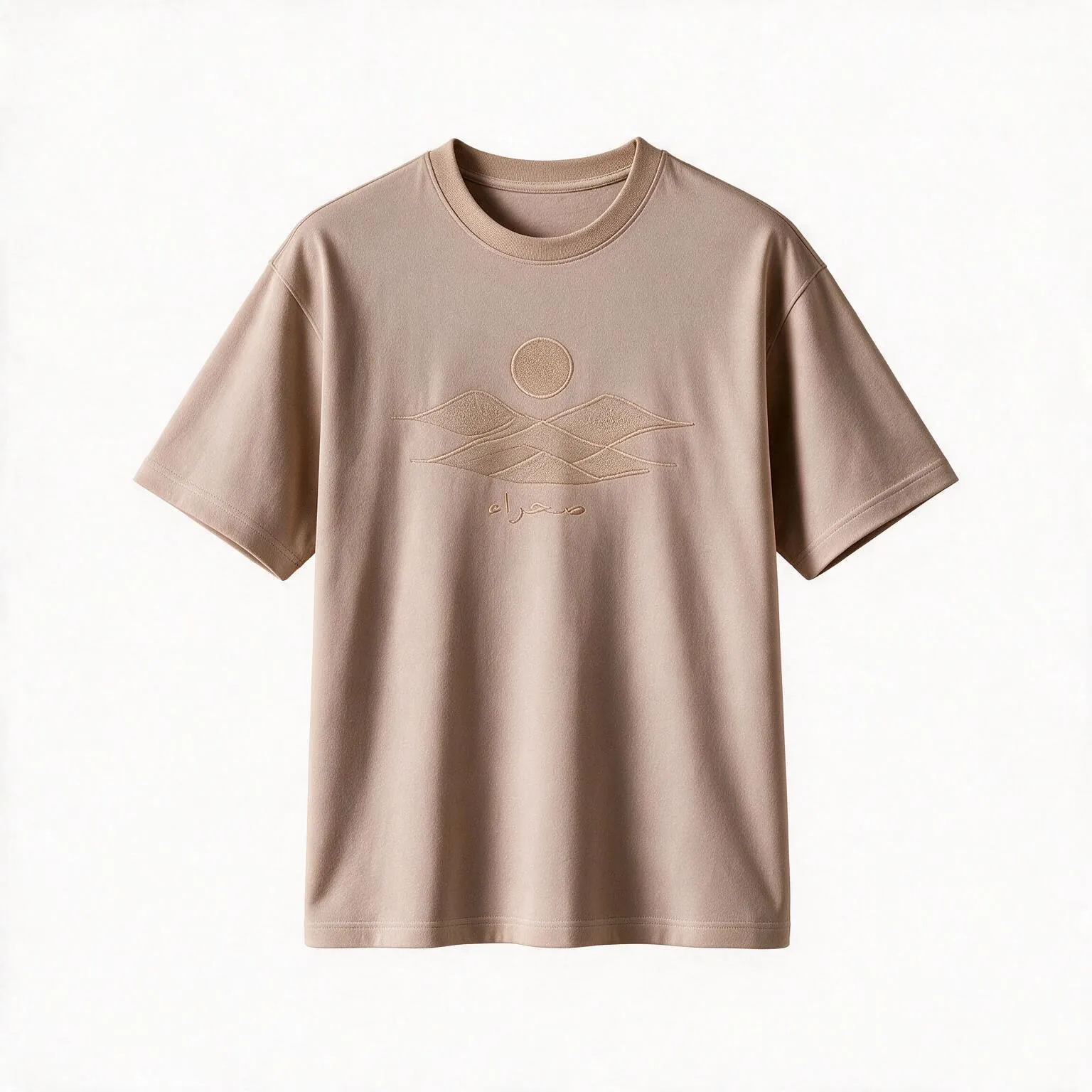
The places we have drawn See all t-shirts →

What to pack for Ras Al Khor Wildlife Sanctuary

Matched to how you get there. Tap items as you pack them; this list is saved on your phone.

0 packed

Take this list with you

Send it to yourself or the people you are going with. Ticked items are marked.

Questions people ask about Ras Al Khor Wildlife Sanctuary

Is Ras Al Khor Wildlife Sanctuary open now?

We could not confirm it. Khaleej Times reported a temporary closure for redevelopment on 4 July 2025, and uaebirding noted the same in September 2025. Dubai Municipality's Book a visit page, last checked October 2026, marks only the Mangrove Hide as temporarily closed. Call the Municipality helpline on 800900 before travelling.

Is it free, and do I need a permit?

The Municipality's visitor pages list no fee, and Khaleej Times and Visit Dubai describe the hides as free (last checked October 2026). Families and individuals do not need a permit but must complete walk-in registration and may be asked for an Emirates ID. Schools, universities, tour companies and media groups must pre-book through the Municipality's online portal; media filming needs a No Objection Certificate (nrs@dm.gov.ae).

Which bird hides are there, and which are open?

Three: Mangrove Hide, Flamingo Hide and Lagoon Hide. On its Book a visit page, last checked October 2026, Dubai Municipality marks the Mangrove Hide as temporarily closed, describes the Flamingo Hide for flamingos all year round, and pitches the Lagoon Hide at experienced birdwatchers. It does not give a separate open or closed notice for the last two, so confirm by phone.

When can I see flamingos?

Dubai Municipality says flamingos are at the Flamingo Hide all year round, and uaebirding says the hide always has greater flamingos present. The Municipality adds that winter is the peak for bird numbers, with up to 25,000 birds.

Can I get there by metro or bus?

PropertyFinder suggests the Dubai Metro Green Line to Al Jadaf or Creek station and then a short taxi ride. We have not confirmed any bus routes with the RTA. uaebirding says most taxi drivers know the Mangrove Hide.

Can I fly a drone or take photographs?

Photographers can walk in with registration. Phones are listed as not allowed inside the hides, and the Municipality tells visitors to bring a camera. Its visitor rules do not mention drones, but they ban noise-producing equipment and approaching wildlife, and UAE recreational drone rules (GCAA CAR-UAR) require flight approval. Treat drones as not allowed unless the Municipality approves in writing.

SourcesWhere the facts on this page come from